
Table of Contents
MANILA: Today’s young Filipinos are constantly hooked to the web with their gadgets.
It was not always been the case. Yes, the technology has evolved; but so did the rules.
And that’s what happened in the Philippines, ushering in a tech and telecommunications revolution.

In the early 1990s, getting a telephone landline in Metro Manila could take several years — sometimes as long as 15 years.
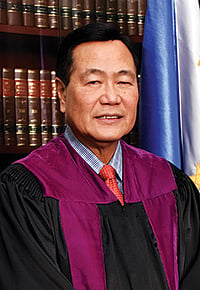
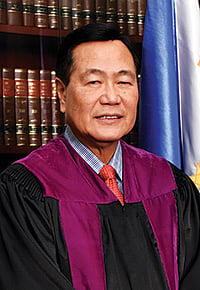
That’s according to the recollection of former Philippines Supreme Court Justice Antonio Carpio. He later became the legal adviser to then-Fidel V. Ramos.
In the provinces, Carpio said, many Filipinos could not reasonably expect to obtain a telephone line at all.
Structural issue
The problem was not simply a shortage of telephones. The structure of the industry itself was a bottleneck. PLDT dominated the country’s telephone network.
By 1991, contemporary accounts put PLDT’s share at roughly 94% of telephone lines.
Smaller phone operators under PETEF depended heavily on PLDT for interconnection, particularly for calls outside their own networks.
This gave the dominant operator considerable power over whether — and on what terms — competitors could connect to its network.
That meant a new company could technically enter the telecom business but still struggle to offer a genuinely nationwide service if its subscribers could not call people using PLDT.
PETEF stands for the Philippine Electronics and Telecommunications Federation. Founded in March 1969, it historically grouped private and government agencies in the country’s electronics, broadcast, and telecommunications sectors.
It included PDLT, too.
But back then, industry officials joked that PLDT was the “tail wagging the dog”. It had an outsized influence.
Over time, as tech evolved, the PETEF transitioned into what is now known as the Philippine Information & Communications Technology Organisation (PICTO).
CONTROL: In the 1990s, control of PLDT shifted between two major groups. From 1990 to 1998, the Cojuangco family had control over PLDT. Antonio “Tonyboy” Cojuangco Jr. served as the president and chief executive officer. He ran the telecom giant through the family’s holdings and alliances, navigating the deregulation and demonopolisation of the Philippine telecom industry in 1995. From 1998 to the present: Hong Kong-based First Pacific Company Ltd stepped in.
Antonio Carpio’s role
Carpio was then President Fidel V. Ramos’ presidential legal counsel and became one of the key figures in the administration’s demonopolisation drive. His own experience helped illustrate why reform was necessary.
Carpio, 76, is a prominent Filipino lawyer from Davao widely known for his staunch defence of the country’s maritime rights in the West Philippine Sea. He graduated valedictorian and cum laude from the University of the Philippines College of Law.
When he wanted to open his own law firm, he faced a huge challenge: getting a telephone line for his office, which then seemed impossible.
Carpio recalled that before the back of PLDT’s phone monopoly was broken, Manila residents could wait three to 15 years for a telephone line, while people in the provinces might never get one.
On November 24, 1998, the Hong Kong-based conglomerate First Pacific (led by Indonesian tycoon Anthoni Salim) purchased a 17.5% controlling stake in PLDT for ₱29.7 billion. This ushered in a new era of leadership under Manuel “MVP” Pangilinan, who took over as president and CEO, while Tonyboy Cojuangco transitioned to board chairman.
According to research by Lorraine Carlos Salazar on the Philippine telecom reforms, Carpio helped develop the legal strategy for opening the industry and wrote Executive Order No. 59, which became a central instrument of the reform.
Carpio said he had already carefully studied the EO: the government did not necessarily need to wait for Congress to pass a new law to address the interconnection problem.
Existing regulatory powers could be used through an executive order directing the National Telecommunications Commission (NTC).
There’s a backstory to this: Carpio, in a September 16, 2026 interview with Insiders (Episode 54) hosts, said they expected PLDT then to “fight back” — by giving new telecom industry entrants a hard time with interconnection.
“They could make interconnection difficult for you (new industry entrants), by making it spotty,” Carpio told the podcast.
“That was solved, because PCGG (Presidential Commission on Good Government) had voting shares at the time. So I told Tony Boy (Cojuangco, then CEO of PLDT), ‘If the interconnection is bad, we’ll just have to replace you’.
The game-changing order: EO 59
On February 24, 1993, President Ramos issued Executive Order No. 59.
Its title itself captured the objective: “compulsory interconnection” of authorised public telecom carriers to create a “universally accessible and fully integrated nationwide telecommunications network” and encourage greater private investment.
Its crucial provision was straightforward: Interconnection between NTC-authorised public telecommunications carriers shall be compulsory.
This helped change the economics of telecommunications. In practical terms, this changed the economics of entering the industry.
A new telecom company no longer had to build an entirely separate universe of connections before its customers could communicate with subscribers on the dominant network.
New network + compulsory interconnection = a viable competitor. And that mattered enormously for mobile telecommunications.
Why mandatory interconnection was important
Imagine a new mobile company entering the Philippines but being unable to connect its subscribers to people using PLDT.
Even if it offered cheaper or better mobile service, consumers would have little reason to switch.
EO 59 attacked that bottleneck.
The NTC was empowered to regulate the terms of interconnection, while the policy required authorised telecommunications carriers to connect their networks.
Later, Executive Order No. 109, also issued under Ramos in 1993, reinforced the framework by requiring telecommunications networks to be interconnected in a “non-discriminatory manner”.
The result was that competition became technically possible, not merely legally permitted.
Then came the new players
The Ramos administration’s reforms opened space for companies such as Globe Telecom, Smart Communications, Islacom, Digitel, Bayantel, and other cellular operators.
Globe commercially launched mobile services in 1994. The telecom landscape subsequently changed rapidly, with mobile phones eventually transforming how Filipinos communicated.
The reform was not simply about replacing PLDT with another company. It was about changing the rules of the network so multiple operators could participate, and make competition possible.
And there is an important historical irony: PLDT itself ultimately benefited enormously from the much larger telecommunications market created by liberalisation.
A Philippine Development Report noted that telecom revenues grew from roughly ₱20 billion in 1993 to ₱230 billion in 2008, while the industry expanded from a virtual monopoly to a much more competitive market.
The bigger economic impact
The telecommunications reform eventually became much bigger than telephone calls.
The Philippine Development Report described the 1993 deregulation as transforming the industry from a virtual monopoly with limited service into an expanded network with lower prices and better service. It also linked the telecommunications expansion to the growth of contact centres, back-office operations and other IT-enabled services — the BPO industry.
In other words:
Break the network bottleneck → allow competitors to connect → expand telecommunications access → make mobile communications widely available → create infrastructure for the digital economy.
That is why EO 59 is more significant than it may initially appear. It was not merely a technical regulation about telephone connections.
It changed who could participate in the network.
And once multiple companies could connect to one another, competition could actually reach consumers.
A useful historical nuance
EO was the trigger, but it didn’t immediately end PLDT’s dominance.
The Ramos administration dismantled PLDT’s monopoly position through a package of liberalisation and regulatory reforms.
The reform effort involved President Ramos, Carpio, Jose Almonte, the NTC, the Department of Transportation and Communications, congressional action and private-sector entrants.
EO 59 was one of the pivotal measures because it removed a major practical barrier to competition: the incumbent’s ability to prevent or frustrate interconnection.
The administration and PLDT subsequently reached a compromise in 1993 under which PLDT agreed to drop opposition to new entrants and comply with EO 59, among other matters.
Powerful lesson
The lesson: competition policy is not always about simply saying, “You are free to compete.”
If one company controls an essential network, government may also have to ensure that newcomers can connect to that network on regulated, non-discriminatory terms.
That was the critical idea behind the Ramos-era telecom reforms — and it helped turn a country where a telephone line could take 15 years to obtain into one of Asia’s major mobile and digital communications markets.
Dismantling PLDT’s dominance here in the early 1990s is one example of how competition can be created not simply by allowing new companies to enter, but by forcing the incumbent network to connect with them.
[Up Next: Why the internet in the Philippines is slow.]