
Table of Contents
The war with Iran is already costing the United States and its allies billions of dollars in military operations — and that may only be the beginning.
According to estimates compiled by think tanks cited by CNN, the conflict is currently costing about $891.4 million a day, as American forces deploy aircraft carriers, fighter jets, bombers and ground troops across the region.
Yet the real price of the war goes far beyond the cost of missiles and aircraft. The conflict has begun to ripple through the global economy, pushing up oil prices, disrupting airlines and shipping routes, and raising the cost of transporting goods around the world.

With no clear end in sight, analysts warn the financial toll could grow rapidly.
“This is highly unpredictable and so we won’t know the cost of it until it’s over,” Lindsay Koshgarian, programME director of the National Priorities Project at the Institute of Policy Studies, told CNN.
“The cost of the war in Iraq ended up being almost $3 trillion,” she said. “So this could, this could be astronomical, easily.”
The direct cost of war
The daily costs of military operations are already staggering.
A report by the Centre for Strategic and International Studies (CSIS) estimates the war is costing around $891.4 million per day based on the Pentagon’s publicly known operations.
The biggest expenses come from the deployment of air and naval forces.
Air operations alone are estimated to cost about $30 million per day, while naval operations cost roughly $15 million daily. Ground operations add another $1.6 million each day.
Some of the most expensive assets include:
Air assets
-
Tanker and cargo aircraft: $9 million per day
-
Carrier air wing: $5 million
-
Non-stealth fighters: $5 million
-
Stealth fighters: $5 million
Naval assets
-
Aircraft carrier: $6 million per day
-
Destroyer: $5 million
Ground assets
-
Artillery brigade: $1 million
-
National Guard battalion: less than $1 million
The scale of spending has already eclipsed previous operations targeting Iran.
According to CSIS, the first 100 hours of the current war cost about $3.7 billion.
By comparison, the US operation known as Operation Midnight Hammer, which targeted Iran’s nuclear facilities in June 2025, cost between $2.04 billion and $2.26 billion, according to the Costs of War project at Brown University.
That strike lasted only about two and a half hours.
How expensive could the war become?
The total cost will depend largely on how long the conflict lasts and whether it escalates further.
Kent Smetters, faculty director of the Penn Wharton Budget Model, told CNN that a wo-month war could cost between $40 billion and $95 billion, depending on the intensity of fighting and whether the United States deploys ground forces.
Defense Secretary Pete Hegseth has indicated the campaign may intensify.
“We are just getting started,” he said, adding that US forces will be “accelerating.”
For analysts, the uncertainty makes it difficult to estimate the final bill.
Military operations require constant resupply of precision weapons, fuel, logistics and maintenance — costs that rise sharply if the war expands.
Oil prices and energy markets
The economic shock from the war is being felt far beyond the battlefield.
One of Iran’s most powerful strategic tools is its ability to disrupt global energy markets.
Oil prices surged to nearly $120 a barrel after the conflict began before easing to around $90, according to market data cited by the Associated Press.
The surge reflects fears that the war could disrupt energy flows through the Strait of Hormuz, the narrow waterway that carries roughly 20% of global oil and natural gas supplies.
Any sustained disruption to this route could trigger further spikes in fuel prices worldwide.
Higher energy costs ripple quickly through the global economy, affecting everything from transport and manufacturing to electricity prices.
For many governments, the economic pressure created by rising energy prices may ultimately become one of the most significant consequences of the conflict.
Airlines face soaring fuel costs
Airlines are already feeling the impact.
According to AFP, the global price of jet fuel has surged sharply since the war began, reaching $173.91 per barrel, roughly double the level recorded in early January, based on the Platts benchmark.
“As soon as the price of a barrel of oil rises, airline profits fall, and vice versa,” said Paul Chiambaretto, professor of strategy and marketing at Montpellier Business School and an air transport specialist.
Airlines have responded in several ways.
Some carriers have begun raising ticket prices, while others are relying on fuel hedging strategies to cushion the shock.
Scandinavian airline SAS has already announced a temporary increase in fares, while several airlines in the Asia-Pacific region — including Qantas, Air India and Cathay Pacific — have said they are increasing prices or preparing to do so.
The timing is particularly sensitive for the tourism industry as travellers in Europe and North America begin booking summer holidays.
“This conflict is already having a negative impact on people’s willingness to travel,” said Transavia France CEO Olivier Mazzucchelli.
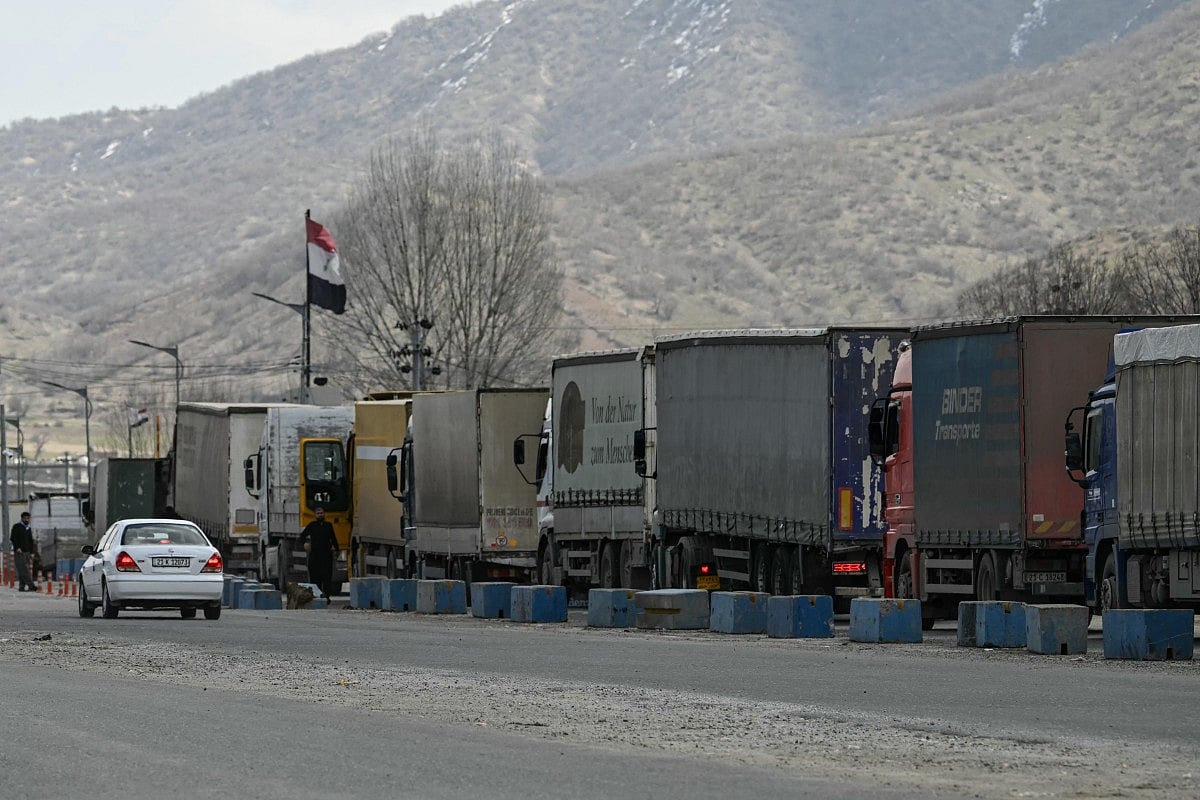
Shipping and global trade disruptions
The conflict is also disrupting global shipping routes, potentially raising the cost of goods worldwide.
Vincent Clerc, chief executive of global shipping giant Maersk, warned that the rising costs of transport will eventually be passed on to consumers.
“So what it means is that ultimately, in this case, these increases will pass to our customers and will pass on to the consumers,” Clerc said in an interview with the BBC.
Shipping companies are facing higher fuel costs and operational challenges as vessels avoid dangerous routes near the conflict zone.
Freight costs have already increased by around $200 for a standard 20-foot container, translating into shipping price rises of roughly 15% to 20%, according to industry estimates.
More than 130 vessels were reported stuck in the Gulf earlier this week, highlighting the scale of the disruption.
Some shipping companies have rerouted vessels around the Cape of Good Hope, a much longer and more expensive journey that adds time and fuel costs to global trade.
Since container shipping carries everything from electronics and clothing to food and household goods, higher freight rates are likely to filter through supply chains and eventually reach consumers.
The hidden global economic impact
Ultimately, the true cost of the Iran war may be measured not just in military spending but in its broader economic consequences.
Rising fuel prices, disrupted trade routes and reduced travel demand can slow economic growth, push up inflation and strain government budgets around the world.
Analysts say the war is evolving into a test of economic endurance as much as military strength.