
Table of Contents
In July 2026, Dubai officially launched the Dubai Digital Twin platform — an accurate virtual copy of the emirate, containing data on infrastructure, landmarks, buildings and residential units. The data is continuously updated, ensuring its accuracy, reliability and integrity. The platform currently includes 3D models of more than 195,000 buildings.
This is not just a visualisation, but a tool that enables effective planning, from urban infrastructure to rainfall modelling, before decisions are made that affect millions of people. The digital twin helps prepare for future changes and improve the quality of life in the city.
But this digital transformation has a blind spot. While the city gets a digital copy, the old logic still applies inside buildings: GPS signals do not pass through walls. Satellite navigation, which we are all used to, loses accuracy in enclosed spaces — the signal weakens due to concrete and floors.

Demand for indoor navigation is growing. More and more industries, from shopping malls and airports to universities, need solutions that connect a building’s digital model with the real movement of people. Without special technologies, a person in a large building simply gets lost.
How to make a building’s digital model work for people
At the intersection of a building’s digital twin and the real problems people face, Indoors Navigation, a Russian developer of a unified information environment for managing buildings and assets, is at work. The company creates a geographic information system (GIS) based on an object’s digital twin and geolocation services that operate both outdoors and indoors.
At the core of the product is the Indoors Navigation Platform (INP), a unified environment that combines several functions at once.
The platform allows users to create custom maps, from a single floor to an entire building. Based on these maps, the system builds routes and tracks the movement of people and physical assets both indoors and outdoors. But its functionality does not stop there.
Indoors Navigation’s products have been certified under the Made in Russia national programme. This confirms that they meet the high standards of quality and reliability required for export-oriented products.
Getting lost in an airport or hospital — a problem that can be solved
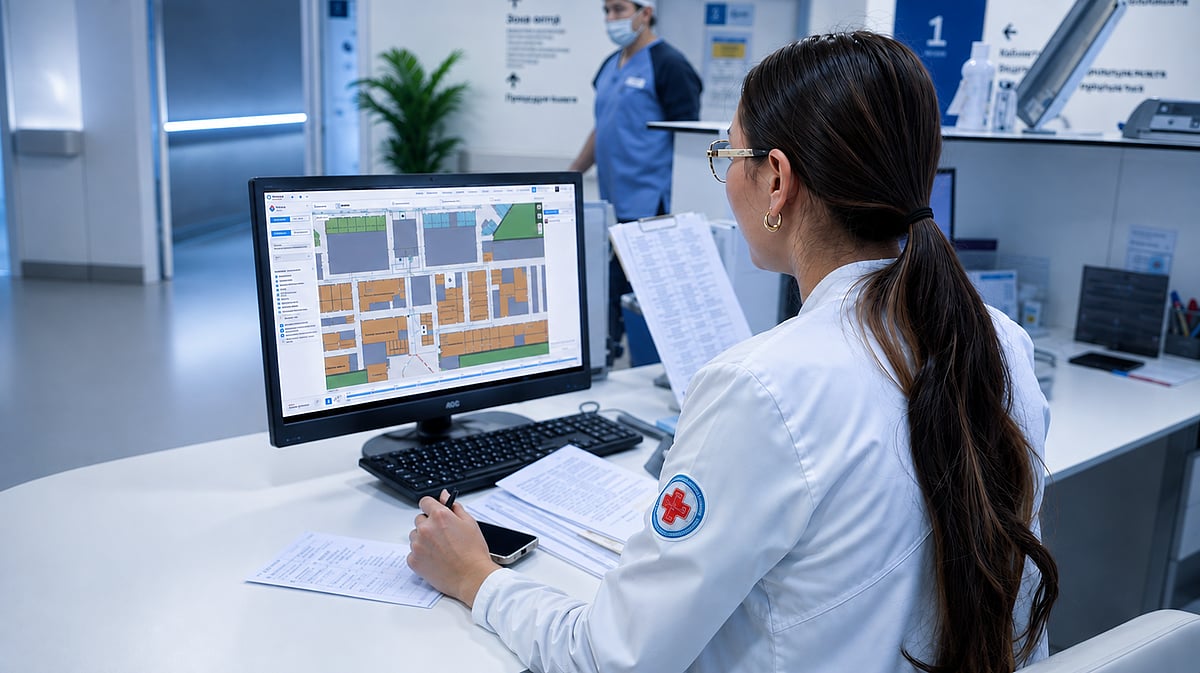
A building’s digital twin is a digital model that replicates a real object. But its value is only revealed when it solves real problems. In hospitals, patients cannot find the right office; in airports, passengers miss flights; in property management companies, requests take days to process; and students spend their first weeks searching for classrooms. INP solves all these problems. The platform offers tools for each of these scenarios, from navigation and flow management to an electronic dispatch service.
A building’s digital twin stops being an abstract technology and becomes a tool that saves time, reduces the burden on staff and improves people’s experience. That is why such solutions are in demand in the UAE, where technology and comfort are valued equally highly.
Russian technologies conquer global markets
Where else are such solutions emerging? Russia today is actively developing technology and becoming a visible player on the global market. And one of the tools helping Russian companies enter the international arena is the Made in Russia programme.
Indoors Navigation’s products have received the Made in Russia certificate — confirmation that the solution meets high standards of quality and reliability. The Made in Russia programme is a voluntary certification system created to promote Russian non-commodity goods on international markets.
This is particularly important for the UAE market. In a region where technological solutions from many countries are represented, the customer needs to understand whom to trust. The Made in Russia certificate works as a filter: it helps distinguish a verified product from the many offerings and makes the choice a conscious one. For local partners, it is a signal: this is not a random developer, but a company that has passed official certification and meets the stated standards.
What exactly makes INP unique? The platform does not simply build routes inside a building. It combines several technologies in one system. INP uses a building’s digital twin and supports multiple positioning standards at once — Bluetooth, Wi-Fi, UWB, RFID, LoRa and others. This means the customer does not need to change equipment or tie themselves to a single vendor. The system works with what is already installed. Positioning accuracy using Wi-Fi RTT reaches 30 centimetres, a level that allows you not just to find an office, but to track the movement of equipment in a warehouse or staff in real time. Integration of the SDK and API takes just two weeks, from order to launch. The platform also supports both cloud deployment (SaaS) and operation on the customer’s servers (On-Premises), critical for organisations working with sensitive data.
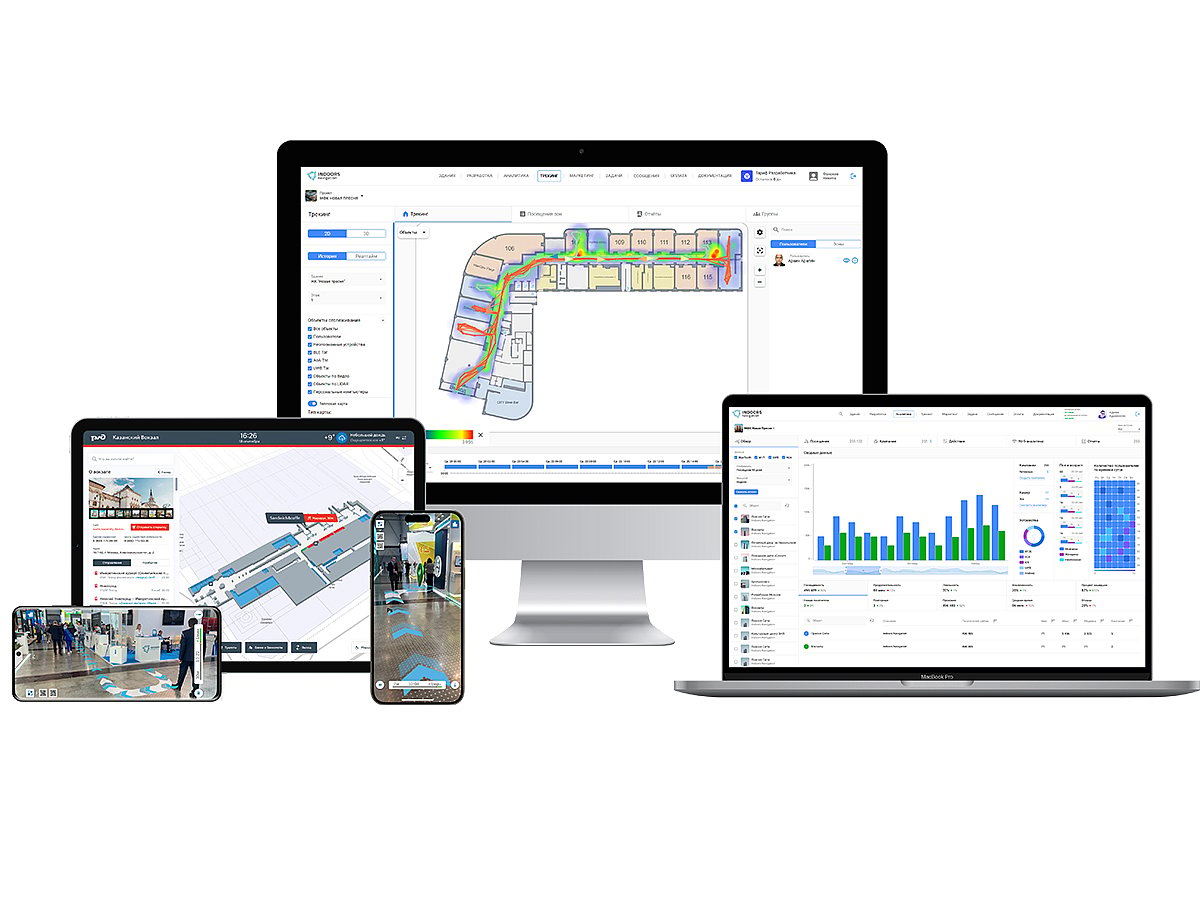
INP is a unified environment that collects visitor analytics, manages IoT equipment, embeds marketing tools and handles tasks from room booking to asset tracking. It is this comprehensiveness that makes INP competitive against analogues.
Indoors Navigation has already delivered numerous projects at home and is actively entering foreign markets. The company’s export potential goes beyond Georgia, where it already operates. Its near-term plans include taking part in GITEX Global in Dubai, the region’s largest technology exhibition, a venue where technology companies and potential partners from around the world meet.
In addition to the exhibition, the company plans a project at Jakarta airport, as well as a navigation project in a shopping mall in Ecuador. This shows that the solution is already ready to work at international sites and adapts to different markets.
Russian technologies are becoming part of the global market. And the Made in Russia programme helps these technologies find their way to foreign customers, through certification, support and participation in international events.
A building’s digital twin is no longer an experiment; it is becoming the standard for the modern city. Its strength lies not in beautiful visualisation, but in real solutions: helping a patient find the right office, a passenger avoid missing a flight, a resident getting help faster, a student finding a classroom. These are technologies that make space understandable and convenient for people. And Made in Russia is the benchmark that helps find them.