
Table of Contents
Every day, Mrs H walks into Dubai’s Stomping Grounds. Sunday might be missed occasionally, but that’s rare. She has breakfast and two or three coffees during her visit, spending around Dh250 a day. She is almost family; the baristas know her too well, and with each coffee, she receives a handwritten note. It’s a tradition, now.
Mr O has Table 14 at the café. He orders the ‘usual’, and needs three extra-hot coffees and two bottles of water as he works. He doesn’t want to be disturbed. He spends around Dh120 daily, on average.
Mr Ferrari (the team admits they still don’t know his real name) shows up in one of his two Ferraris between 7:15 and 7:30am. Dressed smartly, he is always in the middle of a phone call. He doesn’t say a word to the staff; they already know that it’s time to start brewing his Espresso Orange. He takes it, taps his card and off he goes. He finishes his beverage by the time he reaches the front gate and is usually gone within minutes.

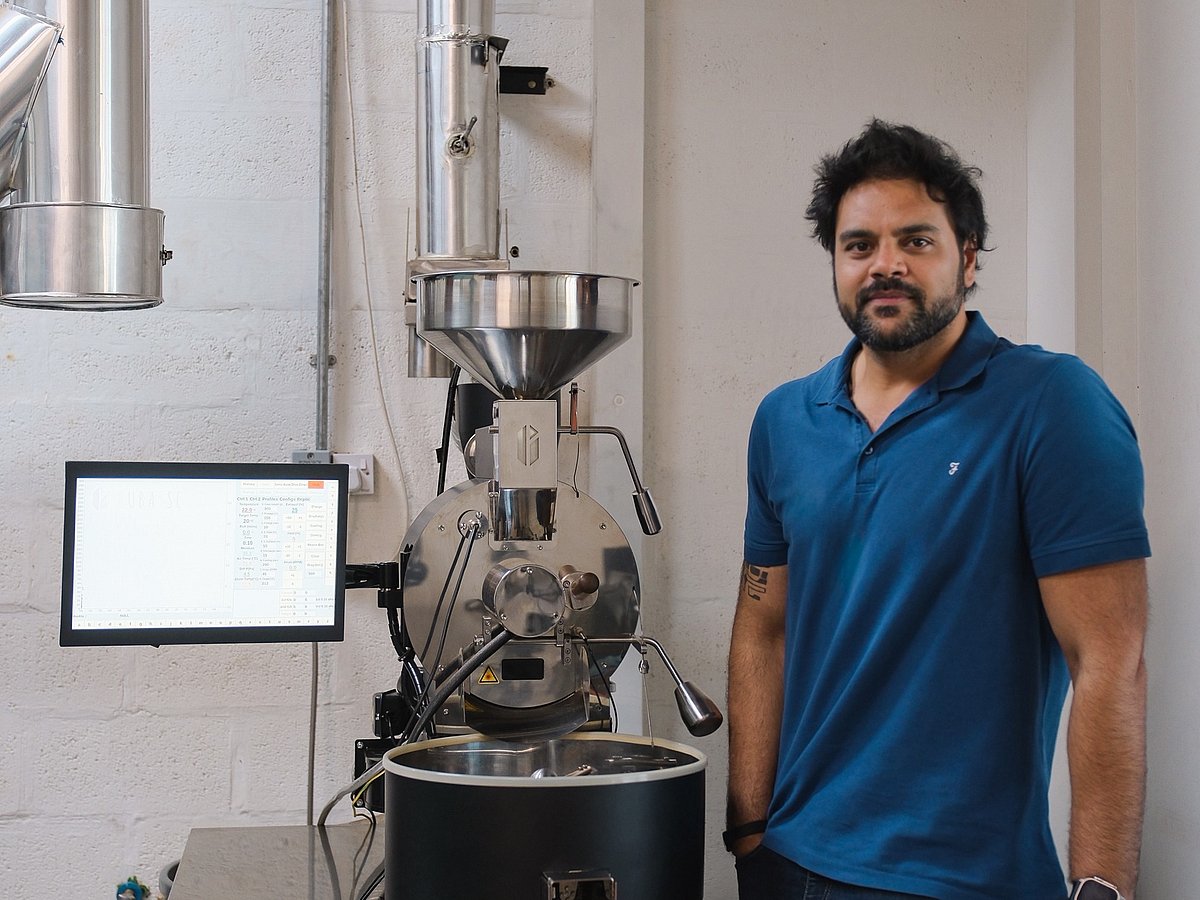
These are just some of the regulars and a glimpse at their coffee habits at Stomping Grounds, Dubai, as owner Ryan Godinho tells us. A coffee is a daily expense that cannot be trifled with for most. Some need it in the morning to kick off their day, others need it at regular intervals. Godinho has seen the range first-hand. “Someone popping in once a day for a single coffee might spend around Dh30, while someone who visits multiple times a day, or treats us as their home away from home for a few hours, can easily spend Dh200 or more,” he says.
So, here’s a question for all of us coffee drinkers: when we keep buying ‘just one coffee’, how much does that Dh20, Dh30 or Dh50 cup actually add up to?
The math is a little caffeinated too.
What does a daily coffee actually cost?
Our three regulars at Stomping Grounds are just a smidge of an example of how extensive the range can be. One customer spends around Dh30 on a single daily coffee; another can spend Dh120 during a working day, while someone who treats the café as a second home can easily spend Dh200 or more.
Moreover, the arithmetic isn’t just about how much someone spends on each visit. It also depends on how often they visit the café or order a coffee during the day.
For instance, at The Coffee Lab in Port Rashid, founder Osama Belshalat says regular customers often come in twice a day, with daily spending on coffee beverages ranging from around Dh50 to Dh100. At Kairos, founder Shiraz Sarwar says regulars spend around Dh40 a day, with most returning at least three times a week. At Uptown Social, Managing Partner Aleix Garcia sees many customers visiting three to five times a week, spending between Dh60 and Dh100 depending on their coffee choice.
So, for someone buying a Dh25 coffee five days a week, that works out to Dh125 a week, around Dh540 a month and approximately Dh6,500 a year.
At Dh30 a day, five days a week, the annual figure rises to about Dh7,800. For someone spending Dh50 a day, the same five-day-a-week habit comes to around Dh13,000 a year.
The figures can climb a little further when coffee stops being a single drink and becomes part of a longer café visit with breakfast, pastries or snacks, or a different drink added to the bill. As Godinho puts it, a customer visiting once a day for a single coffee and someone spending hours at a café are effectively participating in two very different spending habits, even though both may simply think of themselves as ‘going for coffee’.
And that is where ‘just one coffee’ starts to look different: Not at the counter, but on the monthly or annual statement.
Why Dh25 doesn’t feel like Dh6,500
It’s only Dh25, we tell ourselves. Plus, we really need that coffee in the morning. Okay, maybe that afternoon too, as it has been a rough workday. Count another one for the evening, as you need to drive home.
The truth is, while we cherish our coffee habits, they are rather easy to overlook, especially when the annual figure can run into thousands of dirhams. The answer, says Jafar Hashem of Zentara Solutions, an entrepreneur and investor, is that people tend to think about the individual purchase rather than the pattern.
“We judge the purchase, not the habit,” he says. “Dh20 doesn’t feel expensive. But Dh20 every day is more than Dh7,000 a year. The amount is small. The repetition isn’t.”
A Dh25 coffee does not demand the same attention as a Dh500 bill. It is a small transaction, made quickly and often as part of an existing routine. By the time the month is over, however, dozens of those small decisions may have accumulated. “A large purchase gets your attention. A small one gets forgotten,” Hashem says. “That’s why frequent spending can be more dangerous to your budget than it feels.”

‘Let’s grab a coffee’
And coffee isn’t just a tangible, steaming cup of joe either; it has also woven its way into the social life of cities like Dubai. “You meet someone and the first thing you say is, ‘Let’s grab a coffee,’” says Aaliya Lala, a travel and lifestyle content creator and entrepreneur. “But usually, it is never just one coffee.”
The coffee meeting turns into two or three hours at a café, followed by another beverage. Then you’ve had a dessert as well, because what feels better than coffee and cake? Lala says she can easily spend Dh100 or more on days when she is out for meetings or socialising, separate from lunch or dinner.
As most would agree, coffee is an ‘affordable little luxury’. Nicole Remedios, a PR professional, observes that the appeal is not necessarily the drink itself, but the experience of sitting in a café, enjoying the ambience and taking a break from the routine. “I may not be able to spend on bigger luxuries all the time, but I can sit in a nice café with a good cup of coffee and enjoy the moment,” she says.
The distinction between a treat and a routine is important, says Anna Ivanova-Galitsina, a PR advisor in Dubai. “The danger is exactly this: when you start taking an innocent treat as an everyday routine expense and stop calculating and appreciating it,” she says.
She says the spending can grow further when the coffee itself stops feeling like the treat. “It’s bad enough to stop calculating. But when you stop appreciating the coffee that you buy as a treat, you invest in other innocent treats. And that’s how expenses grow.”
Those extras could be a pastry or a sandwich, she says, or simply choosing a coffee at a more expensive café. Looking at the habit as a monthly expense can make the pattern more visible: at Dh25 per coffee, buying one on weekdays works out to around Dh500 a month, while buying one every day comes to Dh750. Add pastries or other food, and that total can more than double.
As a result, the purchase feels justified. However, the problem, as Hashem notes, is not necessarily that someone buys coffee every day. “Financial responsibility isn’t about never spending on yourself,” he says. “If you can afford your lifestyle, meet your commitments and still save for the future, enjoying a coffee every day isn’t a problem.”
The more useful question, he says, is not ‘Can I afford Dh20?’ but ‘Can I afford this habit?’
The distinction matters, as the answer can change depending on how often the purchase is made, what else is being bought alongside it and what the money could otherwise be used for. For some coffee drinkers, the calculation may still be worth it. The cup is more than just a beverage; it’s the peace before work rituals begin, a meeting place, and a break during a long, exhausting day. The point, then, is not necessarily to give up the coffee. It is to notice the habit before it becomes invisible.
Do coffee drinkers actually cut back?
So if coffee is truly woven into the fabric of the day, what happens when prices rise or budgets tighten? The answer from café owners is not quite as simple as people giving up their daily cup.
At Stomping Grounds, Godinho says his regulars have generally remained loyal despite price changes. He says customers rarely comment on their bills or question price increases, although the café cannot know how each person adjusts their wider household budget. “What we consistently see is that coffee has become such an established part of their routine that price is rarely, if ever, the deciding factor,” he says.
At The Coffee Lab, however, Belshalat says there are signs that customers can become more cautious when spending comes under pressure. “We have noticed over the past weeks that consumer spending has become a bit more restricted,” he says. “With that said, we still notice many familiar faces.” He believes customers may cut back without giving up coffee altogether, finding ways to preserve what they see as a small pleasure.
Meanwhile, at Kairos, Sarwar has noticed a similar pattern. Some customers become more cautious when prices rise, he says, perhaps swapping one café coffee for an office brew or something made at home. However, they may still continue buying coffee outside several times a week. The distinction is crucial: Cutting back does not necessarily mean abandoning the habit.

And at Uptown Social, Garcia says many neighbourhood customers return three to five times a week, spending around Dh60 to Dh100 depending on their order. He says the café often doubles as a place to work, meet friends, have lunch or simply unwind, making the visit about more than the coffee itself.
For someone who normally buys seven coffees a week, reducing that to four still preserves the ritual while lowering the overall spend. Hashem says that can be a more realistic approach than trying to eliminate every small pleasure. “If you enjoy seven coffees a week, you don’t necessarily need to go to zero,” he says. “Sometimes going from seven to four is enough to create a meaningful saving without taking away something you enjoy.”
The same principle applies to the coffee itself. A person may choose a less expensive drink, buy fewer add-ons or use coffee at home or at work on some days, while keeping the café visit for the occasions that matter most. The point is not that every Dh25 coffee needs to be scrutinised. It is that repeated spending becomes easier to manage when it is visible.
So, is that coffee still worth it?
Ask the regulars at Stomping Grounds and the answer is obvious. Mrs H comes for the handwritten note tucked beside every cup. Mr O comes for Table 14 and the quiet to work through three extra-hot coffees. Mr Ferrari comes for thirty seconds and an Espresso Orange that’s ready before he’s finished his sentence.
None of them is really buying coffee. They’re buying a ritual: a place to land, a pause in the day, a small thing that goes right every time. That’s why “just stop buying coffee” has never worked as advice. You can’t budget away a ritual by pretending it’s only a drink.
What you can do is look at it properly, all of it, not one tap of the card at a time.
“Your financial life is rarely changed by one Dh30 decision,” Hashem says. “It’s shaped by the decisions you repeat.”
So keep the coffee, if it’s worth it. Just see the whole habit for what it is.