
Table of Contents
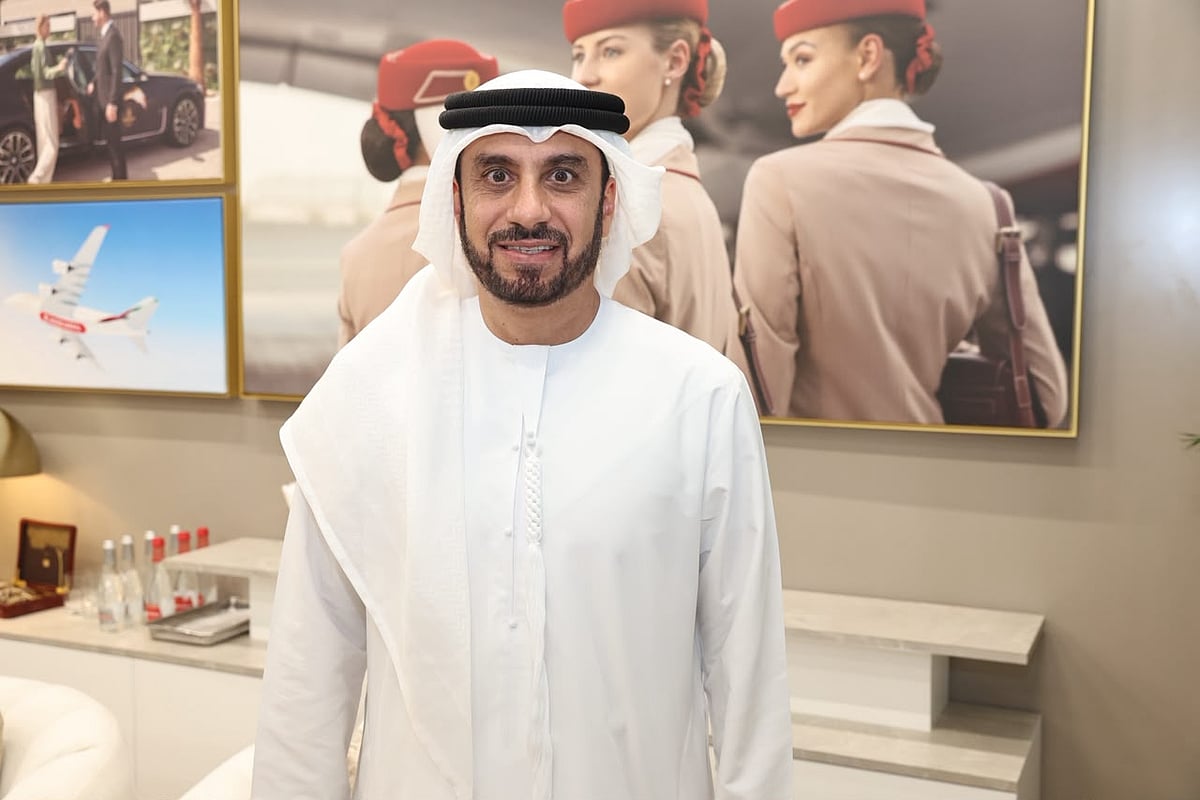
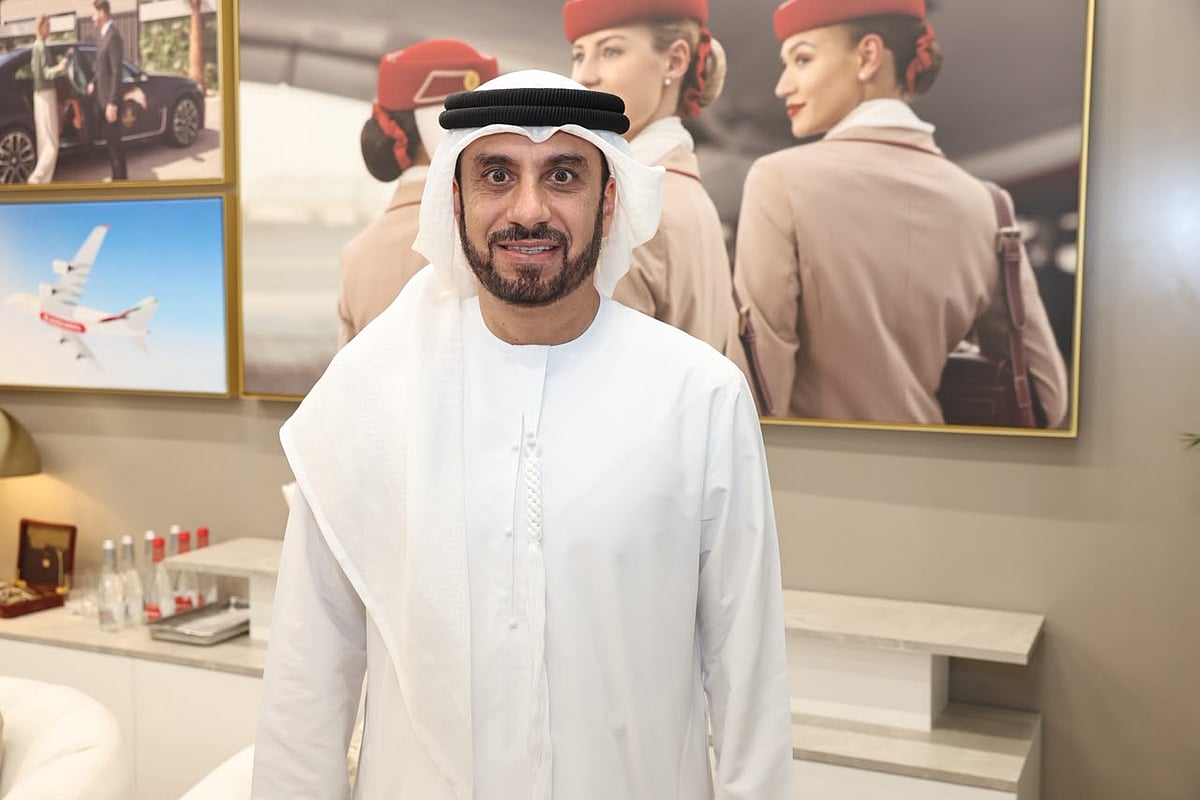
Dubai: Emirates’ move to the Dubai’s new passenger terminal at Dubai World Central (DWC) is progressing in phases, with Dubai South’s investment on track for a 2032 target, the airline’s Deputy President and Chief Commercial Officer, Adnan Kazim, told Gulf News on the sidelines of Arabian Travel Market (ATM) in Dubai
Sign up for our daily business newsletter, Cheques & Balances
“The DWC, the Dubai South team are well on track in terms of their investment. They haven’t stopped any of that,” said Kazim. “The target still remains to be around the 2032.”
Kazim said Emirates was already putting its own investment into “creating a new hub and new place” at the airport, framing the move as gradual rather than a single switch. “That’s something a roadmap, I would say. It will come over phases.”

Cargo hub
Cargo is shaping up to be central to the DWC transition. Kazim pointed to engineering infrastructure already under way.
“We already, I think, the team announced about the engineering hangars in DWC. That was one component,” he said, referring to the $5.1 billion engineering complex at Dubai South slated to become the world’s most modern and advanced maintenance, repairs and overhaul (MRO) facility.
“But there are so many other components of even the Sky Cargo mega hub that will be created in DWC for the future.”
He said the facility would become the “core hub” for Emirates SkyCargo, built around a mega terminal and expanded freighter capacity. “Definitely, that will play a vital role for our Sky Cargo team to be able to connect the world with Dubai.”
However, Kazim did not provide a precise a timetable for when Emirates’ passenger operations would shift from Dubai International (DXB) to DWC.
Winter outlook
Kazim’s DWC comments came alongside a broader update on Emirates’ performance as it heads into the winter season after a tough first-half of the year. He described bookings as tracking positively despite a summer disrupted by regional conflict.
“The outlook overall looks quite promising, quite positive,” he said, pointing to a summer seat factor of around 75 per cent. “We are quite tracking similar to last year’s booking, even though we are sitting at 93 per cent of the capacity today, which is showing quite a positive signal.”
Travellers are booking later than usual, he said, but demand is strong across the board. “They’re coming quite late, but they are coming in a very positive way” — across Europe, the UK, China, Africa and the Americas.
He linked the momentum to Dubai’s autumn calendar. “Dubai is quite busy in the agenda of the winter with so many activities and so many exhibitions happening and taking place,” he said, citing October half-term holidays in UAE as an additional driver.
Emirates figures show the airline carried more than 8.6 million passengers between July and August, operating at roughly 93 per cent of pre-disruption capacity. Seat load factors on routes to and from West Asia, Europe, the Middle East, the Americas and Africa all ran above 75 per cent over the summer, with particularly strong performances on Indonesia, Côte d’Ivoire and UK routes.
Demand from several markets is currently running ahead of last year, including South Africa, Brazil, India, Portugal, Egypt, Ghana, Colombia, Saudi Arabia, Pakistan and, via the flydubai partnership, Nepal.
Dubai’s pull
Kazim said the city itself remains a core driver of demand. “The city really has everything to offer — from the shopping mall to the beach to the activities around to the quality of the restaurants, the standard and high quality of the hotels,” he said.
“Definitely, I think that should really bring in more people as we progress,” said Kazim
Emirates said more than half a million customers arrived in Dubai on its flights in the second half of August alone, up 7 per cent year-on-year — a mix of UAE residents returning ahead of the school year, new residents relocating for work, and visitors on late-summer breaks.
Over the summer, the airline also sweetened its offer to travellers: one free date change anywhere on its network, unlimited free date changes on Dubai journeys, reduced refund fees on Dubai bookings, and a new Comprehensive Travel Cover policy — which the airline describes as a first-of-its-kind product including medical cover against conflict and airspace disruption, backed by airline-managed accommodation, ground support and rebooking.
Premium push
Asked for his ATM highlight, Kazim pointed straight to its new Premium Economy cabins, the first electrically powered seats featuring a full-height adjustable privacy screen.
“For us, the highlight was around the premium economy seat,” he said, describing a new seat for the A350 with privacy dividers between passengers and wireless charging.
“Premium Economy remains to be the important component of the cabin that we’re trying to invest into and even expand as we progress,” he said. “From the demand side, standing quite solid. Which is again why we’re trying to put more investment behind it.”
Emirates said 104 aircraft — 53 Boeing 777s and 51 A380s — have now completed its retrofit programme, taking the number of aircraft with Premium Economy and its latest cabin products to 137.
That figure is expected to reach 155 by the end of December. Premium Economy is now flying to 90 destinations, with six more — including Paris, Delhi and Stockholm — due before year-end.
This year has also brought the industry’s first U-dream headrests on A350 Economy Class, alongside next-generation Emirates Lounges already open in Munich, Frankfurt and Manchester.
Fleet growth
Emirates has taken delivery of 18 aircraft since January — 11 A350s and seven Boeing 777 freighters — with six more A350s due before the end of December. The A350 currently flies to 30 destinations from Dubai, rising to 36 by year-end.
Helsinki joins the network on October 1 with the A350. Accra, Tokyo Narita, Ho Chi Minh City and Hanoi are getting second daily services, and one daily Delhi service is being upgraded to an A380. The A350 will also reach Larnaca, Malta, Nairobi and Hamburg from late October, and Mauritius in November, while retrofitted 777s arrive on the Stockholm route in October and Frankfurt in November.
Looking further ahead, Kazim said Emirates’ passenger experience by 2030 would keep evolving through new aircraft — including the Boeing 777X, expected next year — revamped lounges, modernised retail concepts, and Starlink connectivity, which is currently fitted on close to 50 aircraft and expected to reach 232 by next year.
“We never stopped investing into the future,” Kazim said, describing the strategy as built around “the Dubai DNA” of staying ahead of the competition.
ATM deals
Emirates signed 11 partnership agreements on the second day of ATM.
Among them was a new memorandum of understanding with the Ras Al Khaimah Tourism Development Authority to drive visitor traffic to the emirate, alongside a renewed partnership with the Sri Lanka Tourism Promotion Bureau — a country that welcomed 2.3 million international visitors last year, up 15.1 per cent — and a new MoU with the Japan National Tourism Organisation tied to Emirates’ planned 28 weekly flights to Japan from October.
The airline also renewed its long-standing tourism partnership with the Maldives, whose air arrivals rose almost 10 per cent last year to 2.25 million, and expanded its codeshare arrangement with Kuwait Airways into a reciprocal agreement.
Further agreements covered European trade partnerships, marine crew travel and support for Overseas Filipino Workers through the Philippines’ OWWA.