
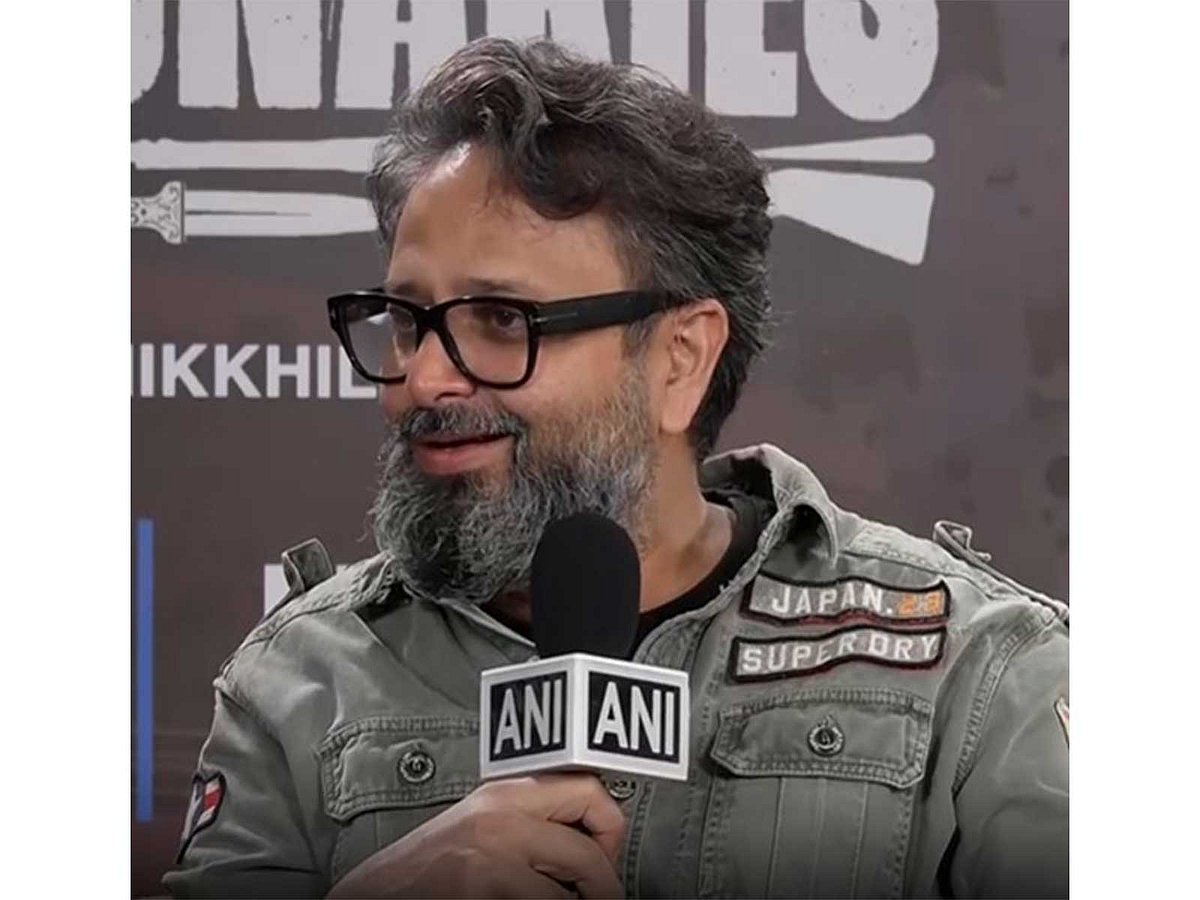
For a filmmaker who gave us Kal Ho Naa Ho, Nikkhil Advani has certainly kept audiences guessing. His filmography has swung from romance and family drama to terrorism, war, history, patriotism and social injustice. There is Kal Ho Naa Ho, D-Day, Airlift, Mrs Chatterjee vs Norway, Freedom at Midnight and now The Revolutionaries, his latest series out on Prime Video now.
So, when I tell him that his career looks like one long identity crisis, he laughs.
“There’s a lot of love in The Revolutionaries,” he says, almost as though he is determined to reassure anyone expecting a sombre historical drama series, out on “The Revolutionaries is not some staid, very serious political drama.” Instead, he says, the series is about “josh, joshila, junoon”, roughly translated as passion, fervour and obsession, and young people refusing to accept injustice.

And if there is one thread connecting the wildly different projects he has made over three decades, Advani says it is not genre, politics or even history. It is a compelling unapologetic drama.
“I am a melodramatic person,” he says with such pride. “I like drama. I like drama everywhere. I want drama in my writing rooms. I want drama on the set. I want drama in my house.”
His wife, he adds, is less enthusiastic about this particular personality trait.
“She is tired of the fact that she says, ‘Why are you so dramatic about everything? Why the hell don’t you leave your drama home in your studios and come?’”
But the drama in The Revolutionaries comes with a very specific purpose.
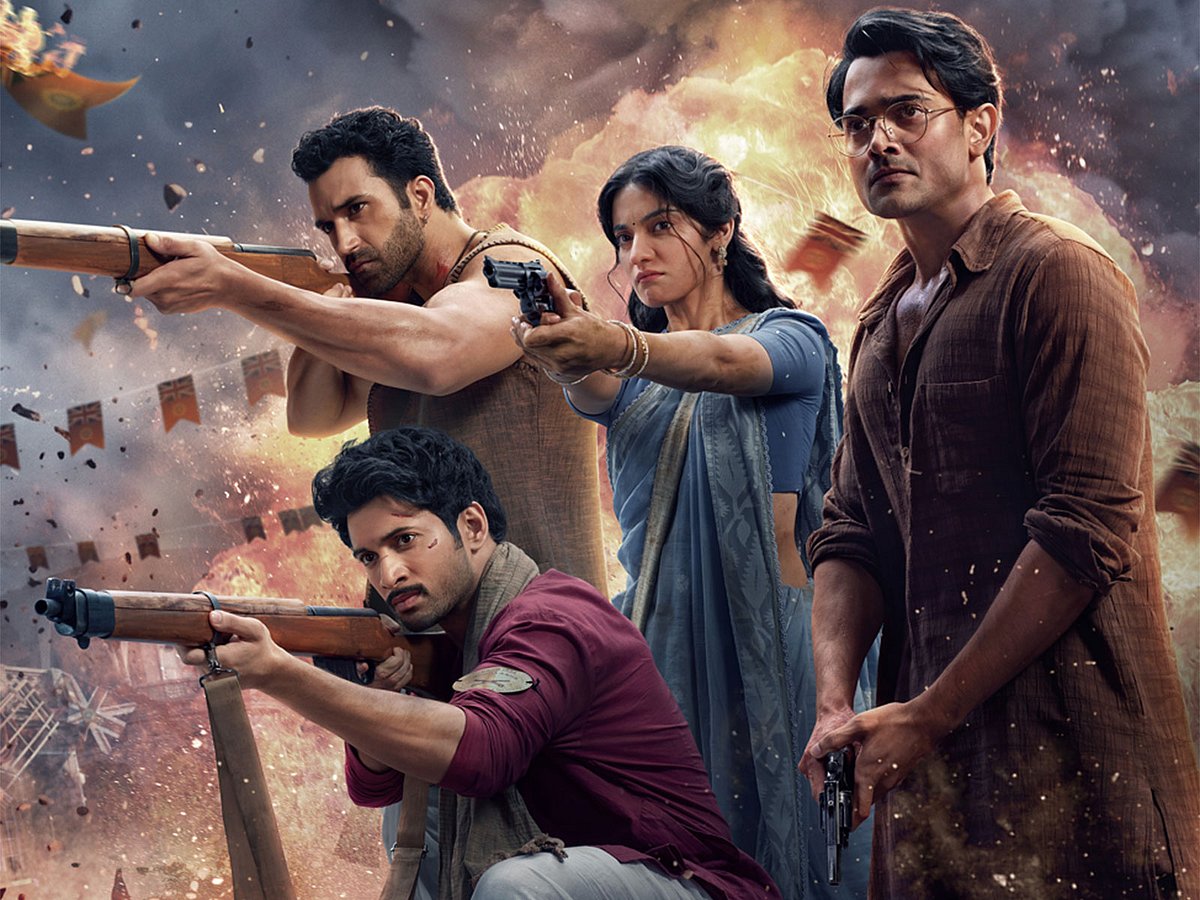
Set in the early 20th century, the series explores a generation of young revolutionaries who questioned British rule and sought to challenge the machinery of colonial oppression. Advani is particularly interested in the youth behind the movement, rather than viewing the independence struggle solely through the more familiar figures of Gandhi, Nehru and Patel.
“Revolutions are done by young people,” he says. “It’s something that happens globally.”
That idea also gives the series an unexpected contemporary resonance, arriving at a time when young people and Gen Z-led protests have dominated headlines around the world.
But Advani insists the parallels are not what drove the project.
The story, he says, belongs to its own historical moment. What fascinated him was discovering how interconnected some of these revolutionary movements were, stretching across India and beyond.
“I always thought about revolutionaries in pockets and in silos,” he says, referring to figures such as Bhagat Singh, Chandrashekhar Azad, Udham Singh and Subhas Chandra Bose.
His research led him towards a larger network, including figures such as Rash Behari Bose and Sachindranath Sanyal.
“I never knew that actually Rash Behari Bose had organised it, had structured it,” he says, describing a network that stretched across Bengal, Punjab, Banaras, San Francisco and Germany.
That discovery, for Advani, became the heart of the story.
And it is also why he resisted the temptation to cast established A-list stars as young revolutionaries.
“I didn’t want my 25-year-old and 24-year-old revolution being played by 60-year-old super A-list stars,” he says. “Today you can’t get away with it. The audiences will call you out.”
Instead, he wanted actors who looked and felt young enough to inhabit that world.
Interestingly, Advani says he was not casting based on the social-media popularity of his young stars.
He admits he did not know Bhuvan Bam as an influencer and had not been following the enormous online fandom around some of the other actors.
“I live in my cocoon,” he says.
What he did know was that he wanted youth both in front of and behind the camera.
“I am 55 years old. I am the oldest person on my set,” he says, laughing. “I am like a nana or a dada on my set.”
His crew, many of whom had worked as associates on Freedom at Midnight, were promoted to heads of departments for Revolutionaries.
The generational divide has clearly been educational.
“I’ve learned ‘work-life balance’, whatever,” he jokes, referring to the Gen Z colleagues who are apparently more than willing to keep their older director in check.
There is, however, something much more serious underneath Advani’s approach to the series.
He is acutely aware of the dangers of reducing patriotism to chest-thumping.
“I don’t think that patriotism should be about chest-thumping,” he says.
For Advani, patriotism is deeply personal. He points to Mrs Chatterjee vs Norway, Airlift and other films he has made as examples of stories that, in his view, explore patriotism without resorting to simplistic flag-waving.
“I only want to weaponise love,” I tell him during our conversation.
He agrees with the sentiment, but takes it further.
“I don’t think revolution can happen without love,” he says.
That is perhaps the most revealing link between the filmmaker who made Kal Ho Naa Ho and the one now telling a story about revolutionaries.
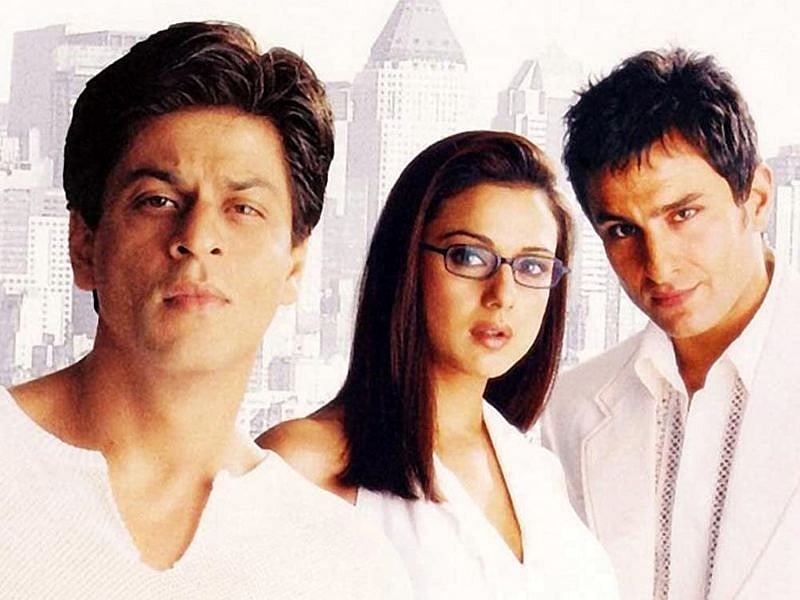
Love, he argues, is not necessarily soft or apolitical. It can be the force that makes people stand up against injustice.
His politics, therefore, are not something he believes should be kept outside his filmmaking.
“Why should I separate it?” he asks when I question whether he can keep his personal politics away from his work.
But he is also careful to define what that politics means to him.
“It’s not about armed resistance. It’s not about non-violence. It’s about injustice.”
For Advani, the responsibility becomes even greater when filmmakers deal with history because cinema has the power to make audiences feel that they have witnessed the past.
“Films are a more powerful tool,” he says. “Twenty-three years later, people meet me and say that my life changed because of Kal Ho Naa Ho.”
That influence, he believes, comes with an obligation.
“I think that is extremely important to be responsible. It’s extremely important to not just say that I’m going to do something for the sake of entertainment. I find that highly irresponsible.”
That may be the closest thing Advani has to a filmmaking manifesto.
He is still, unmistakably, the man who likes drama. He still wants heightened emotion, music, spectacle and big cinematic moments. The Revolutionaries has nine songs and a large-scale action component, something he acknowledges may surprise viewers expecting a conventional historical drama.
“I was manifesting Sanjay Leela Bhansali,” he jokes at one point.
“On another day I was manifesting Subhash Ghai, or the third day I was manifesting Manoj Kumar.”
Yet beneath the theatricality is a filmmaker who believes that entertainment and responsibility do not have to be opposing forces.
Perhaps that is the real continuity between Kal Ho Naa Ho and The Revolutionaries. The genre may have changed. The politics may have changed. The scale certainly has. But Advani remains interested in people who feel deeply, love fiercely and are willing to act on those emotions.
And, yes, there is still plenty of drama.
“Always be dramatic,” I tell him at the end of our conversation.
His response is essentially the entire Advani philosophy in two words: keep going.