
Table of Contents
Schools across the UAE are set to introduce new internal measures starting tomorrow (Monday), in line with the “Guide to Reducing the Use of Digital Tools in Learning”, adopted for Grade 6 students in Cycle 2 schools nationwide.
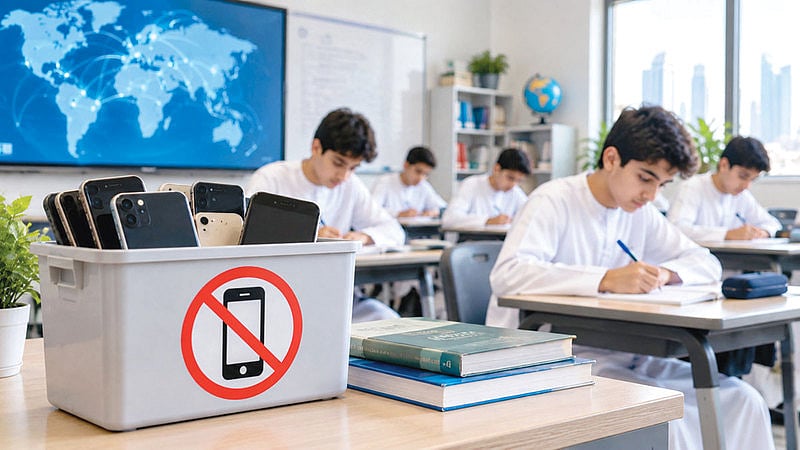
Under the new measures, students will not be permitted to bring laptops and other digital devices to school. The use of VPN applications and private virtual platforms on school premises will also be restricted, while greater emphasis will be placed on the use of textbooks and notebooks.
Get updated faster and for FREE: Download the Gulf News app now – simply click here.
School administrations have informed parents of Grade 6 students in both the general and advanced tracks that laptops will not be allowed at school from tomorrow and throughout the academic year, as part of the implementation of the guide.

The measures put textbooks and students’ notebooks back at the heart of classroom teaching and learning. They encourage handwriting, classroom discussion, direct interaction with teachers, activities and non-digital learning resources, while retaining technology as a supporting educational tool to be used when needed rather than as a permanent substitute for core classroom practices.
In circulars sent to parents, schools stressed that the decision applies only to Grade 6 students and does not extend to other grades. Parents were asked not to send laptops with their children from the specified date and to keep the devices at home until the end of the academic year.
The measures do not amount to a complete ban on technology
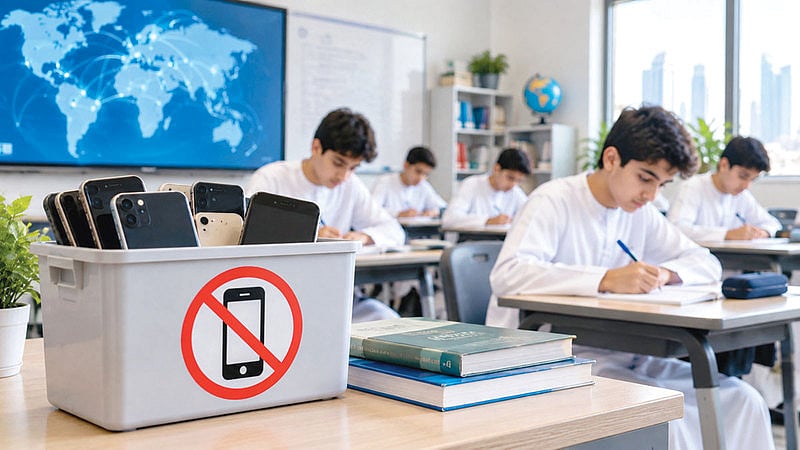
School circulars clarified that the new measures do not represent a complete ban on technology or a suspension of educational platforms.
Laptop use at home will instead be regulated according to the requirements of individual subjects and limited to situations where students need to access an educational platform, use a digital resource or complete a specific assignment.
Accordingly, laptop use among Grade 6 students will shift from unrestricted daily use at school to targeted and purposeful use at home, linked to a clearly defined educational need. The approach is intended to prevent students from remaining constantly attached to their devices without necessity and to reduce indiscriminate screen use under the guise of studying.
The decision establishes two complementary learning environments: the classroom, where learning is centred on textbooks, notebooks, activities and direct interaction; and the home, where laptops and digital platforms may be used when required and in accordance with teachers’ instructions.
Strengthening students’ relationship with books and giving families a direct role

Schools said the “Guide to Reducing the Use of Digital Tools in Learning” aims to encourage students to read directly from textbooks, record notes and solutions in notebooks, participate in classroom activities and collaborative learning, and benefit from a wider range of teaching methods.
The approach also seeks to avoid making computers a permanent requirement for explaining lessons or completing assignments.
At the same time, the measures place families in a more direct role in regulating technology use at home. Parents are expected to ensure that device use is linked to an actual school assignment, set appropriate time limits for educational platforms, distinguish between studying and personal browsing, and avoid allowing unrestricted device use under the pretext of completing homework.
School administrations stressed that successful implementation requires cooperation among all parties. Schools will regulate device use during the school day, teachers will determine when access to a digital platform or resource is necessary, and families will supervise the completion of assignments at home within clearly defined time limits and under controlled conditions.
Schools identify students without ministry-issued laptops
Meanwhile, government schools have begun identifying students who do not have ministry-issued laptops, in preparation for submitting their details and completing the procedures required to provide devices in accordance with Ministry of Education regulations.
The exercise aims to ensure that students in grades where computers are used at school are properly equipped, while also enabling Grade 6 students to access digital platforms and resources from home when required by their subjects.
Schools have asked families whose children have not received ministry-issued devices to register their details through an official website designated by the school for this purpose.
The registration requirements cover students up to Grade 10 in both the general and advanced tracks. Parents are required to provide the student’s name, ministry identification number, Emirates ID number, grade and class, as well as the parent’s details. They must also indicate whether the student has a personal laptop or tablet that was not provided by the ministry.
Schools stressed that devices will be distributed exclusively through the Ministry of Education and advised parents not to approach schools directly before an official announcement is issued.
Private schools ban VPN applications and restrict access to virtual platforms
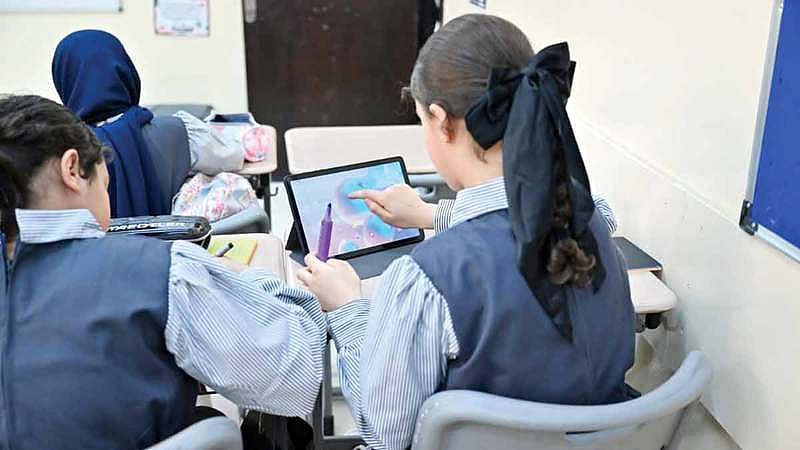
Private schools across the UAE have also decided to prohibit VPN applications on school premises and prevent students from accessing private virtual platforms either inside the school or through school networks, unless such access is explicitly authorised for specific educational or administrative purposes.
Schools have also established rules governing permitted and prohibited use of personal devices connected to school networks, both on campus and during extracurricular activities held outside school.
Programmes to protect students from cyberattacks and online threats
Schools have circulated responsible digital-use policies to students, parents, staff and visitors through their official communication channels.
They said they have established effective programmes and systems to protect students from online risks, including age-appropriate awareness programmes designed to educate students about cyber threats and the impact of digital habits on their safety.
Schools are also implementing internet-filtering systems to monitor students’ online activity on school devices and conducting regular analyses to identify network violations and potentially harmful trends.
In addition, schools are establishing teams to determine appropriate measures to support students who develop risky, excessive or illegal digital habits.
Five cyber risks students may face
Schools have identified five key online risks that students may encounter and against which they should be protected:
-
Exposure to inappropriate or illegal content.
-
Exposure to online content that could negatively affect their mental wellbeing.
-
Exposure to unsafe online communication, including contact with users operating fake profiles.
-
Engaging in personal online behaviour that could result in harm to themselves or others, such as participating in cyberbullying.
-
Exposure to scams, fraud and financial risks, including gambling and phishing.
Parents urged to monitor children’s digital use.
Schools have urged parents to monitor their children’s use of digital devices outside school premises and beyond school hours to ensure safe and appropriate online behaviors.
School circulars said restrictions on VPN applications within school premises constitute a precautionary measure aimed at limiting students’ access to content or platforms that could pose risks to their digital and psychological wellbeing. The measures are also aligned with the Cabinet decision regulating children’s access to social media platforms.
At the same time, schools cautioned that technological restrictions alone are not sufficient to provide the desired level of protection.
Addressing online risks requires an integrated approach combining filtering and monitoring tools with continuous awareness programmes, while strengthening students’ ability to distinguish between safe and harmful uses of technology.
Schools also stressed the importance of making restrictions clear and transparent to students and parents, while allowing legitimate educational and administrative uses. This is intended to ensure that precautionary measures do not become an obstacle to benefiting from modern technologies in education.
Alongside restrictions, schools said efforts must focus on building a culture of digital responsibility among students and maintaining open discussions with them about the risks of inappropriate content, cyberbullying, fraud and communicating with strangers. This would provide students with a personal line of defence alongside the technical safeguards implemented by schools.
Parents urged to attend school orientation meetings
Social workers and academic counsellors have urged parents to participate in the orientation sessions, meetings and information events organised by schools.
They said most government and private schools are expected to hold orientation meetings during the current week to explain their educational and academic plans for the new school year.
These meetings give parents an opportunity to hear directly from their child’s classroom teacher, understand expectations for the academic year, and learn more about the curriculum, discipline and behaviour rules, assessment methods, daily routines and the broader expectations associated with being part of the school community.
The meetings are part of an active school-family partnership that provides an important foundation for student success and contributes to creating a supportive and stimulating learning environment in which students can achieve their full potential during the academic year.
What online risks may students face?
School administrations have also emphasised in their circulars to parents that protecting students from online risks does not stop at the school gates. Families continue to play a central role in monitoring their children’s use of digital devices and online platforms outside school hours.
Schools stressed that effective parental supervision does not mean spying on children or imposing an outright ban on technology. Instead, it involves establishing clear rules for digital use, maintaining regular conversations with children about the content they encounter and the people they communicate with, and teaching them how to deal with fake accounts, cyberbullying, phishing and online fraud.
Parents were also urged to pay attention to sudden changes in their children’s behaviour or digital habits, as these may indicate that they are experiencing an online problem or have been exposed to a cyber-related risk.
The overall approach, schools said, is intended to strike a balance between protecting students from the risks associated with excessive or unsafe digital use and preserving technology’s role as a valuable educational tool when used purposefully and responsibly.