

Abu Dhabi: The General Secretariat of the National Committee for Anti-Money Laundering, Combating the Financing of Terrorism and Financing of Proliferation has launched the third round of its National Risk Assessment (NRA) on money laundering, terrorist financing and the financing of weapons proliferation, today, on the third day of the 15th United Nations Congress on Crime Prevention and Criminal Justice, taking place in Abu Dhabi.
The National Risk Assessment provides a foundation for policymaking and setting priorities in the fight against financial crime, Hamid Saif Al Zaabi, Secretary General and Vice Chair of the National Committee for Anti-Money Laundering, Combating the Financing of Terrorism and Financing of Proliferation, said and added:
“The third cycle draws on accumulated national expertise and advances in data quality and coordination among authorities, enabling a deeper understanding of risks and directing efforts and resources towards the areas of greatest risk and impact.”


It builds on the findings of the two previous assessments, the first completed in 2018, and established a national baseline for understanding risks.
The findings of the second assessment, approved in 2024, broadened the scope of data and participation. Its findings contributed to the development of the 2024–2027 National Strategy, which comprises 11 strategic objectives, 50 sub-objectives and more than 250 initiatives.
84 authorities and the private sector involved
The third assessment will use more advanced tools for analysing financial data and brings together 84 authorities and the private sector to update the national understanding of risks, identify priorities for addressing them, and develop policies and measures that improve the effectiveness of the national system.
Ebrahim Al Alkeem Al Zaabi, Director of the National Risk & Policies Department at the General Secretariat said the aim is not only to describe risks but also to inform future decisions, direct resources effectively and lay the groundwork for the national strategy and action plan.
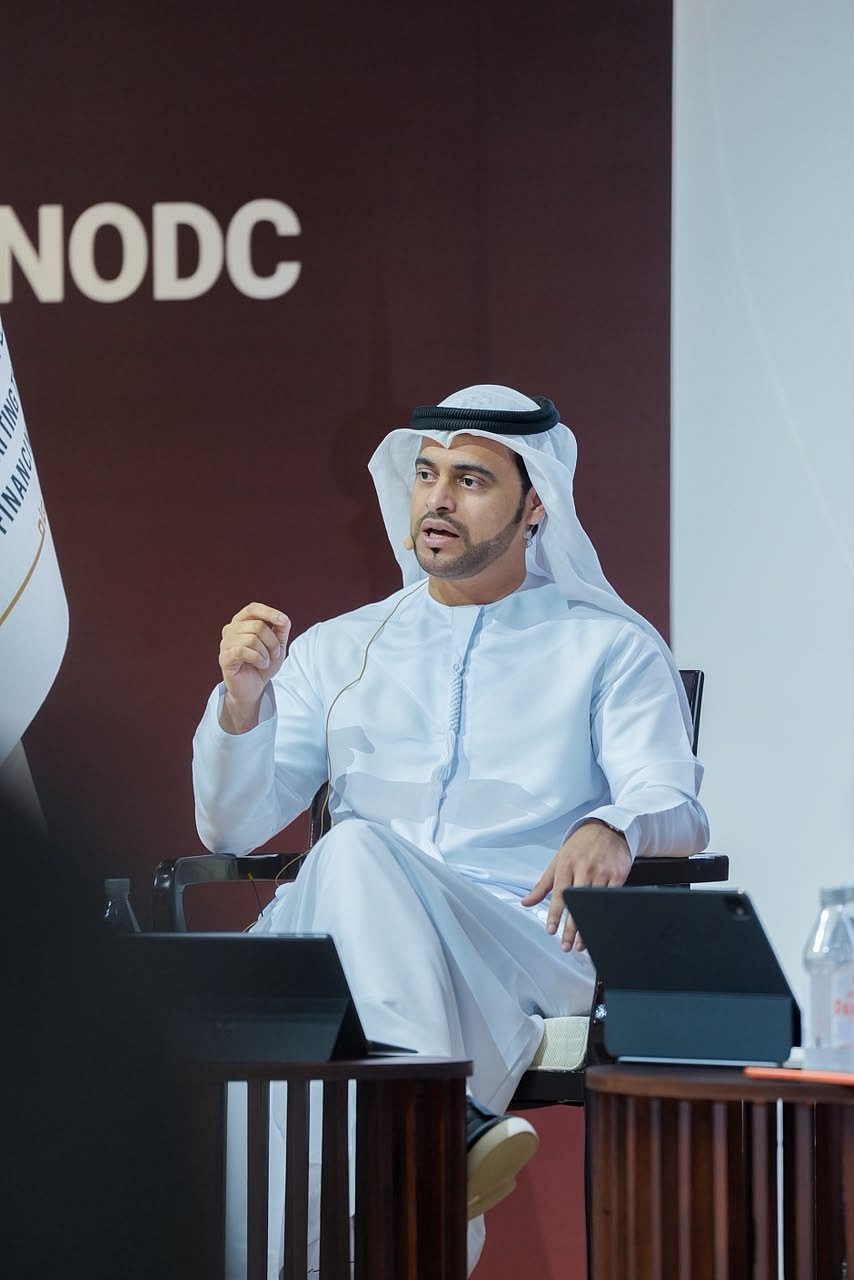
He described the effort as “reflecting the UAE’s commitment to transparency and innovation in safeguarding its national economy.”
Eight specialized teams
The cycle covers more than 20 sectors and will feed into a strategy running to 2028 as well as the national action plan currently in progress.
It will be carried out by eight specialised teams. Their remit covers money laundering threats, financial institutions, legal arrangements, terrorist financing and targeted financial sanctions.
The assessment will have five stages: defining its scope and initial priorities; collecting data and evidence; analysing risks; validating findings against multiple sources; and translating the findings, priority risks and material data gaps into inputs for the 2028 National Strategy and National Action Plan.
Fawzia Al Ali, Head of National Risk Section, outlined the governance framework. She said the teams will examine national threats, legislation, procedures and resources, as well as specific sectors, including the financial, virtual asset and certain non-financial sectors.
She stressed that the assessment is carried out through the coordinated efforts of federal and local authorities, supervisory authorities, law enforcement agencies, the Financial Intelligence Unit, customs authorities, and registration and licensing authorities, alongside private sector contributions through questionnaires, interviews and sectoral data.
More than 20 criminal typologies
The assessment looks at more than 20 criminal typologies and 21 predicate offences to understand where illicit proceeds come from, how they are moved, and how they are integrated into the economy, Brigadier General Abdulaziz Abdullah Al Ahmad, Director General of the Federal Criminal Police, Chairman of the Money Laundering Threat Assessment Team said.
Crimes are weighed against several criteria: the scale of proceeds generated, the involvement of organised crime, the complexity of the offence, its international links and its impact on society and the economy.
The findings will help authorities identify, trace, freeze, seize and confiscate proceeds of crime, while directing human, financial and technical resources according to the level of risk, he added.
Talal Al Tunaiji, Director General of the Executive Office for Control and Non-Proliferation, Head of the Proliferation Financing Assessment Team explained that, as part of the third National Risk Assessment cycle, the Proliferation Financing Risk Assessment Team collects and analyses information from government and supervisory authorities and the private sector to identify threats and vulnerabilities related to proliferation financing. These include risks arising from the failure to implement, or attempts to evade, targeted financial sanctions.

AI in use
Asked by Gulf News to what extent artificial intelligence and other emerging technologies can be relied upon to identify, disrupt and prevent such crimes, Alkeem said the volume of transactions is now too large for a person to determine unaided where to focus.
Alkeem explained that AI therefore helps pinpoint AI therefore helps pinpoint areas requiring attention, allowing authorities to identify risks proactively. Because AI is already embedded in daily life, using it to assess risk differs from a human doing so, since individuals have inherent limitations and capacities.
The approach is to measure risks across the large sectors and concentrate resources there.