

Table of Contents
Sharjah: Just like Alan Kurdi, the Syrian refugee toddler whose body on a Turkish beach in 2015 broke millions of hearts across the world, Alan Rumi’s death has left a trail of grief stretching from a Sharjah neighbourhood all the way back to Kerala in south India.
He was 22 months old. He had a signature style: he would wrap his tiny arms around you, press a kiss to your hand, and as he toddled away, turn and blow a flying kiss over his shoulder. He had already figured out how to make people feel seen.
Now his father is left holding those memories and sharing them with the world after Alan’s death in a freak accident on February 11.

As reported by Gulf News earlier, Alan died after being struck by a neighbour’s car in a sandy parking area near their apartment in Muwaileh. According to his parents, he broke off and ran off while his mother was disposing of rubbish.
What’s in a name
Before Alan Rumi ever drew his first breath, his father had already given him a name worth carrying.
“If we were to get a son, we would name him so. We had planned that long ago,” he recalled while speaking to Gulf News over the phone from Kerala on Friday.
The first name was chosen to honour Alan Kurdi, the Syrian child whose image shook the world, he said.
A Sufi music devotee and a state-level performer of traditional Malabar Muslim folk dances, he was long inspired by the 13th-century mystic Jalal ad-Din Rumi.
In naming their son after two people who moved the world, one through death and one through verse, the couple quietly revealed what they hoped Alan Rumi would become. They did not attach their own names to his. “We wanted him to grow with an independent identity,” his father said.
Six years in the making
Alan Rumi did not come easily. His parents married in 2018 and spent years navigating heartbreak of being unable to have children. They went through IVF treatment. A pregnancy ended in miscarriage at three months. His mother turned inward under the weight of it all: the questions from people, the silence of empty rooms and the waiting.
His father, who owned a chocolate shop in the UAE, wound up his business and took a full year away from work to be beside her. They went on a road trip across India just to give her space to breathe.
“It was very difficult for me to keep her morale high and cling on to our hope,” he said. Then, when they had almost stopped expecting it, Alan Rumi arrived. “We got him unexpectedly. God gave him like that and he took him away like this.”
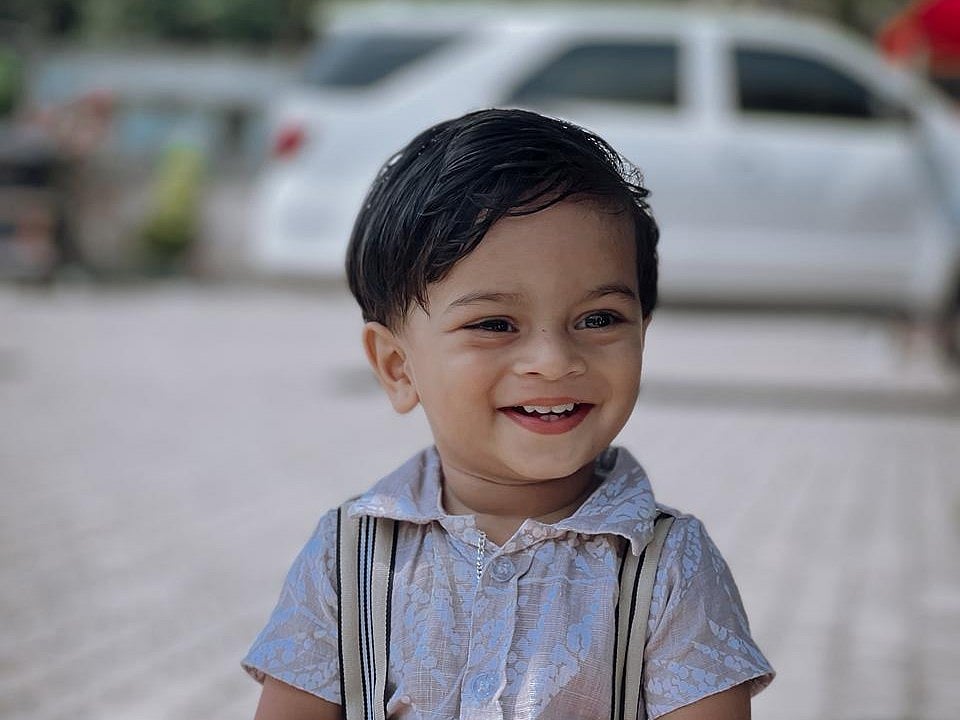
He belonged to everyone
Life changed for the couple. “He was the apple of our eyes and it was the same for everyone around him,” said his father who returned to the UAE to work as a sales executive with a foodstuff trading company.
From being an introvert who preferred to stay hidden, his mother faced her fears and mastered the streets, driving a car and riding a motorbike.
As a toddler, Alan made himself at home in the lives of everyone around him, recalled his father. “He was not a shy child. He went straight to strangers with a smile and a wave.”
Neighbours. Shopkeepers. Passers-by. He collected people the way some children collect toys.
He had begun to speak, calling out for his mother, father, grandparents and learned to say Ameen while praying with his father. When he cried, his father says, he would call on Allah, not mother as most children do. “He wouldn’t cry calling umma. He used to call Allah,” he recalled. The family was supposed to celebrate Alan’s second birthday on April 23.
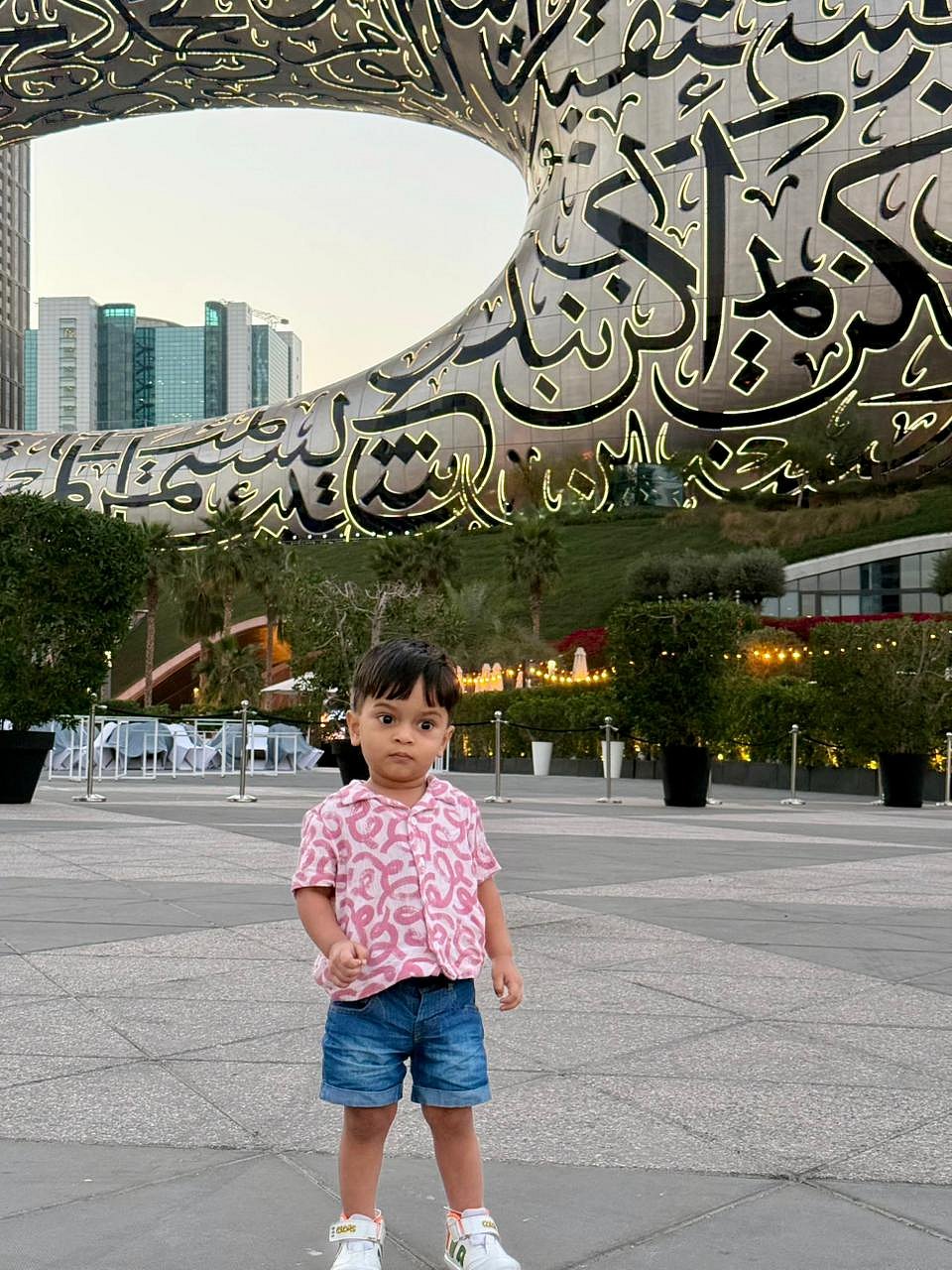
Visit they had waited for
This was the first time Alan had come to the UAE with his mother. His father had moved from Rashidiya to Muwaileh to accommodate his family who landed on January 18.
Their first Ramadan together in the UAE was what he had been looking forward to most. He wanted to take them to Saudi Arabia for Umrah to fulfil an offering for Alan and then extend their visit to celebrate Eid together in the UAE for the first time.
Meanwhile, he said he was also exploring a family visa with a job transfer to Ras Al Khaimah or Fujairah.
On the evening of the accident, he was supposed to take his wife and son to his siblings in Al Quoz and collect special Ramadan food sent by his mother from Kerala. But his work schedule changed and he was running late.
When he heard his wife’s cries over the phone while he was on the way home, he already knew the seriousness of the situation. “Allah gave me the strength to handle the situation,” he said.
He found her outside a private hospital, her clothes stained with blood. The driver, who had hit Alan, himself helped rush him to the hospital. The child was then sent to a government hospital in an ambulance. However, doctors there could not save him. He succumbed to his injuries.
Farewell and forgiving
After laying their only child to rest in Dubai’s Al Qusais Cemetery the following day, the couple flew back home. Before they left, his father told the police and gave a written statement that they had no complaint against the driver, as first reported by Gulf News.
“Our loss is our loss. We cannot replace it, but we do not want to put another family in grief over something that happened unknowingly. There is no point in being emotional and taking revenge. We won’t get our son back,” he said.
He revealed that the neighbour’s wife is pregnant with their first child and the couple’s entire family has also been equally shattered after the accident. “We have been in touch, checking on each other, after he was released following our statement.”
Sharjah Police said this week that the police investigation had been completed and the case had been transferred to the Public Prosecution.
Grief and patience
He said his company stood by him throughout, with colleagues and their chief strategy officer present from the moment news broke.
“Several people came to see Alan for the last time, including neighbours and people who knew him from the shops near our building.”
Their days have been heavy even with friends and family members trying to console them back home. The devastated parents began attending counselling sessions and taking sleeping pills. “We couldn’t sleep for days,” he said.
He said they are gradually coming to terms with reality, and Alan’s mother, who has been experiencing frequent headaches, has gone home for a change of environment. And in the end, he returns to his faith. “Patience comes from Allah. If not, we can’t become normal and we can’t accept the reality.”