

Table of Contents
A no‑nonsense food safety crackdown in Maharashtra has turned Tukaram Mundhe, a career civil servant, into an unlikely celebrity across India.
With graphic inspection videos and strict enforcement, a visible public health message resonates with consumers.
He has also made enemies, even as parts of the food industry push back.

Who is Tukaram Mundhe?
Tukaram Mundhe, 51, is an Indian Administrative Service (IAS) officer who currently serves as Maharashtra’s food commissioner, heading the state’s Food and Drug Administration (FDA).
A veteran bureaucrat with more than two decades of service, he has held multiple postings — so many, he says, that he has “stopped counting” his transfers — and previously drew attention for his handling of the Covid pandemic as Nagpur’s municipal commissioner and for water‑conservation work in drought‑prone areas.
Why has he gone viral?
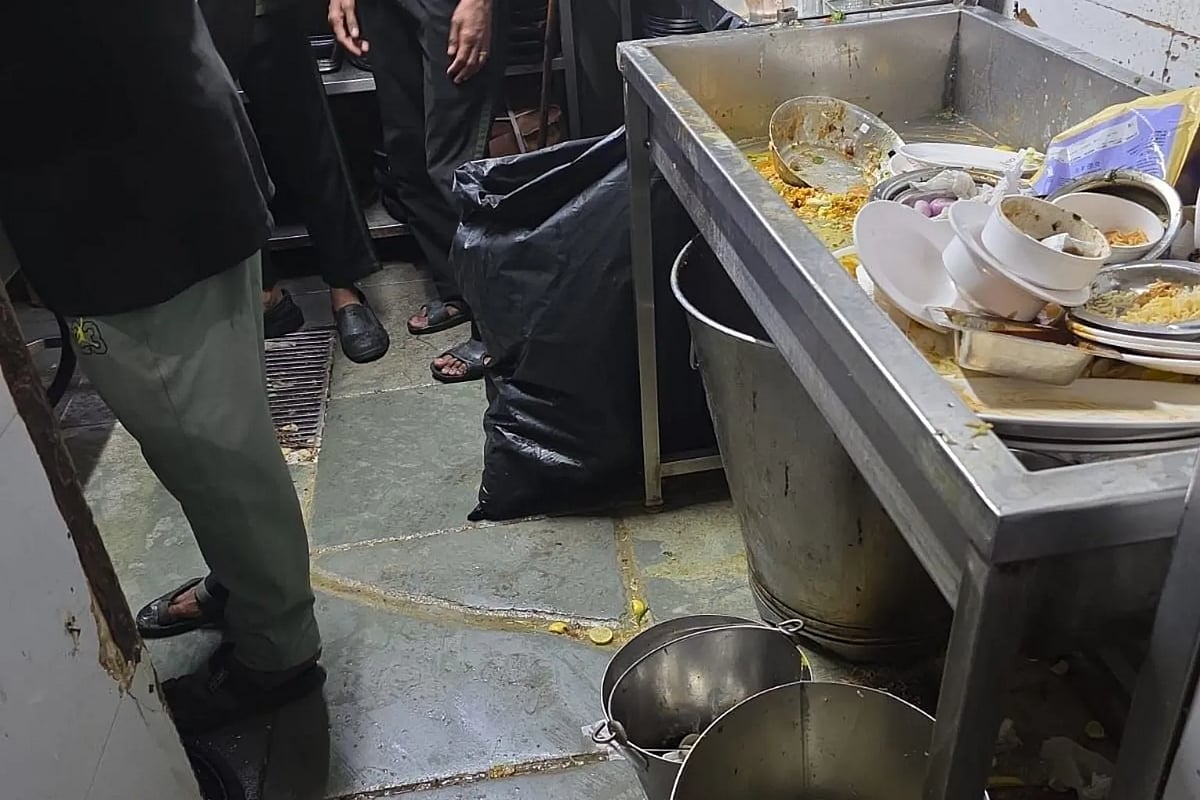
The BBC has highlighted Mundhe’s aggressive inspection drive — complete with photos and videos of cockroaches on kitchen floors, spider webs, spoiled produce and pest‑infested counters — now been widely shared on social media, turning his raids and press briefings into viral reels and podcast clips.
The visibility has made him a recognisable face nationwide, rare for a regulator, and he now commands more than 3.8 million followers on Instagram, with his content circulating across other platforms as well.
What do the aggressive restaurant inspections show?
Since taking charge in May, Mundhe’s department has carried out over 4,000 inspections across Maharashtra, suspended around 300 licences and issued more than 1,000 “improvement notices”, while a new complaints portal logged over 16,000 complaints in its first three months.
The campaign has targeted a wide range of businesses — from members‑only clubs in Mumbai to quick‑commerce warehouses and celebrity‑endorsed brands — with Mundhe insisting that food safety laws must be enforced regardless of a business’s size, influence or reputation.
Officials and observers say the drive has done something India’s conventional system rarely achieves: it has made hygiene lapses and enforcement actions visible in real time.
The technique has resonated with the Gen-Z crowd as it shifts food safety from slow, opaque proceedings to a public, consumer‑facing issue.
Maharashtra bans ‘analogue’ or non-dairy ‘paneer’
In a recent move, the food regulator has ruled that when a customer orders or buys “paneer”, they should receive genuine paneer made from milk, not a cheaper imitation made from non-dairy ingredients.
The ban covers the production, processing, storage, transportation, distribution and sale of analogue (non-dairy) paneer in Maharashtra.
Genuine paneer requires milk.
Non-dairy alternatives can potentially compete with dairy products at lower prices. Maharashtra’s move is also an attempt to protect the market for milk producers and dairy farmers.

The controversy highlights a challenge in the food industry: the difference between a “substitute” and the real product.
A non-dairy product may be perfectly legal when clearly identified and sold under an appropriate name. The concern arises when consumers believe they are buying a traditional dairy product but are actually getting something else.
The state FDA’s move is significant: This is more than simply a food-labeling issue. Paneer is a major Indian food product, widely consumed in homes, restaurants, hotels and catering businesses.
The regulator’s move affects restaurants, caterers, manufacturers and distributors using analogue paneer who will now have to change their sourcing and supply chains, as per the Times of India (TOI).
While this could increase costs where genuine milk-based paneer is more expensive, highlights the need for authenticity.
Mundhe cited inspection data collected by Maharashtra FDA, after testing 308 paneer samples, of which 79 were “substandard” and 30 were “unsafe”.
This was the trigger for the agency’s one-year statewide prohibition on the manufacture, distribution and sale of unstandardised analogue/non-dairy paneer, TOI reported.
The daily portrayed the move as part of a much broader campaign, issue shifting from simple food labeling to consumer protection and public health.
Challenges for food safety regulators in India
Tackling India’s food safety challenge is daunting task.
Parliamentary data in July showed that of 223,808 food samples tested nationwide in 2025–26, nearly one in five were “non‑cInonforming” — unsafe, substandard or mislabelled.
Regulators must police a vast, fragmented market that includes countless small eateries, street vendors and informal suppliers, making consistent inspection and compliance “difficult”, according to the BBC report.
And then the subcontinent’s vibrant street food industry adds another layer of complexity: millions of vendors operate with minimal infrastructure, often using practices such as wrapping food in newspapers, which Mundhe’s department has now banned over concerns about ink chemicals “leaching” into food.
And even as awareness rises amid Munde’s posts, building durable systems that outlast any single officer remains a key challenge,

Support from netizens
Consumers have largely welcomed the speed and transparency of Mundhe’s actions.
Many have heaped praised on his willingness to take on high‑profile establishments and celebrity‑linked brands in the name of public health.
Social media users have amplified his inspection clips, turning him into a folk hero for diners who long felt hygiene was ignored.
Pushback
At the same time, sections of the food industry and some courts have criticised aspects of his approach as “high‑handed”, arguing that instant suspensions and public naming‑and‑shaming over minor or rectifiable issues create panic rather than reform.
The Bombay High Court, while calling the regulator’s intentions “laudable”, has in at least one case ordered compensation to a sweets shop and questioned whether the same scrutiny was being applied to government establishments.
This prompted Mundhe’s team to inspect canteens inside the court complex itself.
For Mundhe, the message remains consistent: the goal is not to shut businesses down, but to ensure food is safe, not substandard and fit for consumption — and that the rules apply equally to everyone.