

Abu Dhabi- UAE Minister of Education Sarah Al Amiri has called for every girl to have access to and complete at least 12 years of safe, inclusive and high-quality education, saying schooling must equip young women with the skills and agency to shape their futures.
“Our ambition should remain clear: every girl should have access to and complete at least twelve years of safe, inclusive, equitable and quality education,” said Sarah Al Amiri.
Al Amiri made the appeal at a high-level event convened by the UAE and UK missions in Geneva on the sidelines of the 63rd session of the UN Human Rights Council.

The gathering marked the 12th anniversary of the Council’s 2014 resolution on girls’ right to education and was held under the theme “Renewing Global Commitment to Leave No Girl Behind”.
“Education should do more than give her a qualification,” Al Amiri said. “It should give her the knowledge, skills and agency to decide what comes next.”
She also linked the UAE’s advocacy to its bid for membership of the Human Rights Council for the 2028–2030 term.
Having served three previous terms, the UAE views its candidacy as an opportunity to deepen cooperation with international partners on advancing and protecting human rights, she said.
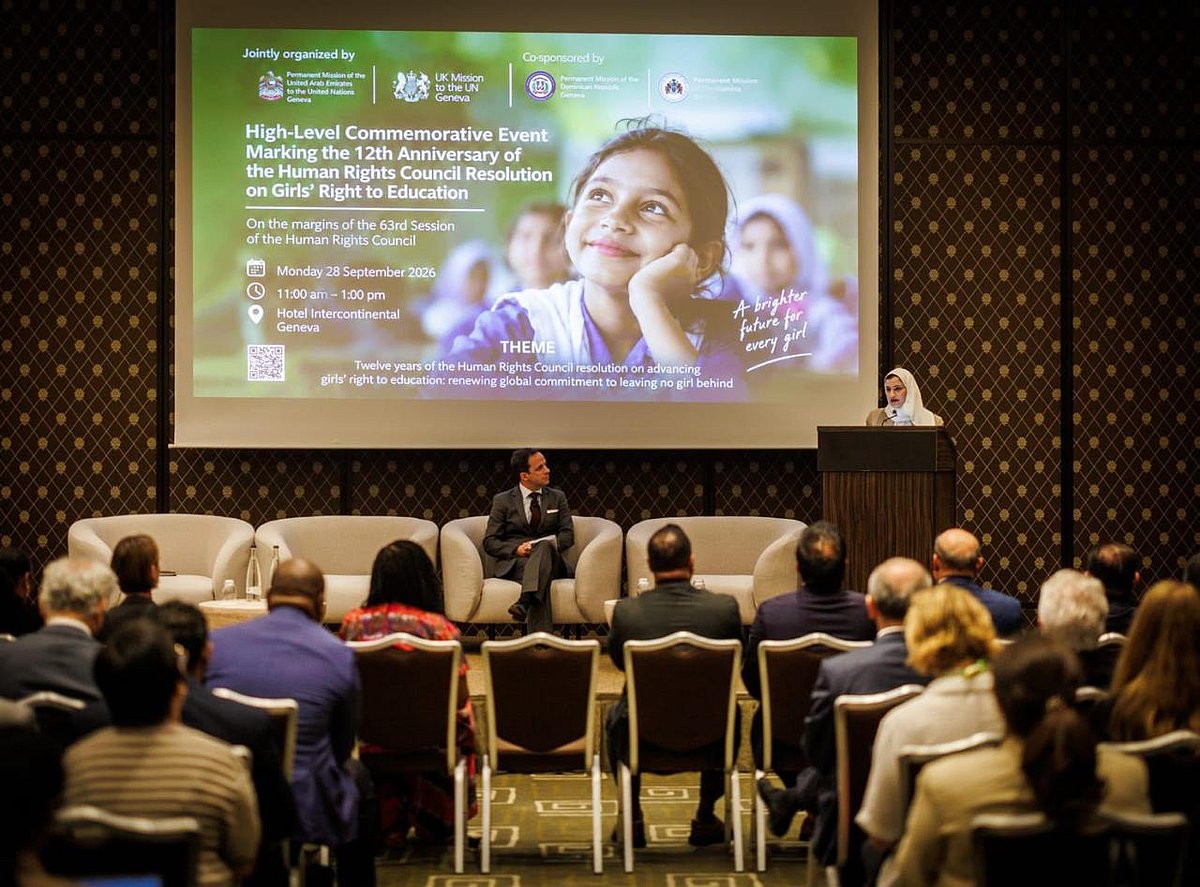
The event also featured opening remarks from Awa Dabo, Deputy UN High Commissioner for Human Rights, and Kumar Iyer, the UK’s ambassador and permanent representative in Geneva. Representatives of UNICEF, UN Women and UNESCO’s International Bureau of Education contributed perspectives on education in emergencies, gender equality and inclusive learning.
The discussion was moderated by David Puyana, Ambassador & Permanent Observer of the University for Peace and also featured contributions from a young speaker from Malawi and Emirati inventor Mariam Al Ghafri.
Participants examined the barriers that continue to keep girls out of classrooms, including conflict, humanitarian crises, gender inequality and the digital divide. They urged governments and international organisations to turn global commitments into practical measures and build education systems that give girls the opportunity to contribute to their communities.