
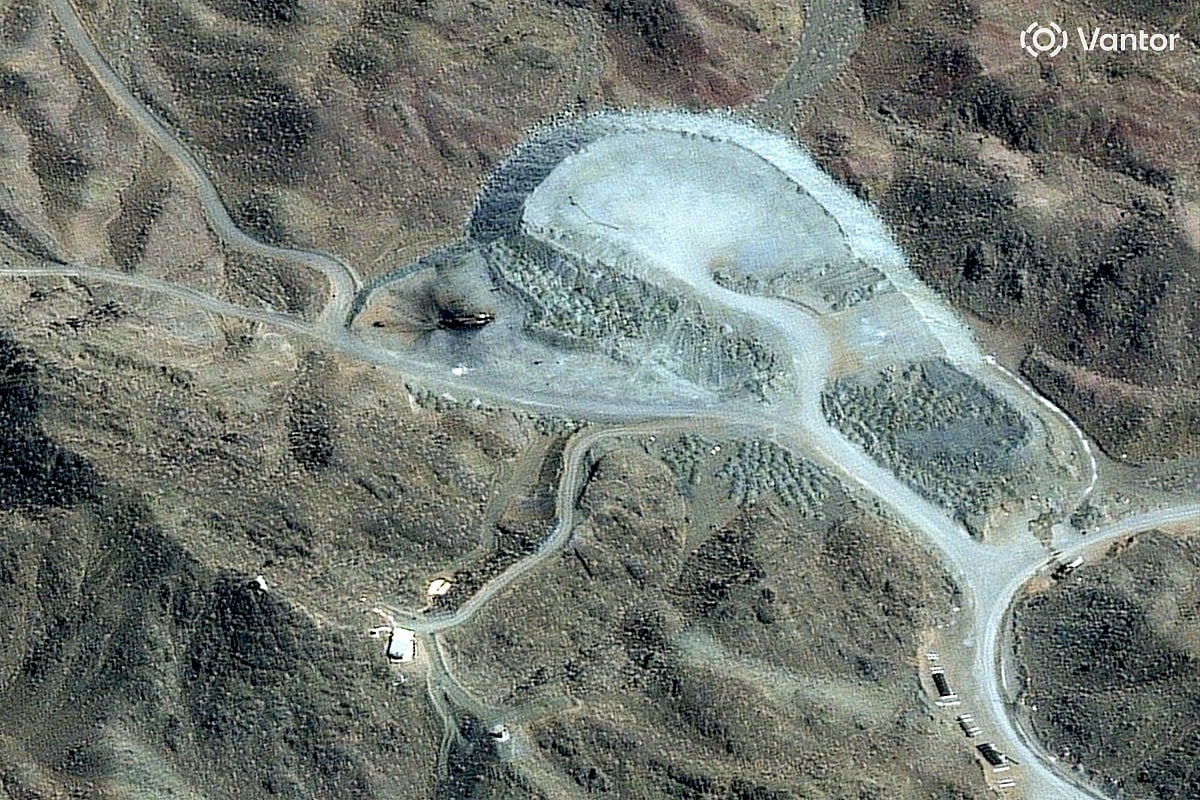
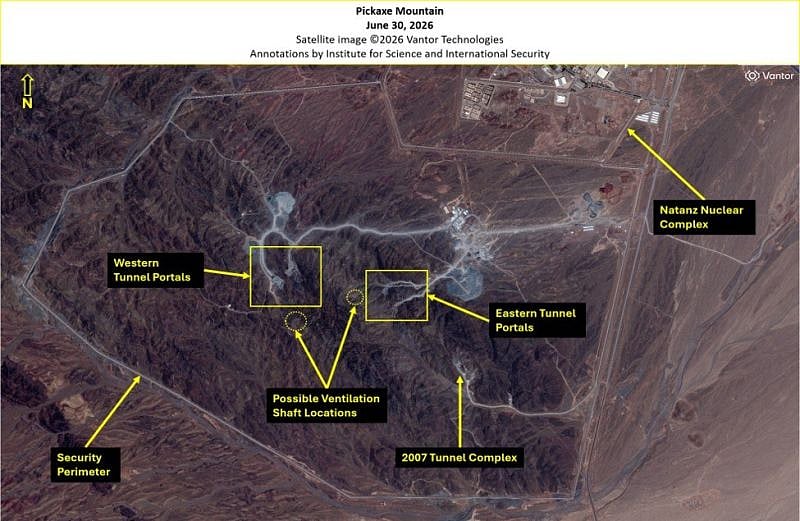
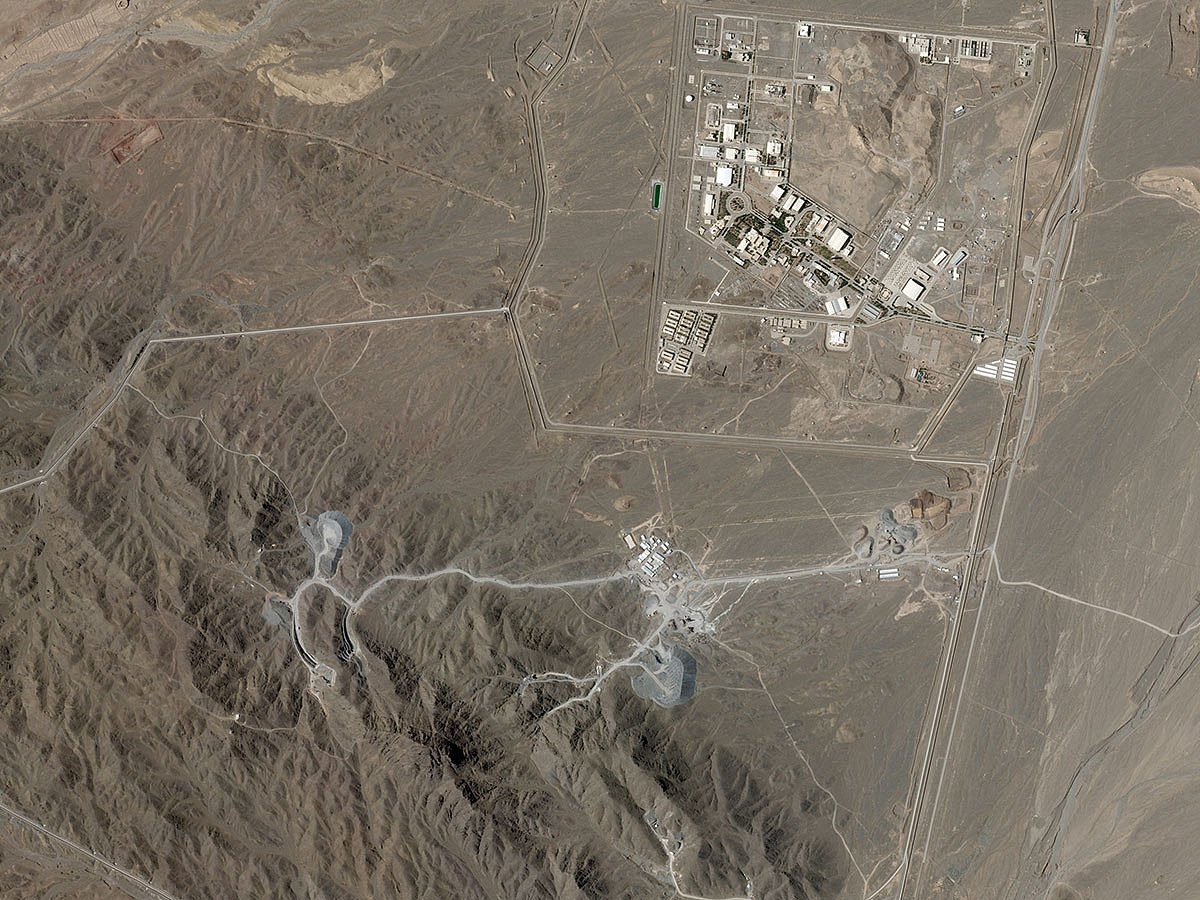
Satellite imagery has revealed a significant increase in construction activity at Pickaxe Mountain, a deeply buried Iranian facility near Natanz that has attracted growing attention from US and Israeli intelligence officials.
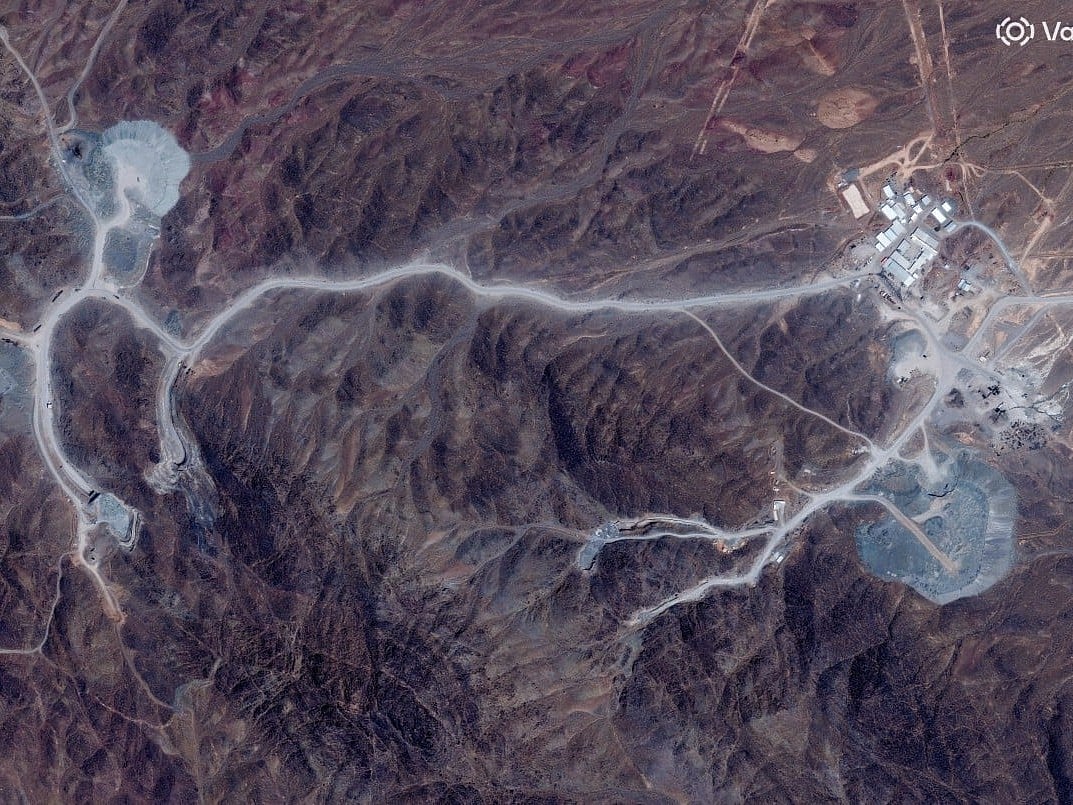
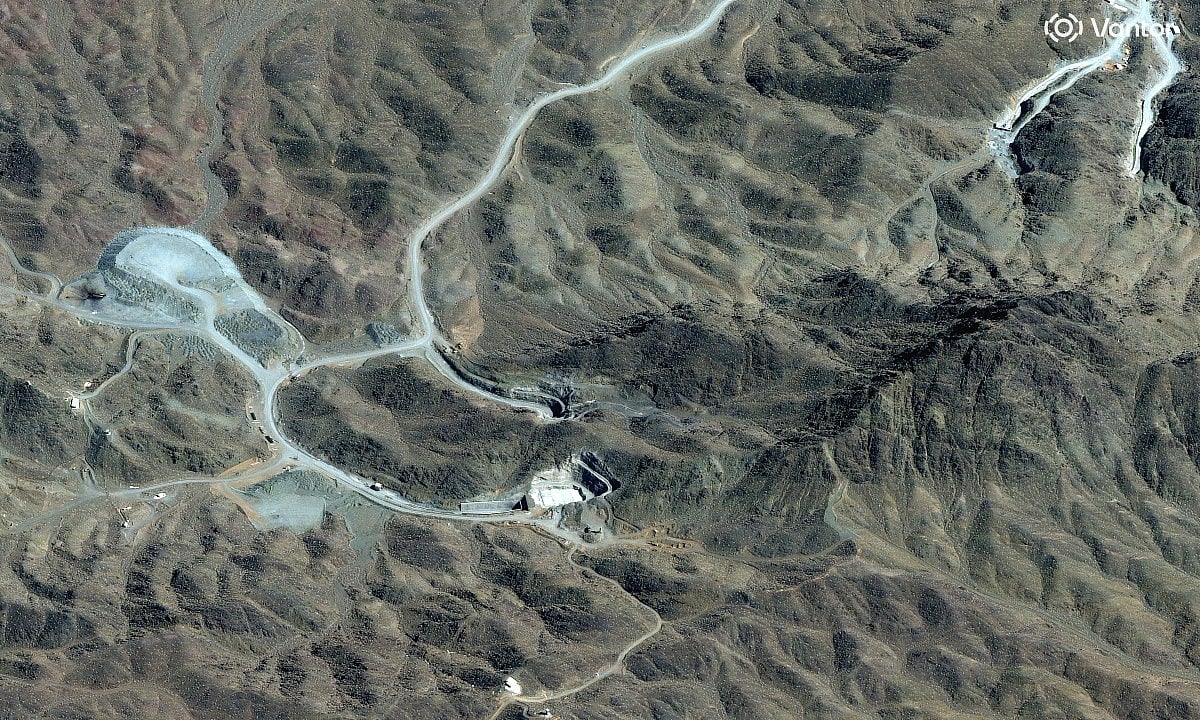
A new analysis by the Center for Strategic and International Studies (CSIS) examined six years of satellite imagery and found that construction activity in 2026 is higher than at any previous point observed at the site, CNN reported.
The work includes:

-
reinforcement of underground access points;
-
paving and expansion of internal roads;
-
hardening around entrances;
-
removal of excavated material;
-
continued work on the underground complex.
CSIS said the imagery cannot confirm an Israeli intelligence claim that Iran moved uranium centrifuges and centrifuge components into the facility.
The analysts also said the site does not currently appear to be operating as an enrichment facility, based on the absence of certain observable activity.
But the location is strategically important.
Pickaxe Mountain facility
Pickaxe Mountain is a heavily buried granite facility close to Iran’s Natanz nuclear complex. Its depth and geology could make it extremely difficult to destroy with conventional weapons.
CSIS said even America’s largest conventional bunker-buster, the GBU-57 Massive Ordnance Penetrator, could have difficulty destroying the facility completely.
The development comes at an especially sensitive moment.
The International Atomic Energy Agency’s board on Wednesday voted to report Iran to the UN Security Council over its failure to provide sufficient cooperation and access relating to its nuclear programme.
The resolution passed 23-3, with Russia and China opposing it.
Enriched uranium
The IAEA estimates Iran holds about 440.9 kilograms of uranium enriched to 60%, a stockpile that could theoretically provide enough material for multiple nuclear weapons if further enriched and weaponised.
There is, however, no confirmed evidence in the cited reporting that Iran has assembled a nuclear weapon.
The bigger danger: the combination of restricted inspections, a large highly enriched uranium stockpile and construction at a deeply buried facility could make diplomacy harder and military calculations more dangerous.
If Washington concludes that Iran is rebuilding a nuclear capability underground, the conflict could shift from destroying known facilities to a much harder problem: finding and neutralising facilities that are designed specifically to survive airstrikes.