
Abu Dhabi: “We do actually get marriage proposals here. We have seen many go down on their knees to ask the big question and even take wedding photos.”
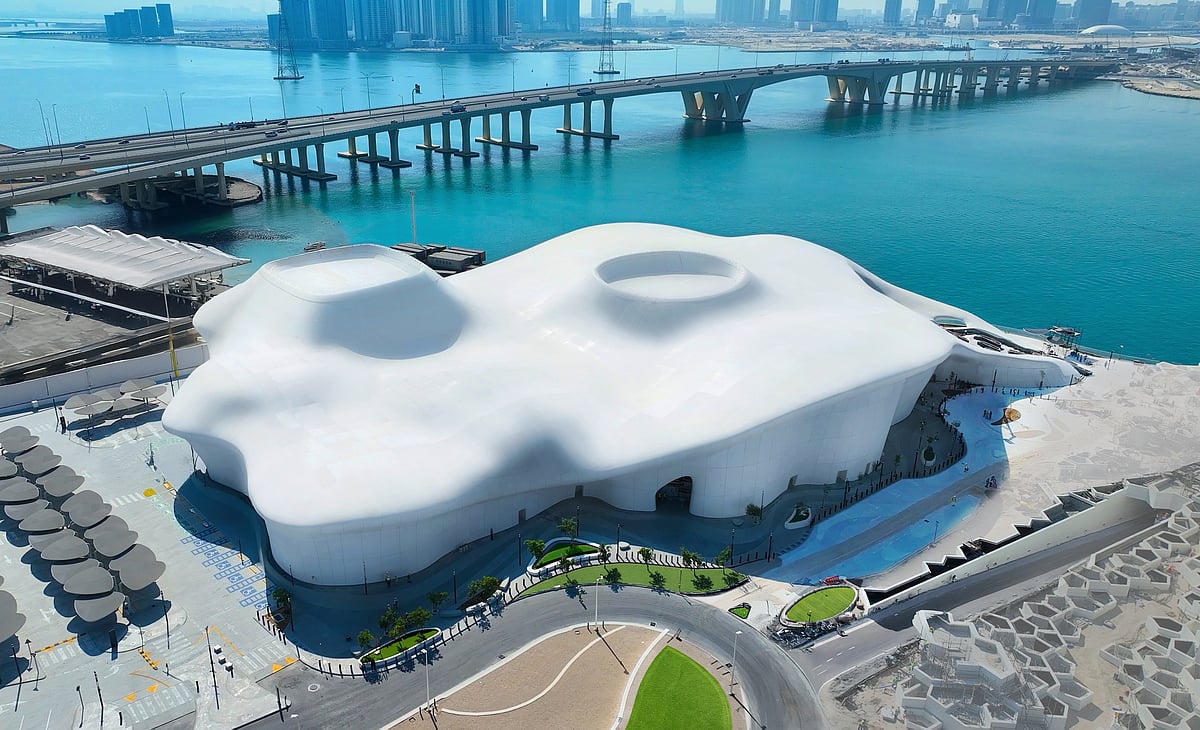
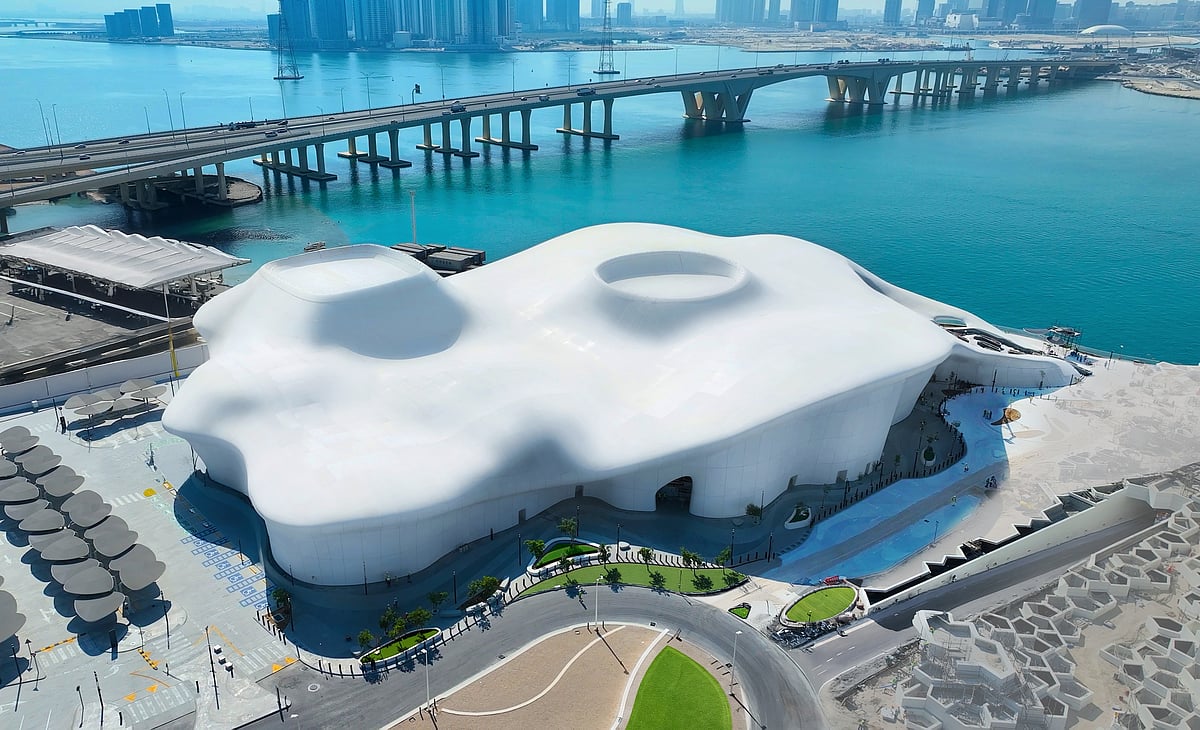
It’s a striking admission, tossed off matter-of-factly by the man knows this place inside out. Mark Cooper is General Manager of Miral Experiences, the company behind some of Abu Dhabi’s biggest visitor attractions, and the man ultimately responsible for how teamLab Phenomena, tucked inside the Saadiyat Cultural District, actually works.
Cooper has been here since day one, has walked thousands of guests through these rooms, and speaks about the place with the quiet authority of someone who has watched every version of every reaction a human face can make. Somewhere behind him, a corridor waits in darkness. On the other side of it: a room that has, by his own account, ended more than a few evenings on one knee.

This is not a museum in any sense you already know. There are no ropes, no silence, no “do not touch.”
What waits beyond that tunnel is a world built to react to you: to bend, glow, and shift depending on where you stand and how you move. Step inside, and you stop being a visitor. You become part of the exhibit.
In two hours walking this place with Cooper, watching families gasp, couples pause mid-sentence, and children throw themselves into pools of light, I understood exactly why this quietly unassuming museum has become one of the most talked-about experiences in the capital.
I’m here for Inside Access, our series led by Gulf News’ Manjusha Radhakrishnan that takes you behind the curtain of the region’s most-hyped attractions. And Cooper is not just any guide. As the man overseeing the entire operation, he knows every secret, every story, every corner where strangers have become fiancés.
An empire built on wonder
To understand why teamLab Phenomena matters, you first have to understand the ground it stands on. Saadiyat Cultural District, a stretch of coastline on the edge of Abu Dhabi, has spent the last decade transforming itself into one of the most ambitious concentrations of culture on the planet.
Louvre Abu Dhabi has drawn millions of visitors since 2017. The Zayed National Museum and the Natural History Museum Abu Dhabi followed, each staking its own claim on the district’s skyline. And this December, after two decades of anticipation, Frank Gehry’s long-awaited Guggenheim Abu Dhabi will finally throw open its doors.
Into this constellation of institutions steps teamLab Phenomena, and it plays by none of the rules of its neighbours. Where the others ask you to look, this one asks you to feel, to wade in, and to disappear into the psychedelic paradise.
“When you come here, we don’t want to tell you how you’re supposed to feel or what you’re supposed to think,” Cooper tells me, his voice carrying the calm certainty of someone who has said this a thousand times and meant it every time.
“You come with an open mind, and you understand for yourself what you’re looking at.”
Into the light
The journey begins gently. An intro room, where art responds to the smallest touch of water and skin, easing you into a world with its own rules. Then Cooper leads me down a narrow tunnel, and the room beyond detonates into colour.
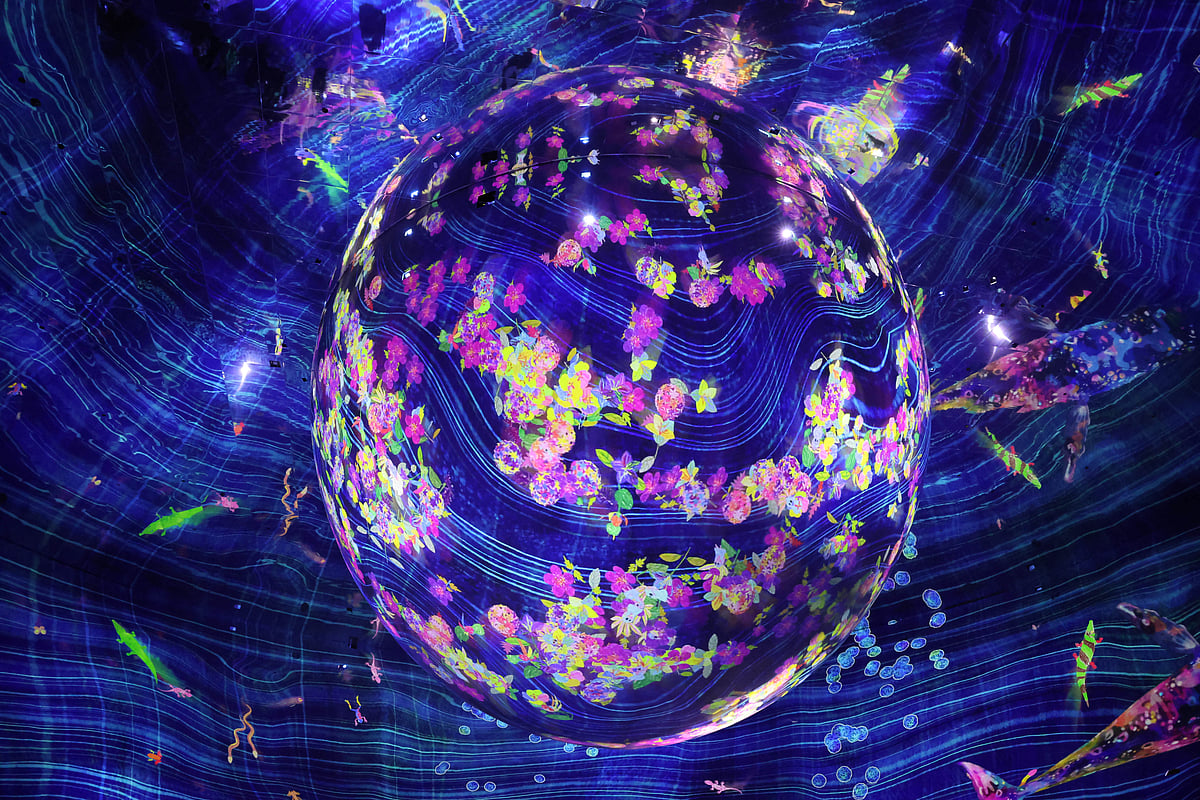
Fluttering Butterflies unfolds like something conjured rather than built: a sprawling, breathing installation of three artworks woven into one, where digital wings trail every step you take across the walls. Guests lose track of time entirely here, Cooper says.
“So many things are interactive. So many things react with touch. You’ll have different smells, different sounds, it’s not just a visual experience,” he says.
“This is something you really have to experience to get that full feeling.”
He is not exaggerating. No two visitors leave with the same photograph, because the artwork itself refuses to sit still.
“You’ll never get the same picture,” Cooper says. “It’s always different. It’s always evolving. It’s interacting with its environment.”
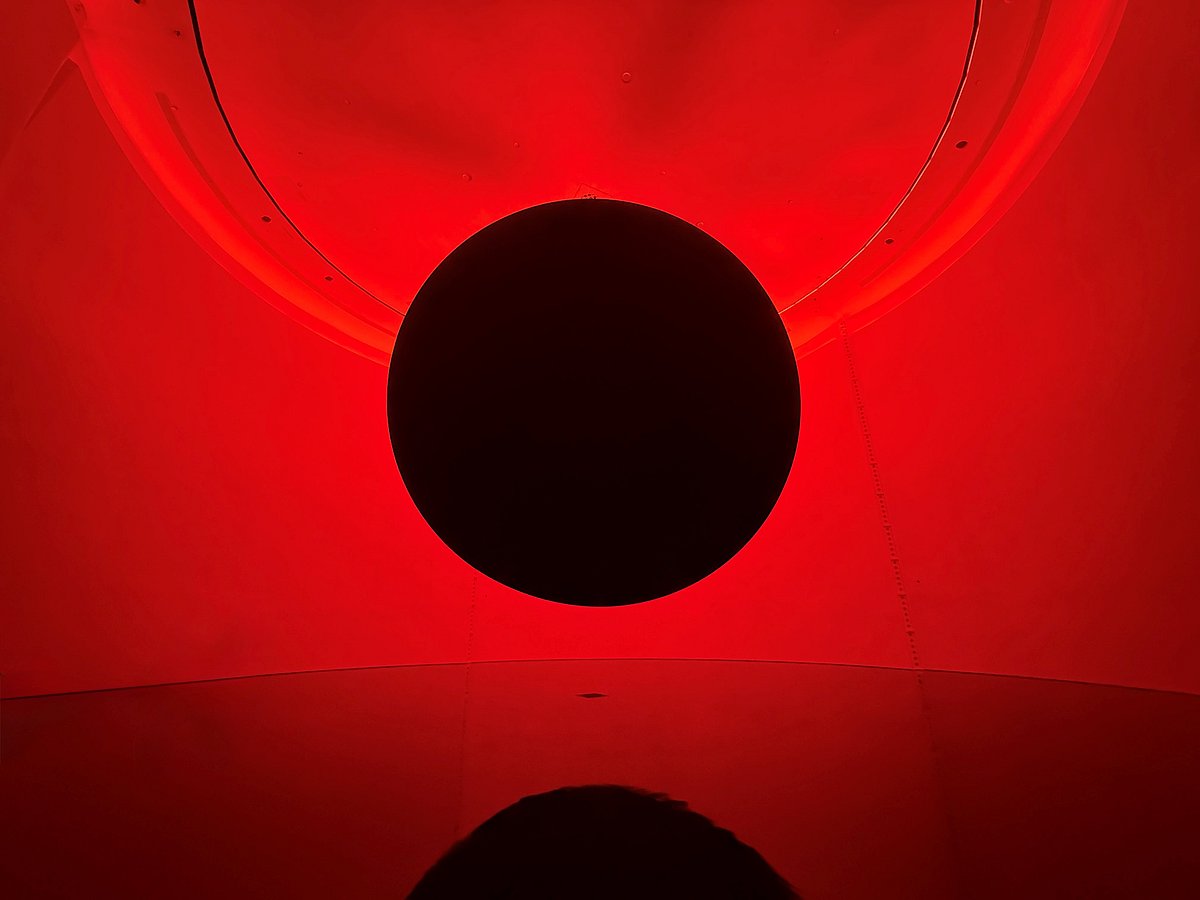
Then comes the room that started this whole story: Levitation Void, a vast, dark space dominated by what looks like a giant black disc, hanging as though suspended in mid-air. Take one step, and it moves with you. Every law of physics your brain has ever trusted quietly falls apart.
“The very first time I saw this, I always thought it was a 2D disc,” Cooper admits. “As I walked around, it kept following me. I couldn’t understand it.”
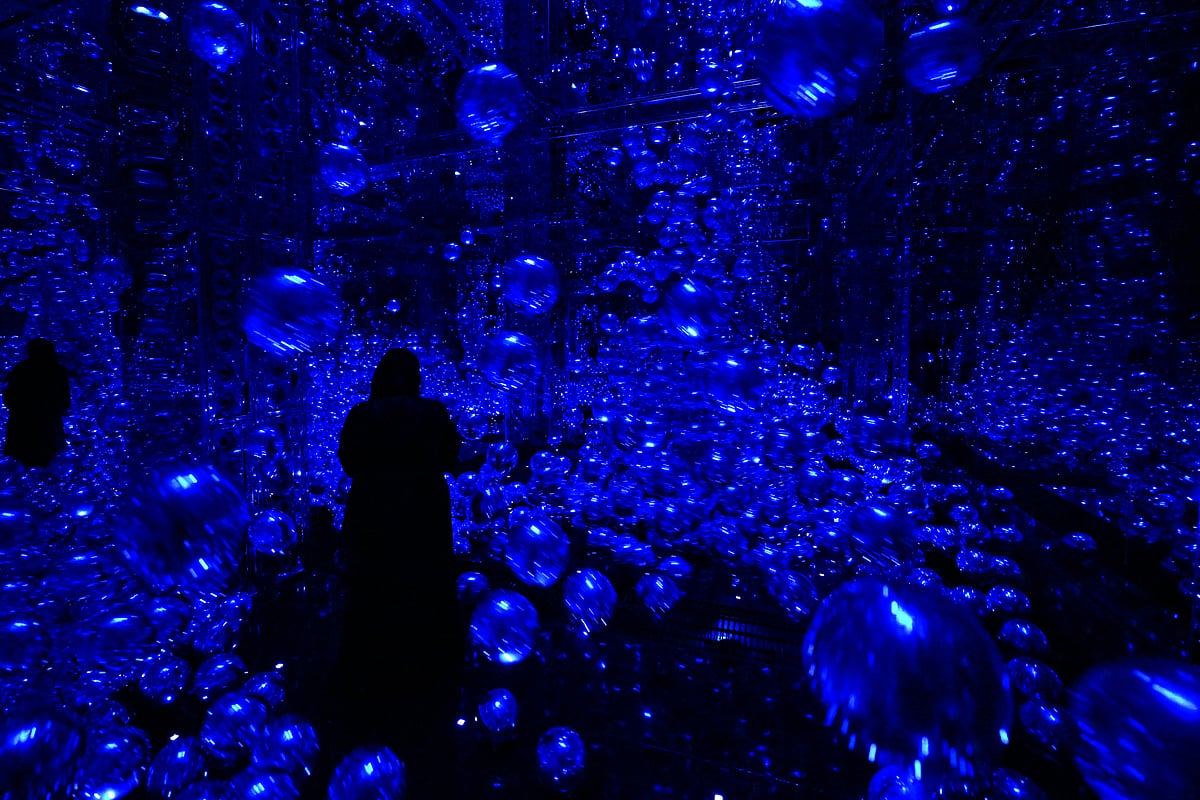
Just beyond it sits Massless Suns and Dark Suns, a domed chamber of floating light spheres that seem to hang mid-air like three-dimensional suns, with faint points of dark purple flickering between them, what teamLab calls “dark suns,” visible only in person, impossible to fully capture on camera. It’s become something of an unofficial proposal spot, Cooper tells me, the kind of backdrop couples seek out on purpose.
By the time you step back out into the Abu Dhabi heat, blinking, disoriented, grinning, one thing is undeniable. This is not a place you visit. It’s a place you vanish into, for a while.
The machine behind the magic
I ask Cooper the question I put to every guide on this series: what does it actually take to keep something this immersive, this alive, running without a single seam showing?
“It’s a continuous journey,” he says. “We always try to get customer feedback, understand what the guest wants, and push towards that as a team.”

It is a strikingly unglamorous answer for a place built entirely on spectacle, and that is precisely the point. Behind every glowing room is a team quietly, relentlessly chasing the exact moment your face changes.
As for who else has walked these corridors, Cooper’s expression gives nothing away.
“I’m not saying anything,” he says, laughing, when I ask whether names like Will Smith or Ranveer Singh have made the pilgrimage. Some secrets, apparently, are sealed tighter than any contract, cheesecake or no cheesecake.
With Guggenheim Abu Dhabi preparing to unveil 30 galleries just down the road this December, Saadiyat is only going to grow louder, bigger, harder to ignore. But if you want to understand, right now, why the world has its eyes on Abu Dhabi’s cultural rise, start here: in the museum where the art moves, the emotions run high, and every so often, against a backdrop nobody could design better, somebody says yes.
What is Saadiyat Cultural District?
Saadiyat Cultural District is Abu Dhabi’s answer to a simple but audacious idea: what if you built one of the world’s great museum quarters from scratch? Since Louvre Abu Dhabi opened its doors in 2017, the district has steadily expanded into one of the densest concentrations of culture anywhere on the planet, adding the Zayed National Museum and the Natural History Museum Abu Dhabi, with Frank Gehry’s long-awaited Guggenheim Abu Dhabi set to complete the lineup this December. teamLab Phenomena, opened in April 2025, is the district’s wild card: less a museum you walk through than a world you disappear into.
KNOW BEFORE YOU GO
Saadiyat Cultural District, Abu Dhabi, 20 minutes from Yas Island, 10 minutes from Abu Dhabi city centre
Hours: 10am–10pm daily Recommended visit time: 2–3 hours, tickets cost Dh135 for adults and above.
Don’t skip: Anko, the Japanese patisserie and bakery at the exit, home to what staff call the “world’s best cheesecake”
Good for: All ages, families, couples, solo travellers and, allegedly, the occasional proposal