
Table of Contents
Manila: The Philippine passport has improved its ranks to 66th, as per the the latest global mobility assessment.
The slot is two notches higher than in January 2026, reflecting steady improvements in international travel access for Filipino citizens.
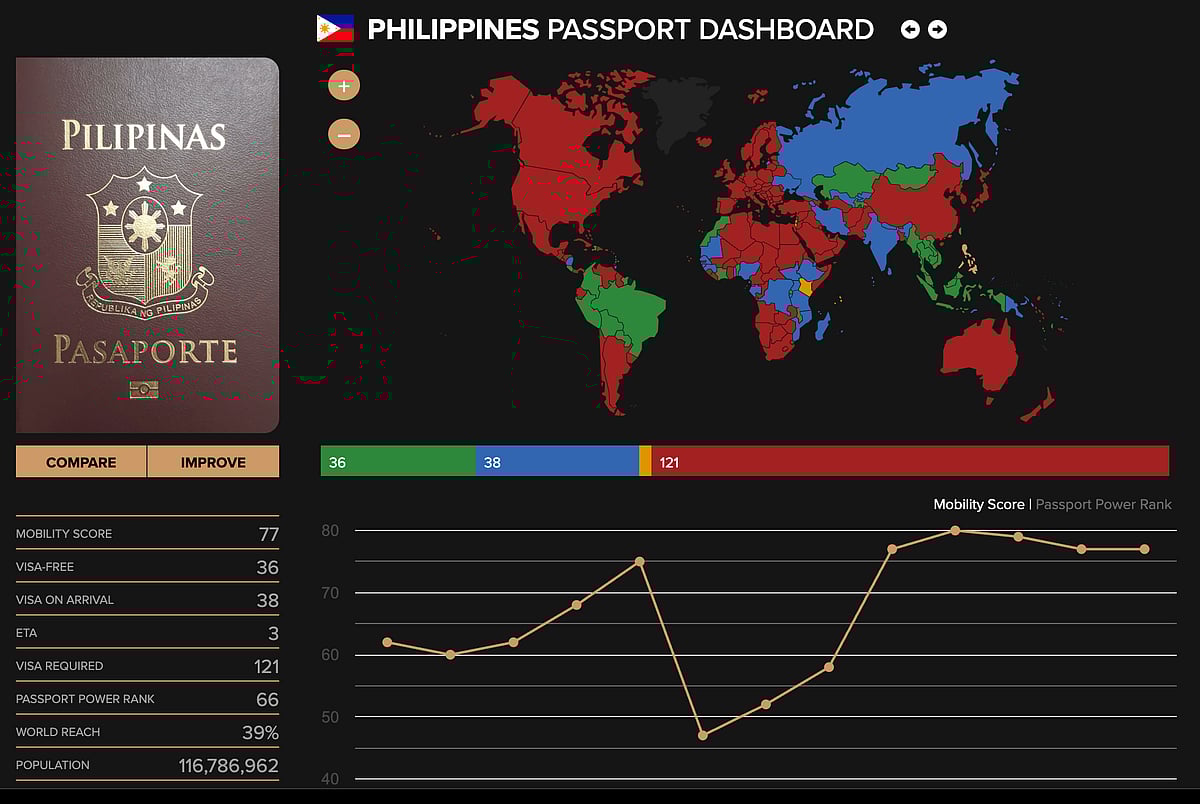
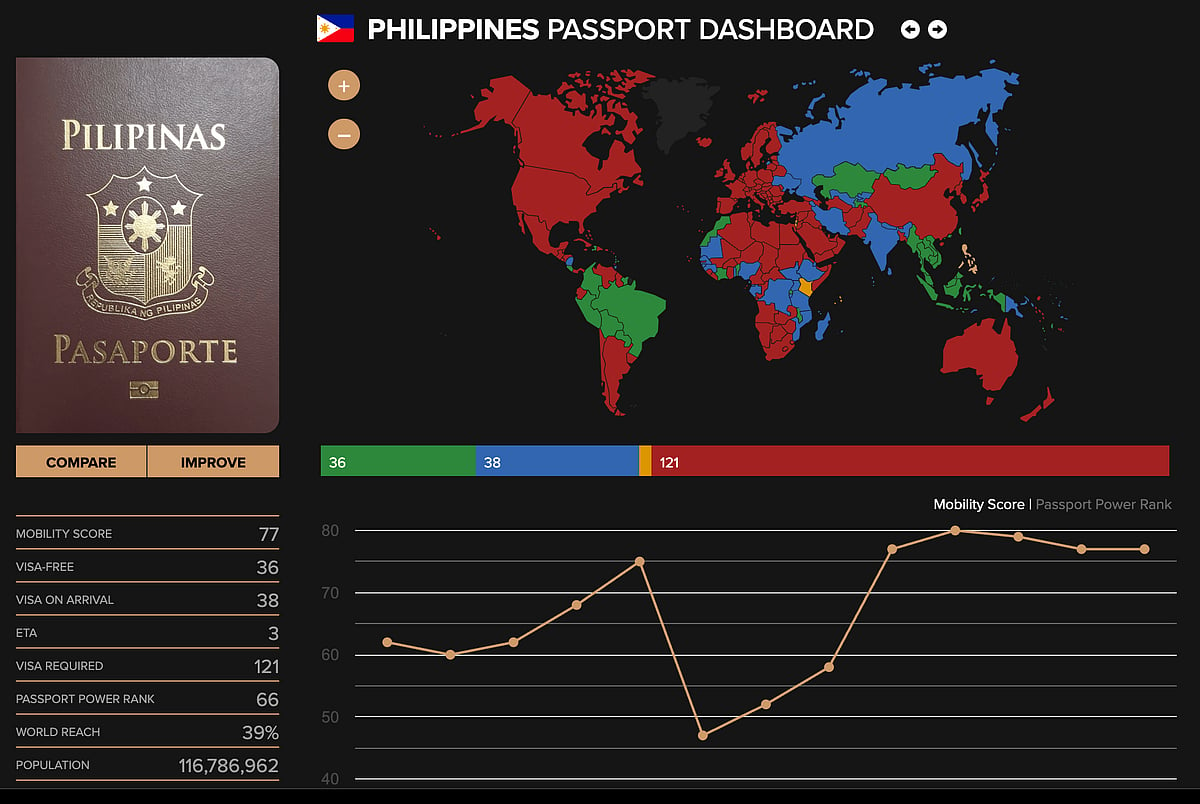
The latest improvement in ranking, based on the live “dashboard” of Passport Index, means holders of a Philippine passport can now travel to 77 destinations without securing a traditional visa prior to departure.

Visa-free entry
Of these, 36 countries grant visa-free entry, while 38 offer visas on arrival. An additional three destinations require an electronic travel authorisation (eTA).
However, visas remain mandatory for 121 countries.
The country’s overall mobility score stands at 77, highlighting moderate global access compared to other passports worldwide.
World reach: 39%
The Philippines’ “World Reach” is measured at 39 percent, meaning Filipino travelers can access just under two-fifths of global destinations without obtaining a pre-approved visa.
The dashboard’s historical trend chart indicates notable fluctuations over time.
Mobility scores previously hovered in the low 60s before climbing to the mid-70s, followed by a temporary decline. In recent years, access has rebounded, peaking around 80 before stabilising slightly below that mark.
The current score of 77 suggests a recovery phase, though still short of the highest levels achieved.
Regions across Southeast Asia, parts of South America, and select areas in Africa show more favourable access for Philippine passport holders.
Prior visa
Stricter visa requirements remain in North America, much of Europe, and parts of Oceania.
Travel analysts say mobility rankings are influenced by diplomatic relations, security considerations, reciprocity agreements, and bilateral negotiations.
Expanding visa-free arrangements is often tied to economic cooperation, tourism flows, and strengthened foreign policy ties.
With a national population exceeding 116 million, increased travel freedom carries significant implications for tourism, overseas employment, and business mobility.
How ranking affects Filipino travellers, businesses
Filipino workers and entrepreneurs stand to benefit from streamlined entry procedures in countries offering visa-free or visa-on-arrival access.
Government officials have previously expressed intentions to pursue additional bilateral agreements to expand travel privileges for Filipinos.
How passports improve in ranking
Observers note that incremental gains in mobility rankings require sustained diplomatic engagement and policy reforms.
Despite remaining challenges, the latest data underscores gradual progress in enhancing the global reach of the Philippine passport, signaling cautious optimism for further improvements in the years ahead.
Top provider of migrant labour
The Philippines is one of the world’s top sources of migrant labour (over 10 million Filipinos work overseas).
Migration is a huge regional issue (millions of Southeast Asians work abroad).
The Philippines took over the rotating ASEAN Chairmanship on January 1, 2026, under the theme “Navigating Our Future, Together.”
The Philippines is using its leadership year to push for better cooperation on labour mobility, remittances, and migrant rights.
It has long been seen as a model for “human-centered” migration management — strong government support for OFWs, bilateral labour agreements, and reintegration programmes.
The Philippines stands out for its strategic, pragmatic, human-centered approach to migration.
Really appreciate the opportunity to connect w/ Secretary of Foreign Affairs @SecLazaro to discuss opportunities to strengthen cooperation on well-managed migration, esp as ASEAN chair pic.twitter.com/rzwEQkQus1— Amy Pope (@IOMchief) February 14, 2026
The International Organisatin for Migration (IOM) has worked closely with the Philippines for years on everything from to ethical recruitment to disaster-related displacement.
A high-level UN official recently publicly praised the Philippines as it steps into a major Asean regional leadership role. It highlights ongoing collaboration in a world where migration is increasingly politicised.