
Table of Contents
The Pentagon is examining how US forces could strike and destroy Iran’s deepest underground nuclear facilities, as satellite imagery shows construction accelerating at a suspected site beneath Pickaxe Mountain near the Natanz nuclear complex, CNN reported.
The planning and testing effort is tied to the Iran conflict and focuses on the problem of attacking facilities built far beneath rock and specifically designed to survive conventional airstrikes, according to the network, which “cited three people familiar with the matter”.
The US maintains operational plans for a potential strike on the mountain complex, but it remains unclear whether existing weapons could penetrate deeply enough to destroy any nuclear-related assets inside.

Get it: Fast, verified news for FREE … download the Gulf News app — simply click here
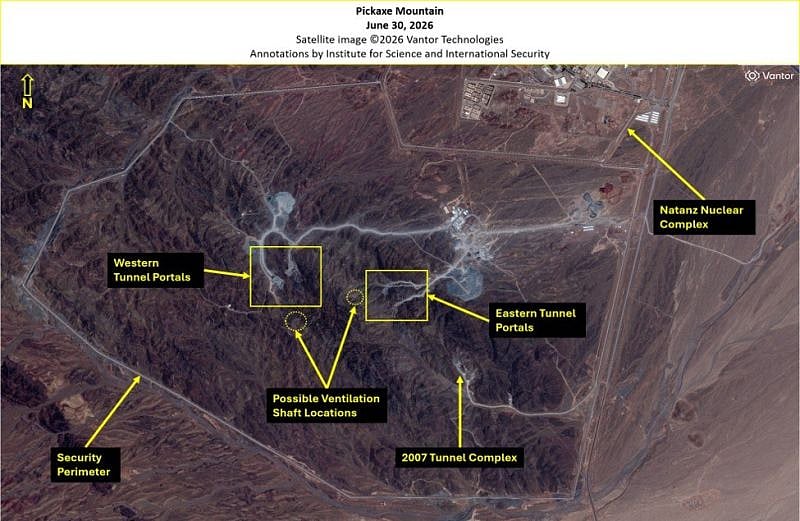
Construction intensifies at Pickaxe Mountain
A new analysis by the Center for Strategic and International Studies (CSIS) found that construction activity at Pickaxe Mountain in 2026 has been greater than at any point in the site’s documented history.
The project appears to have shifted from major excavation to probable internal construction and external reinforcement, CSIS said.
The work reportedly includes hardening and raising tunnel entrances, paving internal roads, reinforcing access areas and flattening or removing excavated rock and soil.
The site lies near Natanz, one of Iran’s most important nuclear locations.
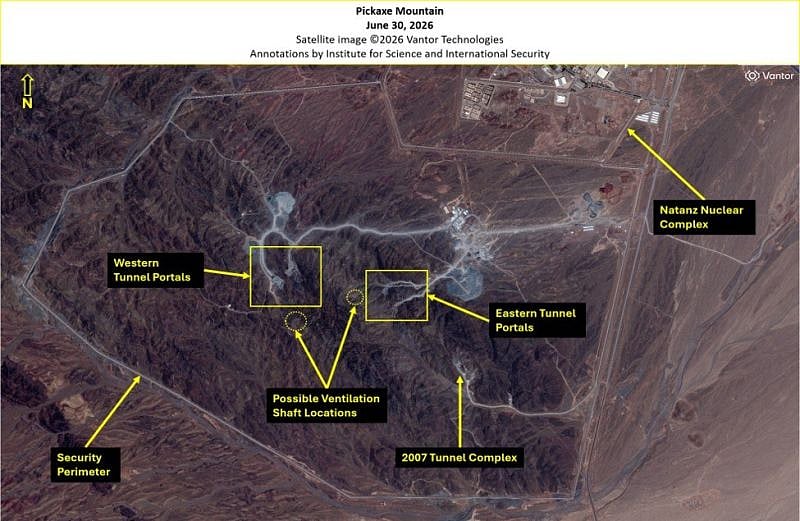
It is tunneled beneath granite and is widely viewed by Western intelligence agencies and analysts as a potential location for Iran to shelter future nuclear-related activity.
But CSIS cautioned that the continued construction indicates the site was not yet capable of enrichment operations, if that is its intended purpose.
Iran has not publicly confirmed the purpose of the facility.
The military challenge
The Pentagon’s concern is that Iran could use deeply buried sites to move, protect or eventually restart sensitive nuclear activities beyond the reach of conventional bombing.
The US has previously used massive bunker-busting weapons against Iran’s known nuclear infrastructure, including during Operation Midnight Hammer in June 2025.
Those strikes damaged major sites, but questions have persisted over whether deeply buried tunnel complexes and underground storage areas could be reliably destroyed.
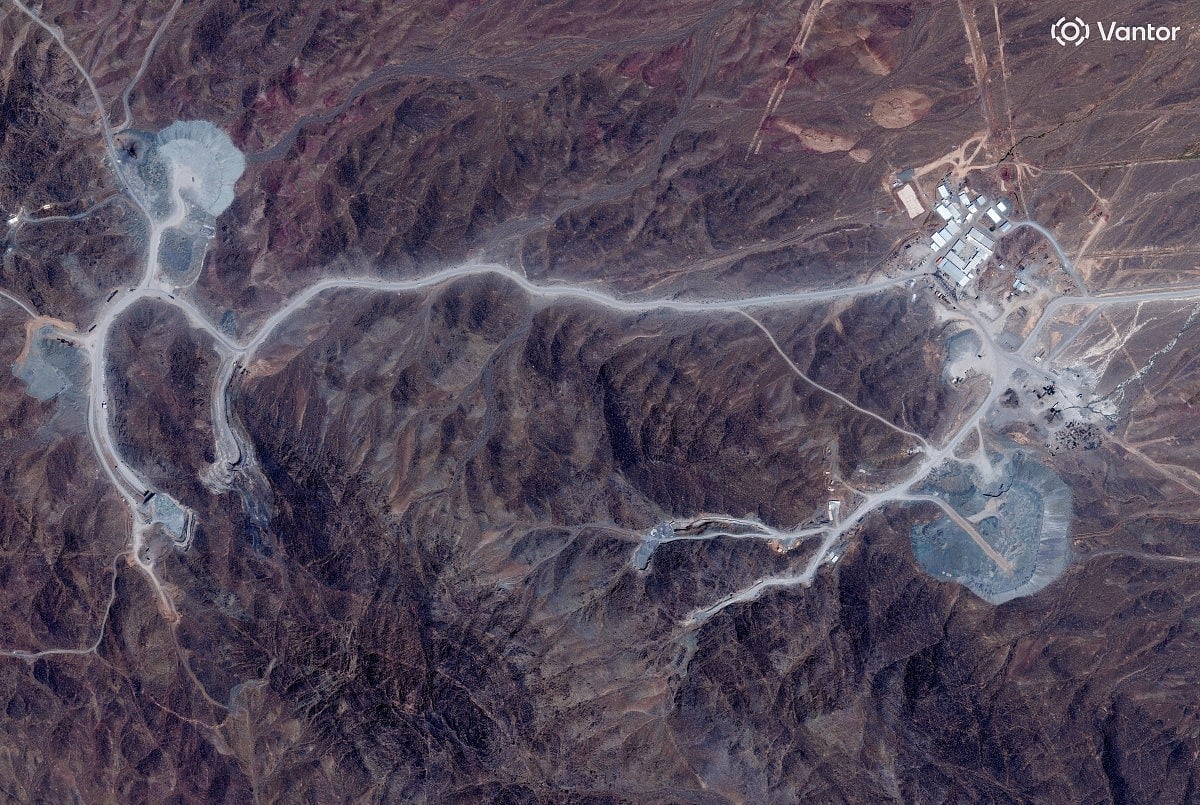
Pickaxe Mountain presents a harder target because of the thickness of granite above its tunnel complexes.
An attack could require specialised earth-penetrating munitions, repeated strikes on entrances and support infrastructure, or operations aimed at cutting access to power, ventilation, transport routes and construction equipment.
The Pentagon has reportedly begun a focused planning effort for underground targets and is developing concepts for a next-generation penetrator weapon capable of reaching greater depths.
The Pentagon has not publicly confirmed the reported testing plans, their location or the precise weapons involved.
Why it matters now
The concern is compounded by limits on international oversight of Iran’s nuclear programme.
The International Atomic Energy Agency (IAEA) has not been able to fully inspect Iranian nuclear sites or verify the location and condition of uranium previously enriched up to 60%, amid the ongoing conflict.
The lack of access does not establish that material has been diverted or that Iran is building a weapon.
It does, however, leave the international community without the verification needed to rule out those possibilities.
For Washington and its allies, the risk is that Iran could pair an unverified stockpile of highly enriched uranium with dispersed or deeply buried facilities.
In that scenario, military action becomes less a matter of striking declared sites and more a difficult intelligence problem: determining what is inside, locating where sensitive work may have moved and deciding whether a strike can produce a lasting result.
What remains uncertain
-
The precise purpose of Pickaxe Mountain has not been publicly established.
-
CSIS assesses the site is still under construction and may not yet be able to support enrichment operations.
-
The Pentagon has not publicly acknowledged the reported test program or detailed what weapons, scenarios or targets may be involved.
-
There is no public evidence that Iran has transferred centrifuges, enriched uranium or a nuclear-weapons program to the mountain.
-
The IAEA’s lack of access creates a verification gap, not proof of nuclear-weapons work.