
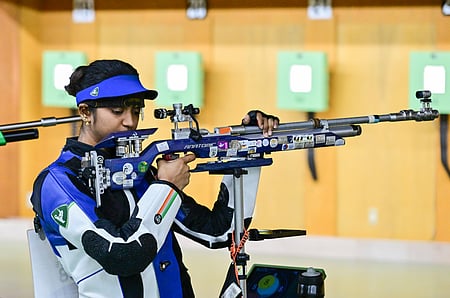
India’s shooters faced an unusual challenge before stepping onto the firing line at the Aichi-Nagoya Asian Games: a nearly two-hour bus journey over winding mountain roads.
The Aichi Prefectural General Shooting Gallery in Toyota City is at an elevation of about 670 metres above sea level, with the route from Nagoya passing through hilly countryside, forests and winding roads. What organisers had indicated would be a roughly 70-minute journey turned out to take almost two hours.
For shooters preparing for precision competition, the journey presented its own problems, including neck stiffness and motion sickness.

No screens, neck pillows
Indian coaches and support staff took precautions to ensure the athletes arrived fresh. The shooters used neck pillows to support their heads as the bus navigated the winding roads.
They were also advised to stay away from their phone screens, which could worsen motion sickness. Some chose to sleep during the journey, while the team also opted for light food before leaving for the venue.
The preparations paid off
Elavenil Valarivan, Sonam Maskar and Vidarsa Vinod combined for 1,898 points to win silver in the women’s 10m air rifle team event. China won gold with a world-record 1,904.2 points, while Japan took bronze with 1,897.1.
Elavenil then added another silver in the individual event later on Sunday. She finished with 252.4 points, just 0.6 behind Japan’s Taichi Hinata, who won gold with an Asian Games record of 253.0.
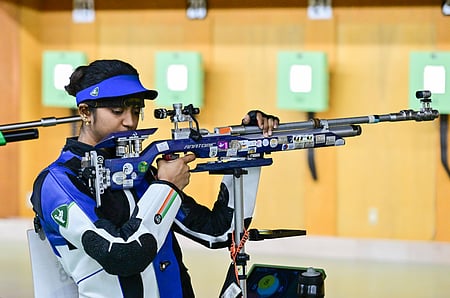
The two medals gave India an early boost at the 2026 Asian Games. They highlighted how even seemingly small details away from the competition venue can matter in a sport where concentration and physical steadiness are crucial.
.With inputs from Agencies