
Table of Contents
Dubai: When Umer Zarin stepped off a plane into the UAE in 1983, Dubai was still finding its modern shape. The first job of the young Pakistani expat was tending the garden of an Arab family in Sharjah.
He had no idea that he would eventually become a driver in Dubai and four decades later, he would still be here and that his son would follow him into the same city, the same company, and the same profession.
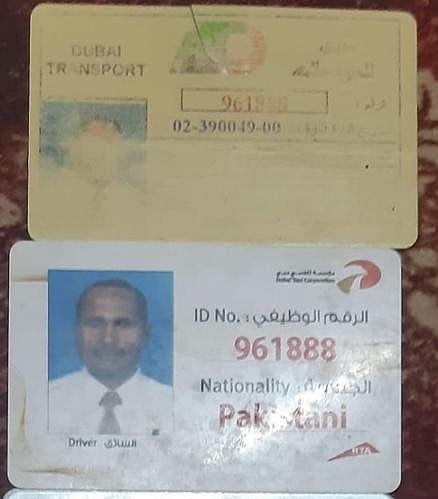
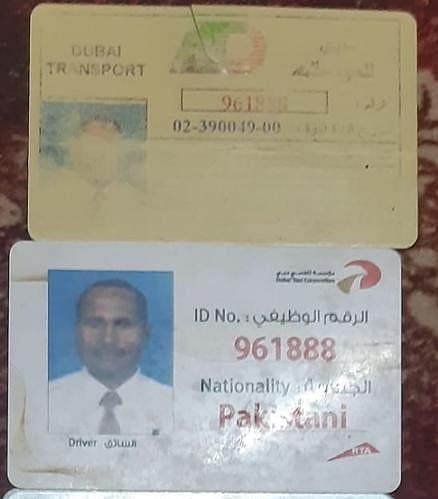
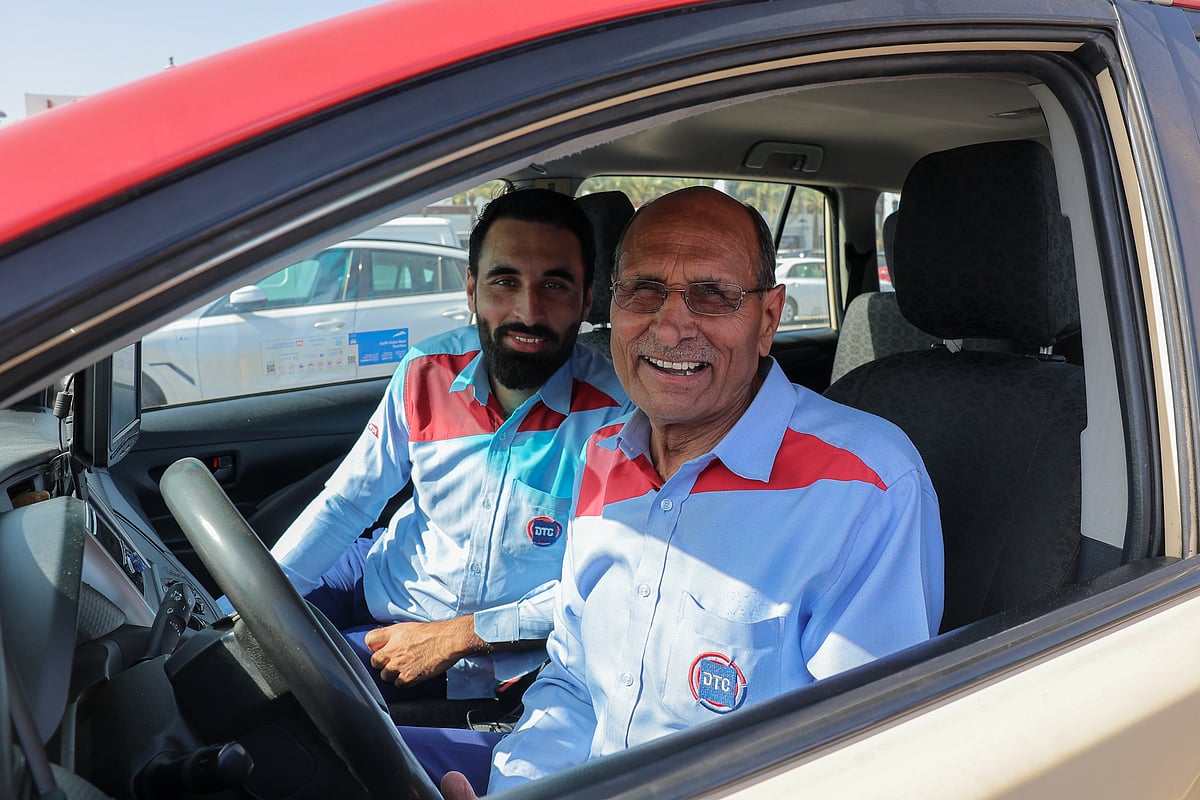
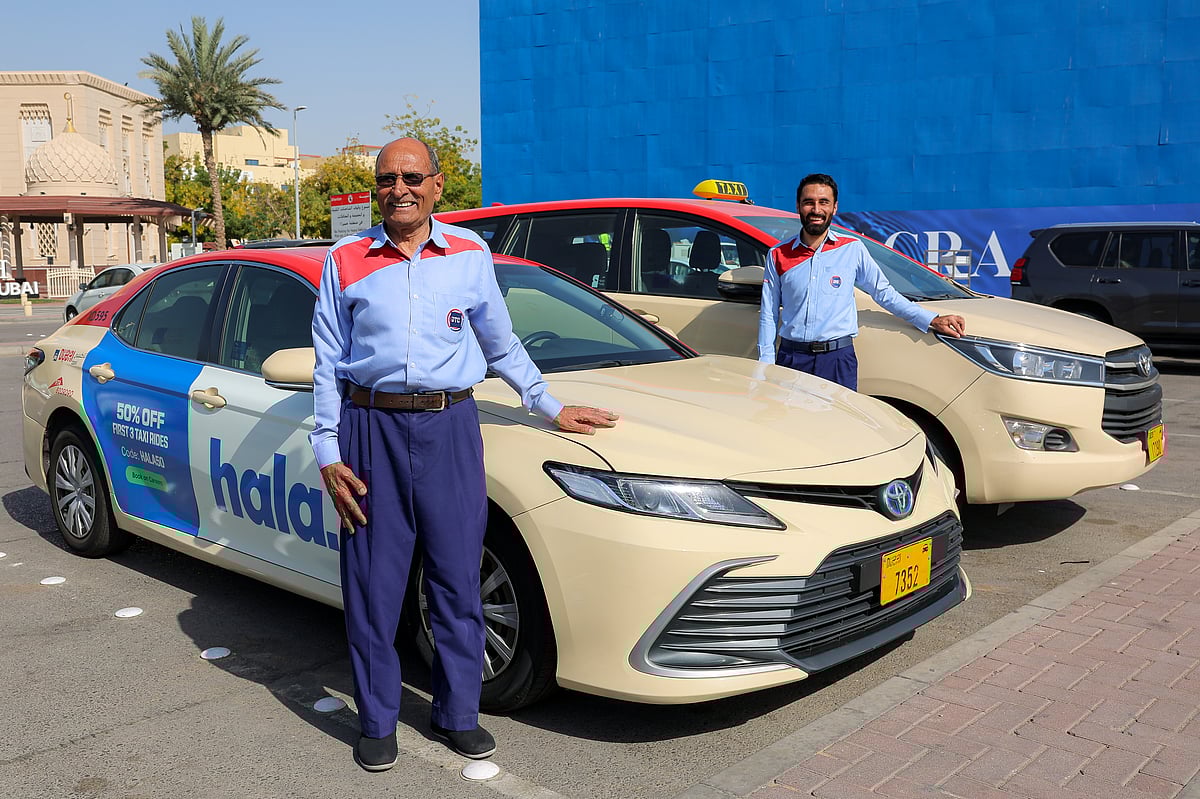
The 65-year-old became a taxi driver with the Dubai Taxi Company (DTC) when it was known as Dubai Transport in 1996 a few years after he got the driving licen. Over a year ago, his elder son Waqas Khan also joined DTC, making them one of the few father-son duos among drivers behind the wheels of over 6,200 DTC taxis.

Separated by three decades of experience in moving the passengers, the father and son now navigate the same streets, but one claims he does not require GPS.
Who wants GPS?
In an exclusive interview with Gulf News, Umer said he knows every nook and cranny in Dubai without needing to use any navigation system or app. “I know all the routes. I learn new ones fast,” he said with quiet confidence.
He has watched highways emerge where there was once only sand, and towers rise where there was open sky. “This place has always amazed me. Seeing the development here, I wonder what human beings cannot make.”
The fares have changed as dramatically as the skyline. He remembers when the base fare started at Dh2.5. Today, pricing varies depending on the time of day, booking method and location, with surcharges applying at busy spots.
Family built from a distance
Behind the daily rhythm of night shifts is a story of sacrifice. Umer has not returned home to Pakistan in four years. “I need to save a lot of money. If I stay back and work during my annual leave, I can earn more commission,” he explained.
His income has carried an entire family. He supported three younger siblings, helped raise them, built a house back home, and got them all married. They now have stable jobs and settled lives.
He also funded his children’s education: Waqas’s degree and the nursing studies of his younger son Abbas, who remains in Pakistan. “I spent a lot on my children’s education. So, I didn’t want to take a break,” said the sexagenarian father.
His wife, Hameeda Bibi, and Abbas have never visited the UAE. “I wish to bring them over for a visit at least once,” he said, the words carrying the weight of years of distance.
Nationality vs humanity
Umer’s decades on Dubai’s roads have made him something of a quiet polyglot. Besides his mother tongue Pashto, he can get by in Urdu, Hindi, English, Arabic, Russian and Tagalog. The last few were picked up, word by word, from passengers and colleagues across the years.
He has seen people, he believes, from every country on earth pass through Dubai’s roads. “There are so many people of so many nationalities. But humanity is different from nationality. Dubai is a place of humanity where everyone lives peacefully. People come here to work hard for their families, not to fight with each other.”
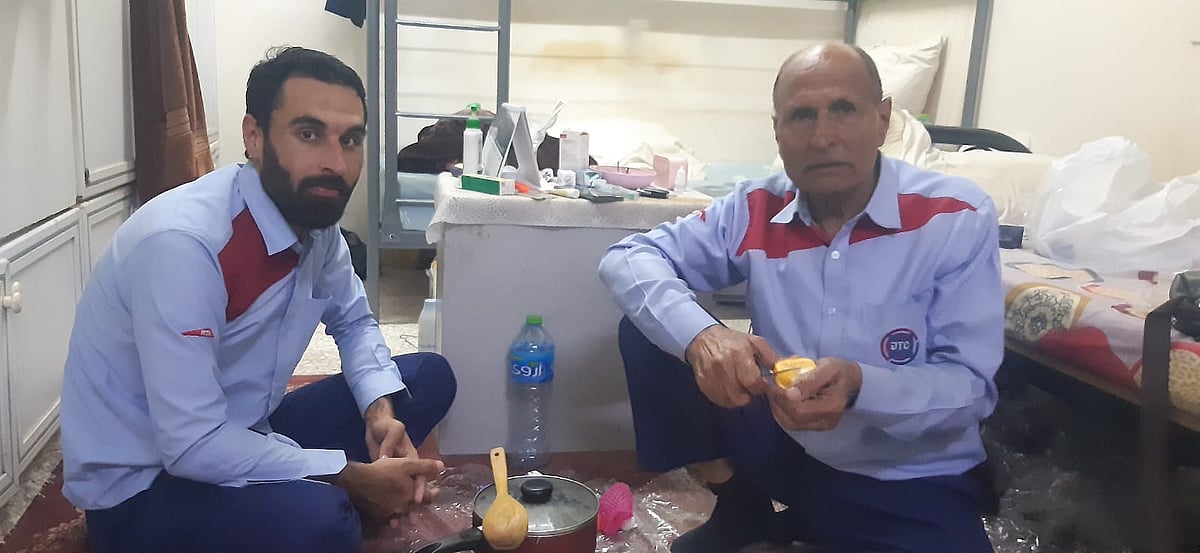
He pointed to their own living arrangement as proof. The father and son have a roommate who is a Hindu man from India. “We love and respect each other. He is the one who took care of me and took me to the hospital when I fell sick before my son joined me,” Umer recalled.
Night shifts and Ramadan
Umer has worked the night shift for three decades. He has watched Dubai’s nightlife grow from near silence to a city that never really stops. Even Ramadan, he noted, has transformed.
“Earlier, everything used to remain closed and it was a difficult time for taxi drivers to make business. But now Dubai is open 24×7 and Ramadan has become a very busy time for us.”
He is disciplined about his health. He often goes for a walk, cooks most of his own meals, rarely eats out, and takes pride in what he prepares. “I am a good cook,” he said. Since Waqas arrived, his son helps in small ways, cutting vegetables and cleaning up.
On Ramadan evenings, they break their fast together at home over dates, fruits, juice and a meal Umer has prepared, then head out for their shifts unlike many taxi drivers who might to have to stop midway to have iftar.
Following in father’s footsteps
When Waqas joined DTC in October 2024 after completing his BA in Pakistan and finding little opportunity back home, he stepped into a world his father had already mapped out. Umer wasted no time passing on the lessons of the road, particularly the rules that taxi drivers must never bend.
His biggest piece of advice was simple but powerful. “Keep your car clean, inside and outside. Nobody should have to close their nose or feel nauseated when they sit in your taxi. If you obey rules and behave well, there won’t be any issues.”
Honesty, too, is non-negotiable. Umer has returned mobile phones and valuables left behind by passengers over the years and urges young drivers like Waqas to do the same.
As for going out together in a taxi, father and son said it has never happened. “We have never done that. Maybe we should do it soon,” said Umer.
Memories from the roads
Not everything from three decades behind the wheel is easy to recall. But two incidents from around two decades ago vividly remain in Umer’s memory.
The first was near the airport, where he came across a road accident and found four people lying injured. He stopped, helped other motorists move them to safety, and waited until first responders arrived.
The second was darker. A car caught fire on Al Wasl Road. The victims did not survive. “I couldn’t do anything. It was too late,” he said with a sigh.
Embracing the future
Considering his age and experience, Umer was assigned as a Mashaweer driver, a flexible on-call service launched by the Roads and Transport Authority (RTA) in 2018 that allows residents to hire trained drivers by the hour, day, week or month at a fixed fare.
He is under no illusions about where the industry is heading. Dubai is actively preparing for autonomous and aerial taxis, and he welcomes it.
“No wonder Dubai will be the first to come up with all that. The city has to grow with the developments in technology. So, we have to welcome all these.”
But he believes something will endure that no algorithm can replicate: the human connection between a driver and the passenger in the back seat. That, he says, will take a long time to replace.
As for his future, Waqas is candid about where he hopes his own road leads, though he respects the path his father walked. “What I love is cricket. I want to be a cricketer,” he said. The 25-year-old has not given up on that dream and he is looking forward to the Ramadan cricket tournaments for DTC employees.