
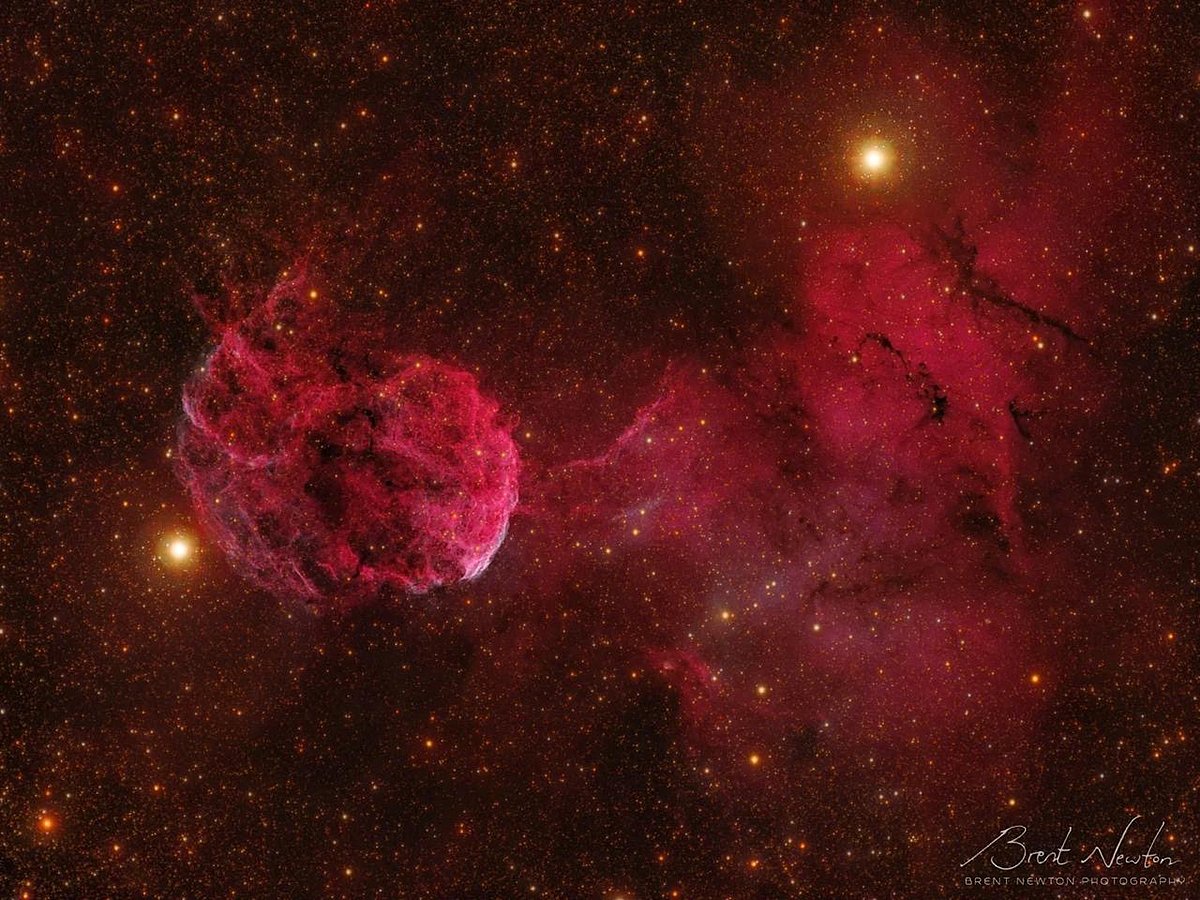
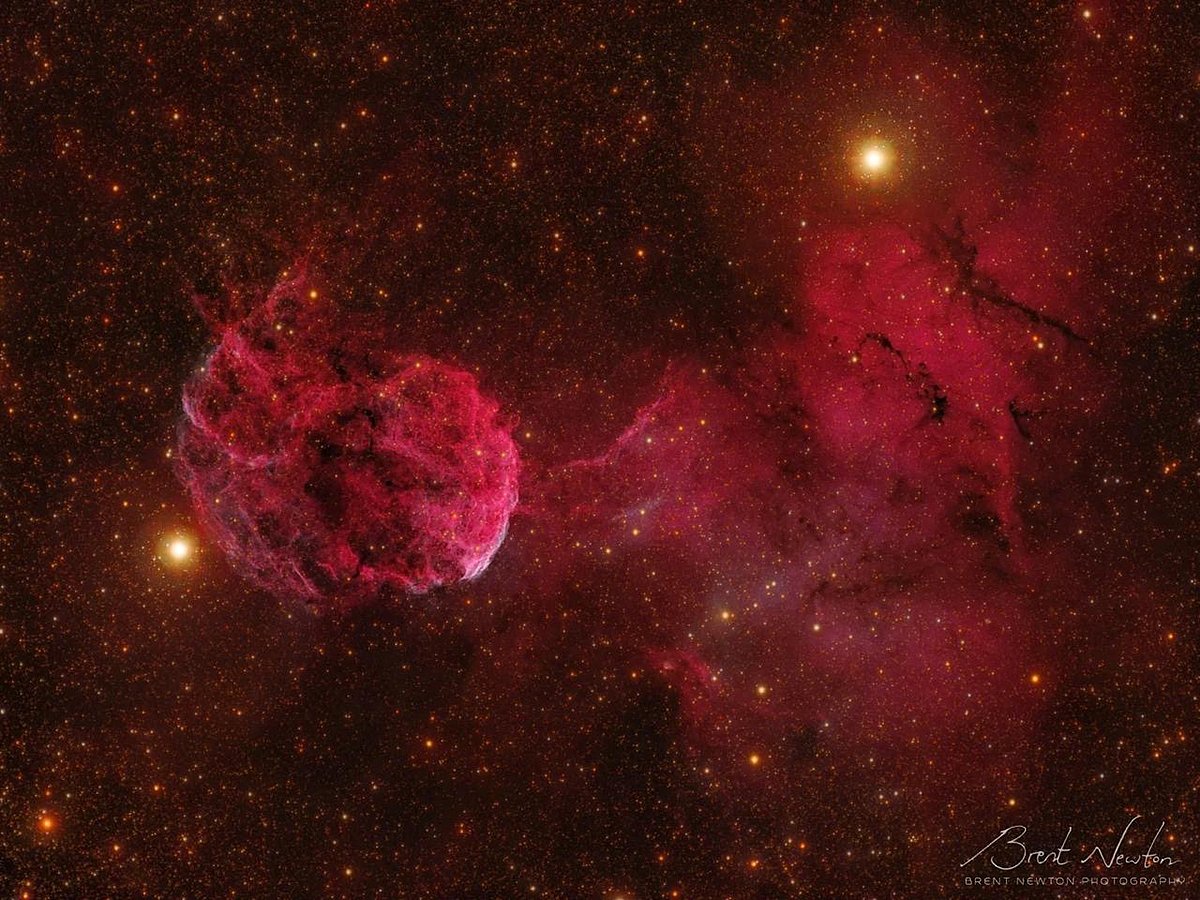
Abu Dhabi: Al Khatm Astronomical Observatory, located in the Abu Dhabi desert, has successfully captured an image of the Jellyfish Nebula (IC 443), a vast cloud of cosmic gas and dust. The nebula takes its name from its distinctive shape, which resembles a jellyfish. It lies within the constellation Gemini, the same group of stars associated with the zodiac sign of Gemini.
The nebula is located about 5,000 light-years from Earth, meaning the light captured in the image began its journey around 3000 BCE. The Jellyfish Nebula is classified as a supernova remnant, consisting of expanding debris and scattered material left behind after the dramatic death and explosion of a massive star in an event known as a supernova.
Astronomers believe the explosion occurred around 30,000 years ago. Studies suggest that the collapsed core of the original star compressed into a neutron star identified as J061705.3+222127. This neutron star is moving through space at an estimated speed of about 830,000 kilometres per hour.

Stay updated: Get the latest faster by downloading the Gulf News app – it’s completely free. Click here for Apple or here for Android. You can also find it on the Huawei AppGallery.
Capturing the nebula required around two weeks of observations. Imaging began on February 8 and continued until February 22, with multiple exposures taken each night depending on weather conditions, sky clarity and the Moon’s position relative to the nebula.
The final image was created from 355 individual photographs, each with an exposure time of five minutes, resulting in a total exposure time of 29.5 hours. The images were stacked to produce the final result.
The photograph was taken using a 4.3-inch refractor telescope equipped with a colour camera and a specialised light-pollution reduction filter. The filter was necessary due to the relatively high level of light pollution at the observatory’s location. The darkness of the sky at the site is estimated at 6.5 on the Bortle Scale.
What spawned the Jellyfish Nebula?
The Jellyfish Nebula, also known by its official designation IC 443, is the remnant of a supernova located about 5,000 light-years away. Observations from NASA’s Chandra X-ray Observatory suggest that the explosion may also have produced an unusual object located at the southern edge of the remnant, known as CXOU J061705.3+222127, or J0617. Scientists believe this object is likely a rapidly spinning neutron star, also known as a pulsar.
When a massive star runs out of thermonuclear fuel, it collapses inward, forming an extremely dense core known as a neutron star. The outer layers of the star then rebound outward in a powerful supernova explosion. If the neutron star spins rapidly and emits beams of radiation, it is known as a pulsar. As it rotates, the radiation sweeps through space like the beam of a lighthouse and can be detected from Earth as pulses of radio waves and other forms of radiation.