
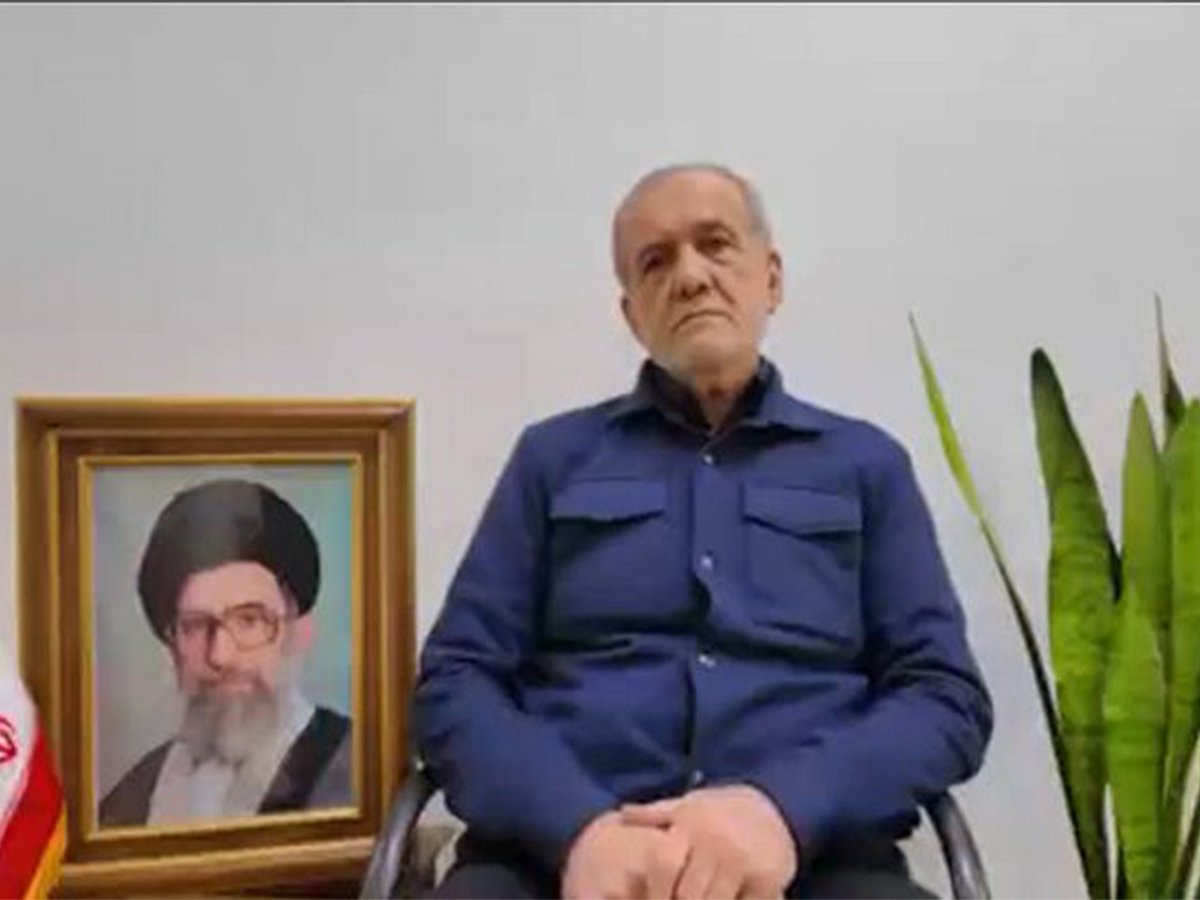
Dubai: Iranian President Masoud Pezeshkian apologised on state television Saturday for missile strikes that hit Gulf countries in recent days, only to retract the remarks hours later — exposing signs of division within Tehran’s leadership as the war with the United States and Israel enters its second week.
Air-raid sirens had sounded across parts of the Gulf since last week, including in Qatar and Bahrain, after Iranian missiles and drones targeted US military installations in the region. Some strikes also damaged civilian sites such as airports and hotels.
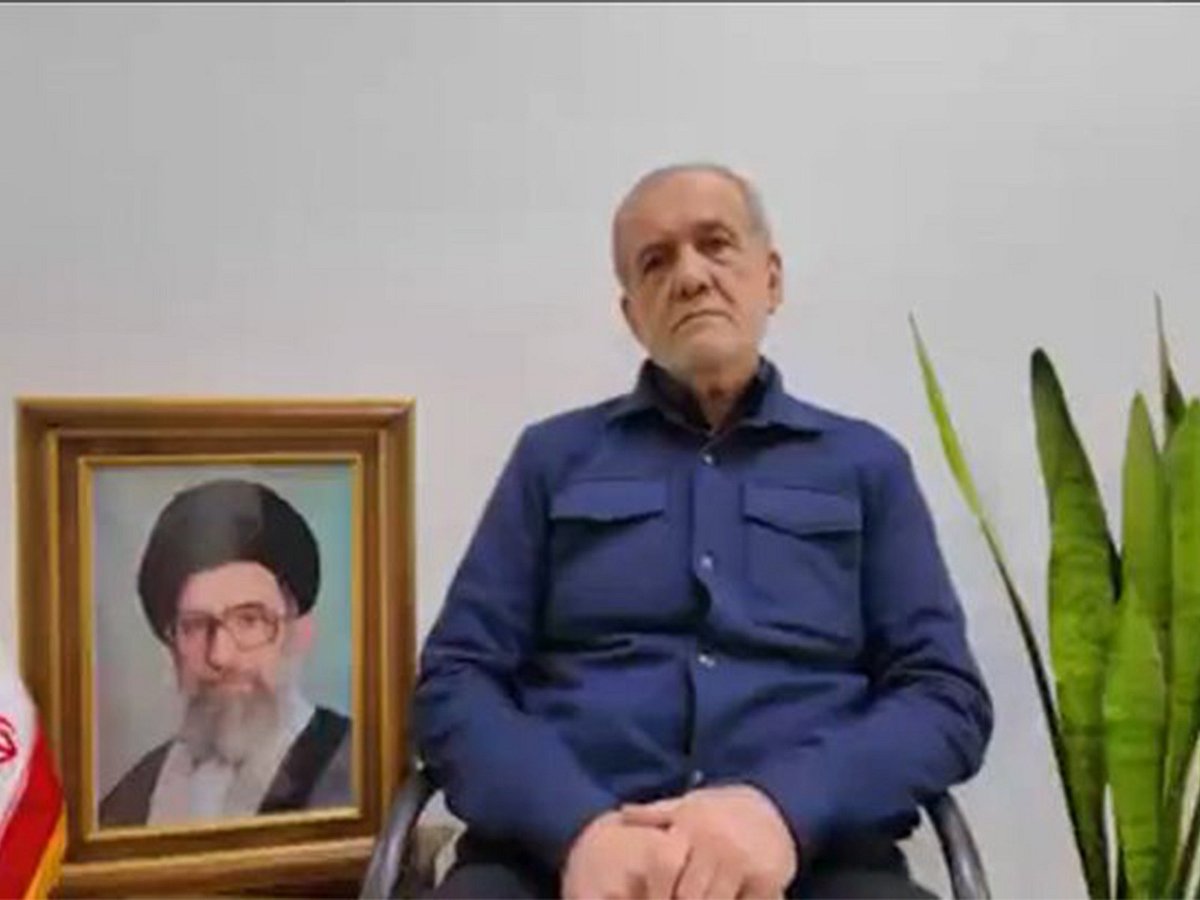
In his first statement, Pezeshkian apologised “on behalf of Iran to the neighbouring countries affected” and said Tehran would halt attacks against Gulf states unless they were used as launch points for strikes against Iran.

But hours later, after criticism from Iranian hardliners, the president issued another statement asserting that Iran had not attacked its “friendly and neighbouring countries” — omitting any apology.
The apparent reversal came even as missile and drone strikes across the Gulf continued, raising questions about who is directing Iran’s military response.
Pezeshkian suggested the attacks were partly the result of confusion within the chain of command after Israel’s strikes killed Supreme Leader Ayatollah Ali Khamenei and other senior officials.
“Because our commanders and our leader lost their lives due to the brutal aggression, our armed forces, when there were no commanders present, acted on their own authority,” Pezeshkian said in remarks carried by The New York Times.
Fresh Iran strikes across Gulf
-
Kuwait: Drone hit fuel tanks at Kuwait International Airport; fire contained, no major injuries reported. Two border guards killed during attacks, authorities said.
-
Bahrain: Iranian drone damaged a desalination plant; officials said water supplies were unaffected. Missile debris injured three people and damaged a university building.
-
Saudi Arabia: Air defences intercepted 33 drones, including one targeting Riyadh’s diplomatic quarter and another aimed at the Shaybah oil field.
-
UAE: Air defences responded to incoming missiles and drones. Dubai airport briefly halted operations after debris from an interception killed a Pakistani national.
-
Qatar: Authorities said 10 ballistic missiles and two cruise missiles fired from Iran were mostly intercepted without casualties.
His comments appeared to point to a breakdown in command and control inside Iran’s military and the Islamic Revolutionary Guard Corps, which has led much of the country’s retaliation.
Iran has fired hundreds of missiles and drones at targets across the region since the conflict began last Saturday, saying it was aiming at American bases in Gulf countries. But the attacks have also struck civilian infrastructure across the Middle East.
The conflicting messages from Tehran come at a moment of political uncertainty after Khamenei’s death. Iran is currently being run by a three-member transitional council, of which Pezeshkian is a member, until the powerful Assembly of Experts elects a new supreme leader.
New Supreme Leader
Ahmad Alamolhoda, a member of Iran’s Assembly of Experts, said the vote to select the country’s next supreme leader has already been held and the successor has been decided, according to multiple news reports citing the Mehr news agency
Among those seen as possible contenders is Mojtaba Khamenei, the late leader’s son.
But analysts say Iran’s powerful security establishment — particularly the Revolutionary Guards — may wield greater influence than the civilian leadership during the crisis.
“Pezeshkian’s comments, which were followed by further strikes on the Gulf, will only reinforce perceptions of his powerlessness within a military-dominated system,” Sanam Vakil, director of the Middle East and North Africa programme at Chatham House, told The New York Times.
Hardliners quickly pushed back.
Gholam-Hossein Mohseni-Ejei, the judiciary chief and another member of the transitional council, warned that attacks on countries hosting US forces would continue.
“The geography of some countries in the region is openly and secretly in the hands of the enemy,” he said, according to Iran’s Tasnim news agency. “Severe attacks on these targets will continue.”
US President Donald Trump seized on Pezeshkian’s earlier apology, claiming it showed the US-Israeli campaign was forcing Tehran to back down.
“Iran, which is being beat to HELL, has apologised and surrendered to its Middle East neighbours,” Trump wrote on social media, adding that the country would be “hit very hard” if attacks continued.
Pezeshkian later rejected Trump’s demand for unconditional surrender, calling it “a dream that our enemies will take to the grave.”
Iranian security official Ali Larijani also accused Washington and Israel of seeking to break up the country.
“Their issue was the fundamental disintegration of Iran,” Larijani said in an interview on state television.