

Table of Contents
Dubai: Good grades remain important for students applying to university, but academic results alone may not tell the full story.
Students need to show universities who they are, what makes them different, and how they have developed beyond the classroom, according to Dr. Mauli Mahajan, founder of MyCompassToday and 3E Worldwide.
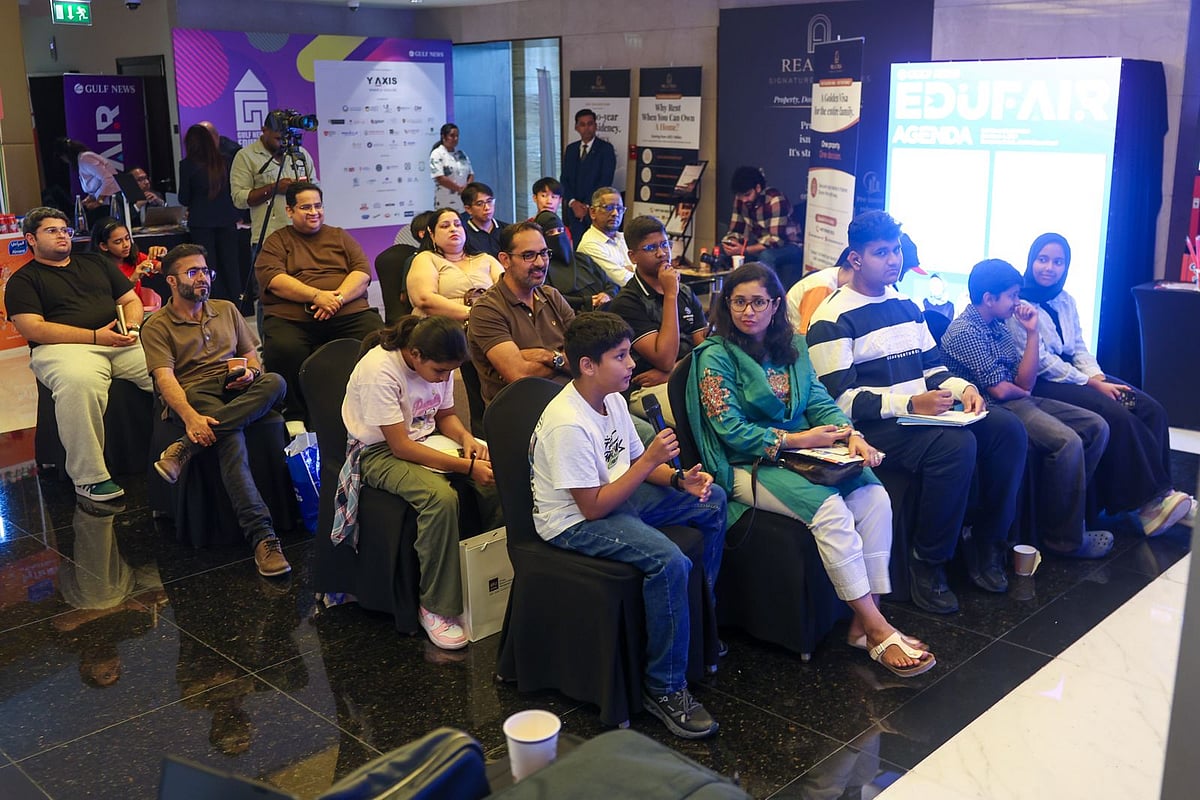
Speaking during a spotlight session on the first day of Gulf News Edufair held at Shangri-La Hotel Dubai, Mahajan has encouraged students to start building their profile early rather than waiting until they are preparing their university applications.

“Marks are important but students need to tell their story through their application to get accepted into the university,” remarked Mahajan.
Get updated faster and for FREE: Download the Gulf News app now – simply click here.
What makes a student stand out
Mahajan has described a student profile as the intentional collection of experiences, achievements, skills, and contributions. For students, the starting point is understanding what makes them different.
“How are you different? How do you stand out from your classmates?” asked Mahajan, urging students to begin developing a profile that is unique to them.
The focus should not just be on accumulating certificates or participating in as many activities as possible. Instead, students should develop experiences that show genuine interests, skills, and growth.
“90 percent of competitive universities today consider extracurriculars very important in admission decisions.”
Mahajan has emphasised the need to present skills and impact, rather than grades alone. Students who show consistent growth can demonstrate their potential through the experiences they have built over time.
Why profile building matters
The university admissions landscape is becoming increasingly competitive, making it important for students to think beyond their academic results.
Mahajan has pointed to the growing use of holistic admissions, where universities consider a broader range of factors.
She has highlighted a shift from marks towards skills and future readiness. This means that experiences outside the classroom can become an important part of their university story.
Profile building can also play a role when students apply for scholarships and financial aid, where impact and achievements beyond academics may form part of their overall application.
At the same time, career clarity needs to start earlier than before. Students do not necessarily need to have their future career decided at school, but exploring different interests early can help them understand their strengths and possible directions.
Eight ways to build a profile
Mahajan has outlined eight areas through which students can develop their profile: explore, create, experience, lead, serve, compete, develop a skill, and reflect.
Exploring allows students to discover interests, while creating can involve developing their own ideas or projects. Experience can come through internships, research programmes, or other opportunities that expose students to areas they may want to pursue.
Leadership can be seen through taking responsibility and working with others. Serving allows students to contribute to their communities, while competitions can provide opportunities to test and develop their abilities.
Students should also work on developing a specific skill and, importantly, reflect on their experiences to understand what they have learnt and how they have grown.
Depth is more important than collecting activities
Mahajan has advised students not to focus on simply collecting activities. They should look for opportunities to build depth around genuine interests.
A student’s profile should gradually become a collection of experiences that connect to their interests, abilities, and development. These experiences can then support different parts of a university application, including activities and experiences, personal statements or essays, scholarship applications, recommendation letters, interviews, portfolios, and internships.
The aim is therefore not to have the longest list of achievements, but to have meaningful experiences that students can explain and reflect on.
Parents can help without adding pressure
Parents also have an important role in helping children develop their profiles. Mahajan has bared that parents should act as their child’s career coach by discussing interests and goals openly and encouraging participation in activities outside academics.
Parents can help identify and apply for relevant internships or research programmes, support consistent engagement with long-term projects and provide practical help, such as transportation and logistics, when needed.
They can also introduce their children to people within their professional networks and guide them to reflect on their experiences.
Staying informed through school updates can help parents understand their child’s progress, while support with time management can assist students to balance academics with other commitments.
In addition, Mahajan has stressed the importance of avoiding pressure and celebrating children’s efforts.
Don’t wait until Grade 12
One of the key messages from the session has been to start early. Waiting until Grade 12 to think about profile building can leave little time to develop meaningful experiences and display consistent growth.
Students should use their school years to explore interests, develop skills, take on experiences, and understand what motivates them.
“The strongest profile isn’t the one with the most certificates. It is the one that sounds like you,” said Mahajan.