
Table of Contents
The number of vessels visibly crossing the Strait of Hormuz has “collapsed” to a fraction of normal levels, but that does not necessarily mean oil shipments have stopped.
Visible vessel traffic through the Strait of Hormuz remains far below normal, but satellite sightings suggest oil flows are much higher than ship-tracking data indicates.
Shipping intelligence firm TankerTrackers.com, in a counterpoint to a recent Reuters report, claimed many vessels carrying valuable cargo in the Middle East are deliberately switching off their Automatic Identification System (AIS) “transponders”, making conventional vessel tracking increasingly unreliable.

Get it: Fast, verified news for FREE … download the Gulf News app — simply click here
“Most of the ones moving any cargo of value are keeping their AIS transponders switched off,” TankerTrackers said in a social-media post, adding that its month-on-month satellite sightings showed Saudi Arabia’s crude oil loadings from its eastern coast had risen “seven-fold”.
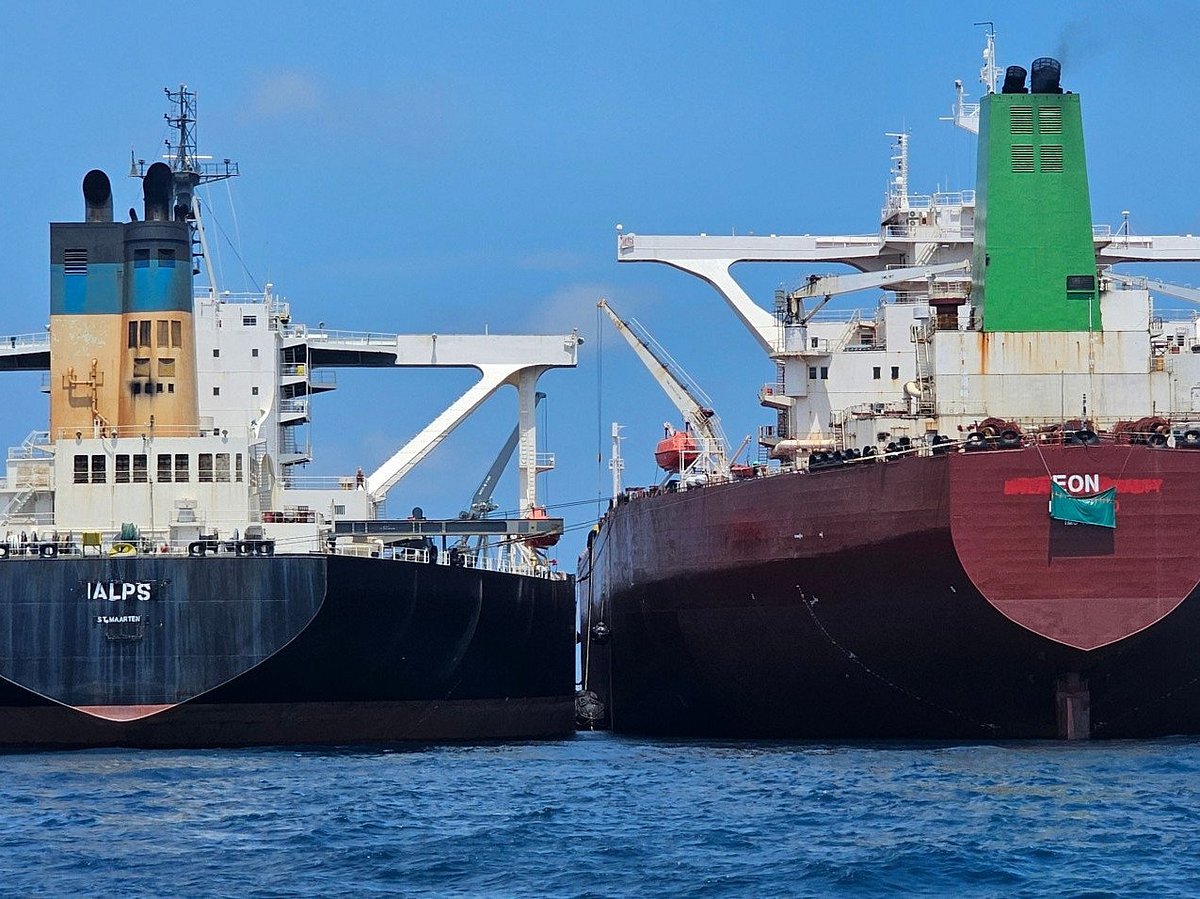
The observation comes as Saudi Arabia has sharply increased crude shipments from Gulf terminals after an attack disrupted its alternative export route through the Red Sea.
An Automatic Identification System (AIS) transponder is an automated marine radio transceiver that continuously broadcasts a vessel’s identity, position, speed, and course to other nearby ships and coastal stations, while simultaneously receiving the same data from surrounding traffic to build a real-time, map-based situational display. (Source: Comar Systems)
Only 3 vessels visibly crossed Hormuz
Reuters reported on Wednesday that three commodity vessels transited the Strait of Hormuz on Tuesday, down from four a day earlier and well below the 10-day moving average of about 15.
The figures are preliminary — and may change significantly because vessels can switch off their transponders during voyages.
That creates an important distinction between visible traffic vs actual traffic.
AIS signals allow ships to be tracked by their identity, position, speed and direction. When a vessel turns the system off, however, it can “disappear” from conventional ship-tracking databases.
Satellite imagery can still provide clues, including by identifying vessels visually even when AIS signals are absent.

TankerTrackers says it uses satellite imagery to identify vessels operating with their transponders switched off. Its latest observation therefore suggests that the extremely low number of publicly visible crossings may understate actual oil movements.
Saudi oil flows shift to Gulf terminals
Saudi Arabia has been particularly affected by disruption to its alternative export routes.
Drone attacks forced the shutdown of the kingdom’s East-West Pipeline, also known as Petroline, which carries crude from the oil-producing east towards Yanbu on the Red Sea.
The pipeline was restarted at a low rate on Tuesday. Full restoration is expected to take longer.
Before that restart, Saudi Aramco had been increasing shipments from its eastern Gulf terminals.
Reuters reported that Aramco loaded about 14 million barrels of crude on seven very large crude carriers (VLCCs) at Ras Tanura on September 20. Satellite imagery reviewed by Reuters showed seven tankers near the port.
Tracking data cited by Reuters also indicated that Saudi crude moving through Hormuz averaged about 2.9 million barrels per day over a six-day period, compared with about 700,000 bpd in August.
Why the numbers appear contradictory
At first glance, the data seem difficult to reconcile: very few vessels are visibly crossing Hormuz, yet Saudi oil loadings are rising sharply.
The explanation is that the two datasets measure different things.
Kpler and other shipping trackers largely depend on AIS signals and other vessel-position data.
TankerTrackers supplements such information with satellite imagery and visual identification.
Consequently, a tanker with its AIS switched off can “disappear” from a conventional vessel count while still being visible in satellite imagery.
So reports of three commodity vessels seen crossing the strait during a 24-hour period is not a sufficient proof that only three vessels indeed physically crossed the waterway.
Saudi Arabia is the world’s largest crude oil exporter, making changes in its shipping patterns particularly important for global oil markets.