
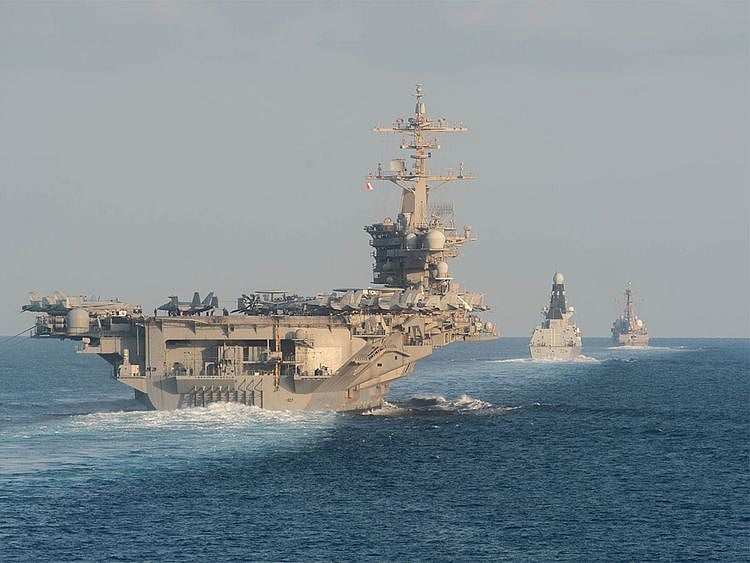
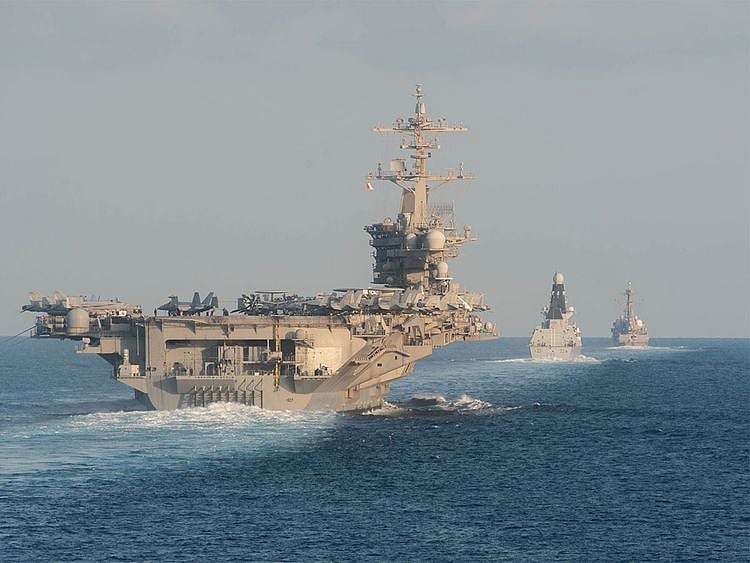
Defense Secretary Pete Hegseth on Wednesday hailed the USS Abraham Lincoln’s crew while visiting the ship as it returned from a lengthy, difficult Iran war deployment in which multiple service members in the carrier strike group attempted suicide.
The massive nuclear-powered warship left California in November 2025 for duty in the South China Sea and was rerouted to the Middle East before US-Israeli attacks on Iran that began in late February, staying at sea until a Thailand port call in early September.
“What the USS Abraham Lincoln carrier strike group did, no other carrier strike group has ever done,” Hegseth said in remarks to service members on the ship while it was at sea in the Pacific.

Get updated faster and for FREE: Download the Gulf News app now – simply click here.
“Ten thousand sorties, 23,000 combat flight hours, almost 4,000 combat sorties,” he said, later announcing the award of a presidential unit citation to the strike group for “extraordinary heroism against enemy forces.”
But the lengthy deployment took a toll on US military personnel on the Lincoln and accompanying warships. In August, military families and lawmakers sounded the alarm about issues including reported suicide attempts and food shortages aboard the carrier.
Those claims were dismissed by President Donald Trump at the time, while Hegseth insisted the situation had been "misrepresented."
On Wednesday, Hegseth took aim at press coverage of the carrier, saying: "There were a few folks in the media who tried to turn the USS Abraham Lincoln into some sort of a symbol — a symbol of dysfunction, or a symbol of low morale, or a symbol of a failed mission."
"It’s the exact opposite," he said. "The only reaction the American people and the American media should have is pride."
Last month, the Trump administration acknowledged in a letter to a lawmaker that there had been eight suicide attempts by US service members who were part of the Lincoln carrier strike group but none of those people.
The letter from Acting Navy Secretary Hung Cao provided details on some of the suicide attempts. He said a sailor assigned to an air wing "went overboard from the ship in early August" and was quickly recovered, while another sailor "attempted to go overboard in March and was stopped by his shipmates."
The letter also said that while food supplies on the carrier were "adequate," limited resupply options during combat led the "number of main entree options" to be reduced from "two to one for a short time."