
Table of Contents
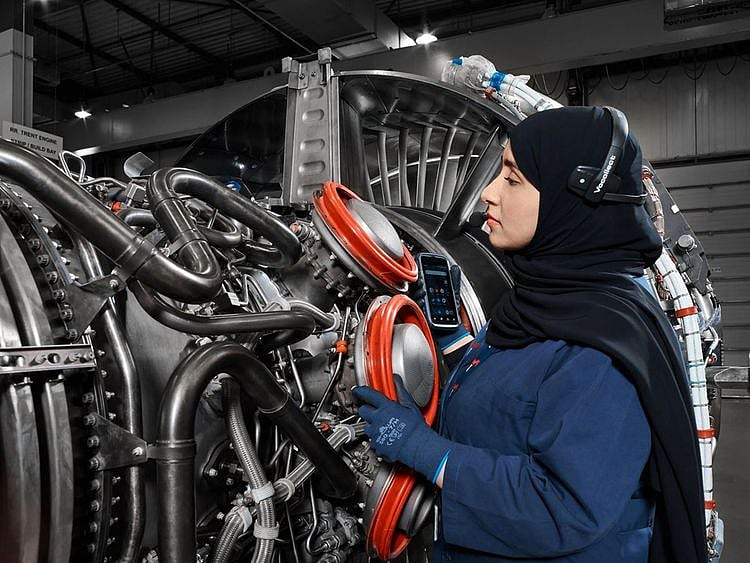
Dubai: Abu Dhabi aerospace company Sanad expects its new GTF engine maintenance centre in Al Ain to require more than 1,000 technicians once fully operational, with much of that workforce expected to be developed inside the UAE through universities, trainee programmes and on-the-job training.
Sign up for our daily business newsletter, Cheques & Balances.
The hiring requirement comes amid a global shortage of skilled aviation workers and forms part of Sanad’s wider expansion in engine maintenance, repair, testing and asset management.
“GTF alone is expected to have 1000 plus technicians when it is fully operational, we are not expecting that these 1000 plus professionals are all going to be expats imported from overseas. It’s a global shortage. It’s a global issue that we are trying to address,” Kashish Kohli, Group Chief Financial Officer and SVP, Asset Management Division at Sanad, told Gulf News in an exclusive interview.

Get updated faster and for FREE: Download the Gulf News app now – simply click here.
Sanad’s workforce grew 44% year on year in the first half of 2026 to 898 employees. Emiratisation reached 36.9%, while UAE nationals accounted for 51.6% of senior leadership positions.
The next phase will require a much larger technical pipeline.
Kohli said Sanad’s recruitment strategy will combine overseas hiring with a stronger focus on developing local talent.
“So our approach is more homegrown talent. So working with the universities, on job training, trainee programs that we do, supported by hiring wherever it makes sense,” he said.
The company also wants more of its future leadership to emerge from within its technical workforce.
“But there’s a strong focus on developing the leadership from the shop itself, from the country itself, by working locally with the universities.”
Sanad is building two facilities in Al Ain. One will be dedicated to GTF engines and is scheduled to begin engine inductions in 2028, while the second is the Dh480 million Repair Centre of Excellence.
The Repair Centre of Excellence is expected to support more than 350 jobs and, once fully operational, handle up to 65,000 repaired parts annually. The approximately 17,600-square-metre facility is scheduled to begin operations by 2030.
The CFO also confirmed that construction is progressing on the GTF Engine MRO Centre, which spans more than 64,000 square metres and is planned to become the world’s second-largest GTF engine maintenance centre.
Capacity becomes the constraint
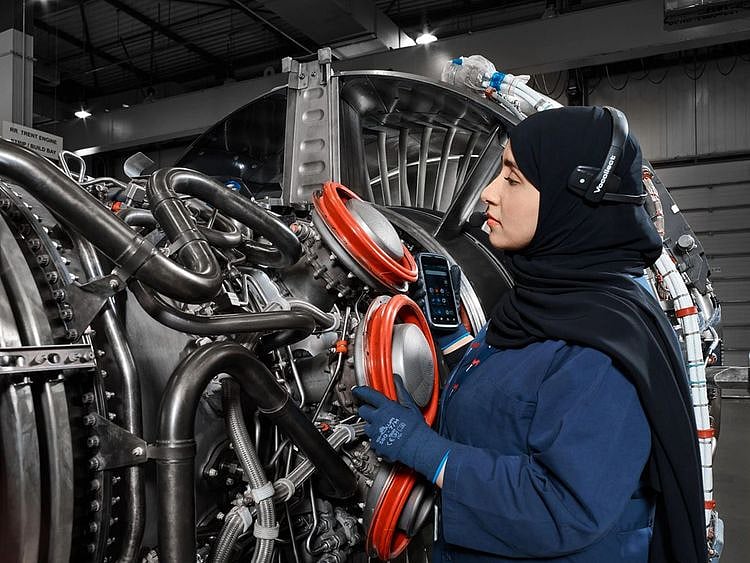
Sanad’s investment in people is being driven by the same pressure behind its infrastructure expansion, with global airlines requiring more engine maintenance while available repair capacity remains tight.
“We are benefiting from a generational super cycle in commercial aviation,” Kohli said.
Citing Oliver Wyman projections, he said the global commercial fleet is expected to expand from around 30,000 aircraft today to close to 41,000 by 2035-2036, with the Middle East recording annual growth of about 5%. Boeing expects the regional fleet to more than double by 2044.
“Demand is not our bottleneck. Capacity and capability are,” Kohli stressed.
Sanad has invested more than Dh800 million over the past two years in UAE aerospace infrastructure, including repair capabilities, testing infrastructure and next-generation engine maintenance capacity.
The company inducted 120 engines during the first half of 2026, an increase of 33.3% from a year earlier, while engine deliveries rose 53.8%.
Sanad expects its existing network to reach annual capacity of about 275 to 300 engine shop visits before the GTF facility begins operations in 2028.
Bringing more work inside the UAE
Part of the expansion is also aimed at reducing delays caused by global supply-chain constraints.
Kohli said engine turnaround times depend on several factors beyond the number of physical maintenance bays available, including parts supplied by manufacturers, material availability and the capacity of external repair shops.
Sanad is therefore bringing more repair and testing work in-house.
“Our response has been vertical integration to insulate as much as possible our operations,” he said.
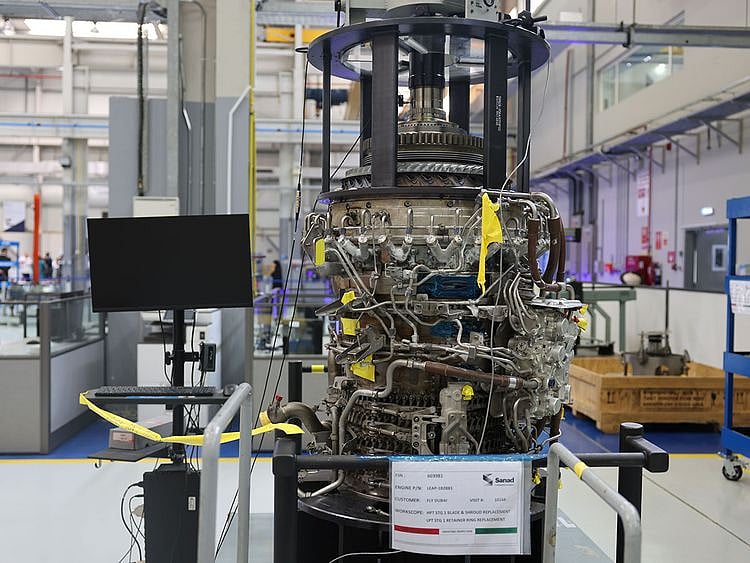
The company has also launched a Trent 700 rebuild programme through its Asset Management division. Engines acquired by the division can be repaired and restored through Sanad’s MRO operations, creating a pool of serviceable engines and material that can be used when customers require parts or spare-engine support.
The approach is designed to reduce waiting periods for material while giving airlines more flexibility when engine maintenance capacity is constrained.
Asset management becomes part of the model
Sanad is also expanding beyond traditional engine MRO by combining maintenance with asset management, repair, testing and material support.
The Asset Management division deployed about AED165 million during the first half of 2026 across engine acquisitions, repair and rebuild activities and asset optimisation.
It acquired 11 engines, taking the active portfolio to 17 assets.
Kohli said Sanad’s maintenance operations give the company an advantage when assessing engine investments because it has direct visibility into repair costs, maintenance requirements and the economics of individual assets.
The company currently supports major engine platforms including the Trent 700, V2500, GEnx and LEAP, with GTF capability scheduled to join the network in 2028.
International business from Abu Dhabi
Sanad generated 99% of its revenue from international customers in the first half, serving more than 80 airlines, lessors and original equipment manufacturers globally.
Revenue reached AED4.31 billion during the period, up 35% year on year, while eight new commercial agreements worth AED95.5 million were secured.
Kohli said Sanad continues to explore opportunities to move closer to customers outside the UAE, although no specific expansion has yet been announced.
“We have always been open, Nivetha, that we want to look at markets where we can be closer to the customers,” he said.
The immediate priority remains delivering the infrastructure already under development in Abu Dhabi and Al Ain and building the workforce required to operate it.
Kohli said Sanad expects the next few years to complete its transition from an engine MRO company into a broader engine solutions business.
“By 2028, we will have the GTF Center operational. We would hopefully have progress on the engine asset portfolio through asset management. Our component repair network would have been scaled a bit.”
The aim, he said, is to offer airlines technical, financial and material support through a single platform while continuing to build the skilled workforce required to support that expansion from the UAE.