
Table of Contents
For half a century, Sylvester Stallone has been the guy who gets back up.
Knock him down. Split his lip. Swell an eye shut. Cue the music. Somehow, Rocky Balboa is back on his feet.
It is an image Stallone has spent decades living with — and, as he now reveals, perhaps living up to a little too literally.

In a candid interview with The New York Times, Stallone has spoken about what went on behind that famously chiselled physique: bulimia, steroid use, an obsession with staying impossibly lean and, eventually, a body that has required rather a lot of repair work.
When fitness stopped being fitness
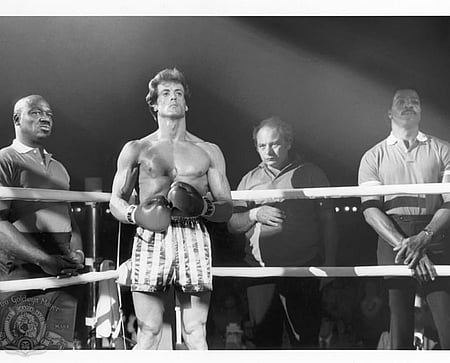
While preparing for Rocky III, Stallone wasn’t simply trying to look like a boxer. He had something much more specific in mind.
“I started to think: Design your body like a jaguar, a cat. Not big like Arnold Schwarzenegger, but more feral and aggressive and very limber and athletic,” Stallone said, according to ANI.
Then came the admission that changes the way one looks at all those famous training montages.
“It became an obsession. Really bad. It got to the point where I became bulimic.”
Stallone, who played Rocky Balboa in the 1982 film, said he reached an extraordinary level of leanness.
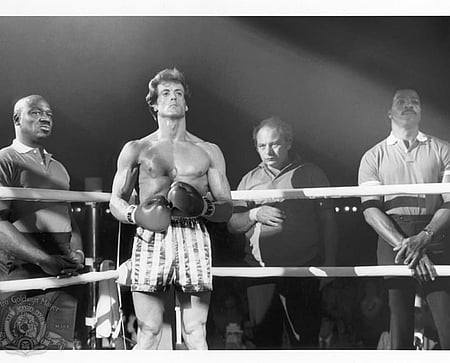
“I got down to 2.6 per cent body fat when I was doing Rocky III,” he said.
And maintaining it became an obsession in itself.
“I couldn’t hold anything down. Or I didn’t want to keep it down because I became so obsessed with staying at that point of fitness, literally an obsessive body-worship kind of thing.”
It is a sobering admission from a man whose physique became shorthand for strength, discipline and the apparently limitless possibilities of one more push-up.
‘Oh, my god, you have to’
Stallone was equally open about steroids.
“Nobody” achieves their fitness goals “without additives and drugs, period,” Stallone said, according to ANI, adding, “I don’t care what they say.”
Asked directly whether he had used steroids, Stallone responded: “Oh, my god, you have to.”
He also explained how he approached their use: “Six weeks on, six weeks off.”
Looking back, Stallone said steroid use “took a terrible toll” on his body and described his approach to fitness during that time as “very masochistic.”
And his body, it turns out, has quite the medical résumé.
Stallone said he has undergone nine back operations, two shoulder operations and three neck fusions.
“Everything is held together with baling wire,” he joked.
Funny line. Less funny reality
Before Rocky, there were pizza boxes
The hard living began long before Hollywood.
Speaking to CBS News, Stallone remembered being so broke in New York that pizza boxes could double as a mattress.
“I did, yeah. It was very comfortable,” he said.
There were also considerably less glamorous jobs, including cleaning lion cages at the Central Park Zoo.
“That’s a rough one, because I felt so bad for these magnificent animals,” he said, “and then I felt bad because I smelled like them, you know, going home.”
His childhood had not exactly been cushioned in affection either. Born in New York’s Hell’s Kitchen, Stallone said his parents sent him away to a boarding house when he was very young.
He understood why.
“I almost didn’t blame them,” he said. “I was very rambunctious.”
Affection, however, was in short supply.
“No. I don’t think they knew how. There was zero touching,” he told CBS News.
No hugs?
“Oh, no, no, no.”
It makes the Rocky story — the hunger, the rejection, the refusal to give in — feel a little less like Hollywood mythology and considerably more personal.
The $360,000 he wouldn’t take
Stallone wrote Rocky in about three-and-a-half days and has credited divine guidance with helping him finish it.
“I said, ‘Is this Your plan to, like, torture me? To this-and-that to test me? All right, I’ve come this far, I refuse to break.’ And I went back in and I finished the last few pages of ‘Rocky.’ I really felt as though something guided my hand, because I’ve never been able to do it since. So, that’s why I have to give credence to some sort of divine guidance.”
Finishing the script did not immediately fix the small matter of being broke.
Stallone even sold his dog because he could no longer afford to feed him.
“It’s the only thing I could sell. It was like, that was it,” he told CBS News.
Then producers came calling. According to CBS News, offers for the script eventually went as high as $360,000 — if Stallone would allow someone else to play Rocky.
He wouldn’t.
“I said, pass. I can’t do it,” he said. “I’ve literally crawled through every gutter in New York. I’ve slept in every alleyway. I have paid my dues, and I know this is it. I will never have this opportunity again. I don’t know if you believe in destiny, but I think in some cases, it happens.”
It did.
Rocky became a cultural phenomenon, won three Oscars including Best Picture and transformed Stallone’s career.
He also bought back his dog, Butkus, and put him in the film.
Because every now and then, Hollywood endings really do behave themselves.
When being weaker felt like freedom
Years later, oddly enough, it was playing a physically weaker man that gave Stallone a sense of release.
In 1997’s Cop Land, he played a partially deaf, overweight character rather than another seemingly indestructible action hero.
“It wasn’t until I did Cop Land, when I had to play the weakest guy in the room, partially deaf, overweight, that I felt somewhat liberated,” Stallone said, according to ANI, adding, “Then things went sideways and I just fell out of grace with Hollywood.”
Looking back now, Stallone has few illusions about what all those years of pushing, lifting, fighting and doing his own stunts cost him.
“It’s come at a terrible price,” he admitted, adding, “If I could do it over again, I would say, ‘Let someone else carry the banner and don’t do your own stunts.’ I don’t know what it was about hurting myself all the time.”
For years, Rocky’s great lesson was that being knocked down didn’t matter so long as you got up again.
At 80, Stallone’s reflections add another, rather more poignant thought to the story.
Sometimes, getting back up is only half the battle. The other half is recognising just how much it cost you to keep taking the punches.