
Table of Contents
Dubai: Kerala is seeing the Gulf emerge as an increasingly important source of international tourists, with Oman, Saudi Arabia and the UAE now among its biggest overseas markets as the state looks to rebuild foreign arrivals that remain well below pre-Covid levels, Kerala’s Tourism Minister told Gulf News.
Sign up for our daily business newsletter, Cheques & Balances
The GCC collectively accounted for about 136,000 foreign tourist visits to Kerala in 2025, up from about 108,000 in 2024, an increase of around 26 per cent, according to state tourism data.
Oman was the standout market, with 65,132 arrivals, up nearly 70 (69.7) per cent from 38,387 in 2024. Saudi Arabia followed with 31,593 visitors and the UAE with 26,255.

Taken together, the six GCC markets — Oman, Saudi Arabia, UAE, Kuwait, Bahrain and Qatar — generated more visitors than France and Germany combined in 2025.
The shift is significant for a destination that has traditionally relied heavily on European markets.
Gulf rises
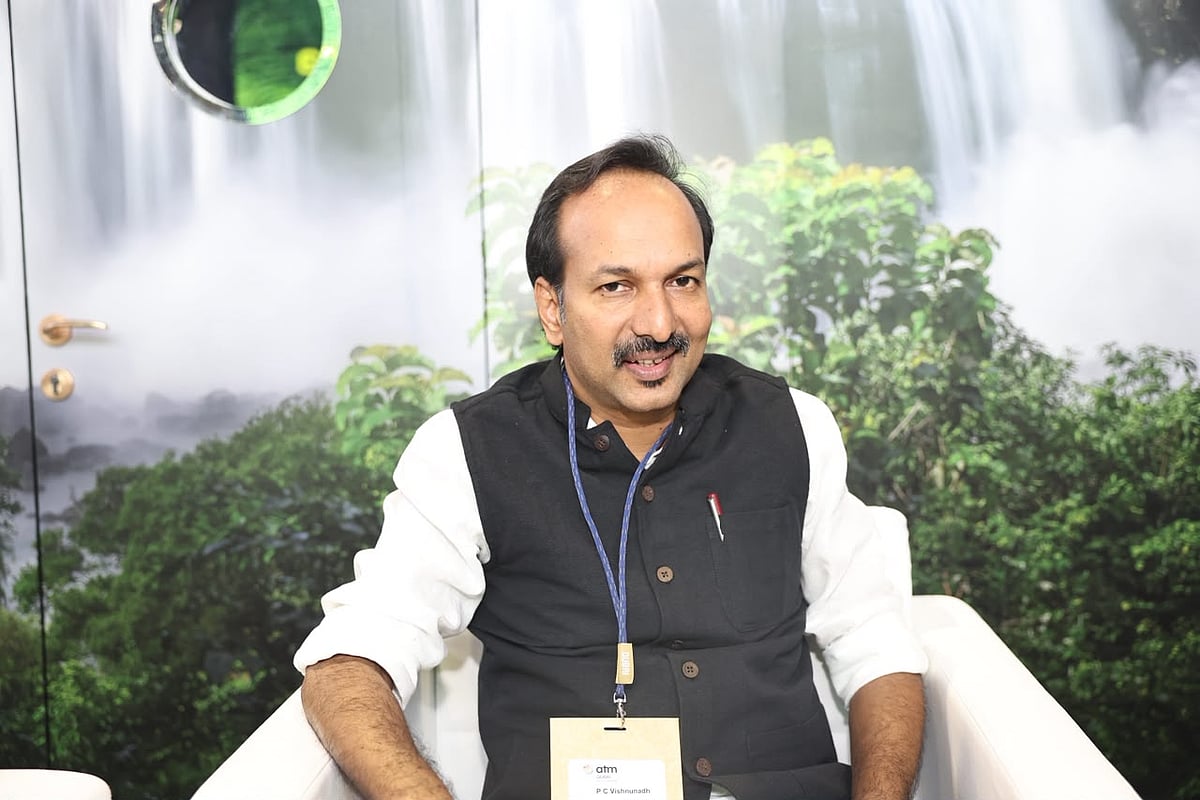
“Oman becomes a surprise,” said PC Vishnunadh, referring to its rise in the state’s source-market rankings.
Historically, the minister said, the US ranked first among Kerala’s foreign tourist markets, followed by the UK and Germany. The latest data show Oman has moved ahead of Germany and France, while Saudi Arabia and the UAE have also become major source markets.
Oman ranked third overall among Kerala’s foreign tourist markets in 2025, behind the UK and US. Germany ranked fourth and France fifth.
Saudi Arabia ranked ninth and the UAE 10th.
The state’s data show that Oman’s 65,132 visitors represented 7.92 per cent of Kerala’s total foreign tourist visits in 2025, compared with 5.98 per cent for Germany and 5.72 per cent for France. Saudi Arabia accounted for 3.84 per cent and the UAE 3.19 per cent.
For Gulf travellers, Kerala is also a relatively short-haul destination. State tourism material describes the UAE-Kerala journey as roughly a four-hour flight, making the destination suitable for family holidays and shorter breaks.
Monsoon sells
One reason for the Gulf growth, according to the minister, is Kerala’s changing approach to its monsoon season.
“What was earlier considered an off season, now the monsoon has become a tourism product,” the Minister, who recently took charge of the portfolio, said. That is particularly relevant to Gulf travellers, he said, because many Arab visitors come to Kerala during the monsoon period.
The state is positioning Kerala’s greenery, cooler weather, nature and wellness experiences as an alternative to the intense summer conditions in the Gulf.
Kerala’s tourism material specifically identifies the Gulf summer holiday period as an opportunity to promote the state’s monsoon as a “green, cool and refreshing escape” and highlights family travel, Ayurveda and wellness as attractions for GCC visitors.
The minister also pointed to Ayurveda as a major differentiator.
“Wellness everywhere you can get — wellness, spa, massage, all those things. But authentic Ayurveda, if you want to experience, you have to come to Kerala,” he said.
The state is working to bring traditional Ayurveda practitioners into the tourism ecosystem by providing assistance and training around tourism behaviour and infrastructure, he said.
Recovery gap
Despite the stronger Gulf numbers, Kerala’s international tourism market has not returned to its pre-pandemic level.
The state recorded 821,999 foreign tourist visits in 2025, up 11.33 per cent from 738,374 in 2024. But the 2025 figure was still 30.91 per cent below the 1.19 million foreign tourist visits recorded in 2019.
The minister said Kerala is targeting a further increase over the coming five years. “2019 was the best year for Kerala tourism,” he said, adding that foreign tourist numbers had fallen sharply during Covid and were now recovering.
“We have to increase that also another 15 to 16 lakh a year,” he said, referring to the longer-term ambition for annual foreign tourist visits.
The minister also said tourism revenue needs to grow. Kerala recorded estimated total travel receipts of ₹50,702.34 crore in 2025, including domestic and foreign tourist visits, up 12.54 per cent from 2024. Foreign tourist receipts were estimated at ₹7,382.02 crore.
More Gulf push
Kerala does not currently have a specific arrival target for the GCC, the minister said, but the state sees considerable potential in the region.
“We are not telling any particular number, but this is a good potential area for us,” he said. Kerala Tourism organised an Indo-Arab Connect event and plans to conduct more roadshows across Gulf and Middle Eastern markets, he said.
The minister was speaking during Arabian Travel Market in Dubai, which Kerala considers strategically important because it brings together travel trade from the Middle East, including tour operators, travel agencies, airlines, hotels and destination specialists.
For UAE-based Malayalees, the market also has a particular advantage: the state is already a familiar short-haul destination, while its family, wellness and nature offerings can be marketed beyond traditional diaspora travel.
Flights matter
The minister said air connectivity remains one of Kerala’s biggest constraints in growing international tourism. “I have… had conversations with Emirates people and other aviation partners,” he said.
“If we have the only one issue is this air connectivity.”
He said the state was pushing for better connectivity through its MPs and delegations, including discussions with the Prime Minister, Foreign Affairs Minister and Civil Aviation Minister.
“If the air connectivity improves, then there is no more improvement in our tourism sector,” he said.
Kerala’s tourism data also show how concentrated its foreign market remains. The UK and US together accounted for almost 28 per cent of foreign tourist visits in 2025, while the GCC markets collectively contributed about 16.5 per cent.
New destinations
The state is also looking to spread tourism beyond Kerala’s established destinations.
The minister said existing destinations were reaching their carrying capacity and that the state wanted to identify new places that could be developed as tourism destinations.
“Any place has the potential to become a tourism destination,” he said.
The government is also planning to give tourism industry status and has proposed a faster approval process for investors, with the minister saying investors should be able to obtain the required permissions within two months under the planned system.
International hotel groups are showing interest in Kerala, he said, as the state seeks more investment in tourism infrastructure.
Culture sells
The minister’s portfolio also includes culture and cinema, and he sees the combination as part of Kerala’s tourism strategy.
“One good thing after a long time, these two portfolios are under control of one minister,” he said.
His priority is to connect Kerala’s cultural calendar with its tourism offering, turning festivals, arts and traditional events into reasons to visit at specific times of the year.
“If a traveller is coming to Kerala in November, we can tell him that this is the season for Theyyam,” he said, while other visitors could plan around festivals or boat races.
The objective, he said, is to make the visit more experiential by giving travellers information on when and where particular cultural experiences are taking place.
That approach could also give Gulf visitors more reasons to travel beyond Kerala’s established beach, backwater and hill destinations — and help the state build a broader tourism calendar as it works towards recovering its international visitor base.