

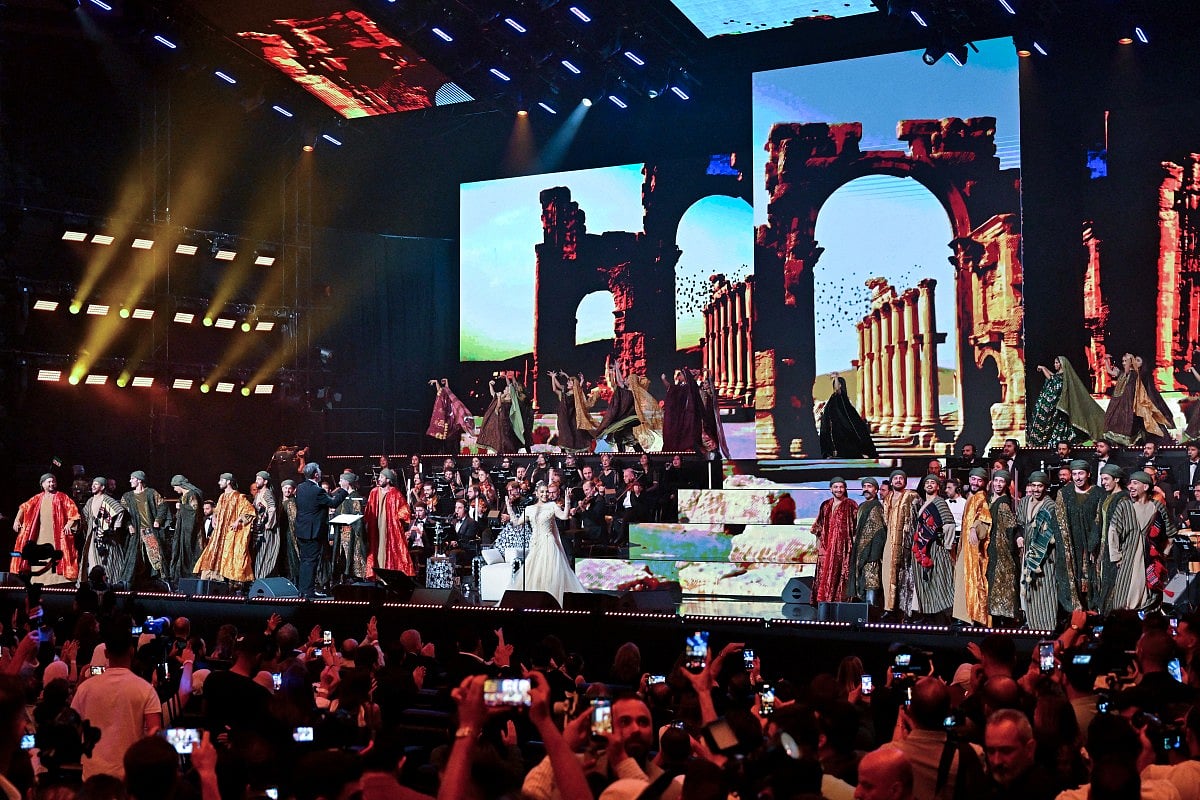
Syrian megastar Assala Nasri has returned to Damascus for the first time in 15 years, receiving a warm welcome from thousands of fans at a sold-out concert in the capital.
The 57-year-old singer, known simply as Assala, left Syria after publicly supporting the peaceful protests that erupted against former president Bashar Al Assad in 2011.
She opened Thursday night’s concert with songs celebrating the Syrian people, repeatedly telling the cheering crowd how much she had missed them.

“I could not believe that I am among you,” she said, describing her return as something she had dreamed of for years.
The concert was held under heavy security after some conservative religious figures and groups called for its cancellation. Half of the proceeds from the show will be donated to charity.
Syria’s new authorities, which came to power after Assad was overthrown in 2024, welcomed Assala’s return. Culture Minister Mohammed Yassine Saleh called her “the daughter of Damascus” and joined her on stage.
‘Moving forward’
Assala was among the first prominent Syrian artists to support the anti-Assad protests. She was subsequently expelled from the Syrian Artists’ Union and became the subject of media campaigns.
She later moved to Cairo with her family and continued performing across the Arab world.
The conflict that followed the crackdown on the protests became a 13-year civil war that killed more than half a million people.
At Thursday’s concert, Syrian flags waved among the crowd as fans sang along and some were moved to tears.
“I never thought this day would come. It’s like a beautiful dream,” concert-goer Sawsan Wadha, 56, told news agencies.
“We are very happy that our country is moving forward,” said another attendee, Lynn Nahas, 40.
Assala’s latest album, ‘The Syrian Album’, features traditional songs from all 14 Syrian provinces and celebrates the country’s cultural diversity.
The album also pays tribute to areas deeply affected by the war, including Syria’s coastline and the Druze-majority province of Suwayda.
Music amid debate
Assala and her family returned to Damascus earlier this week. During the visit, an antiques dealer returned to her an oud that had belonged to her late father, a celebrated Syrian musician.
The singer’s return has also exposed tensions over the role of music and culture in Syria’s changing public life.
Some conservative preachers criticised the concert, with one social media campaign calling for its cancellation. Others accused the culture ministry of promoting a more secular character for society.
Assala did not directly address the criticism but told the audience that recovery would come through “art and music”.
Syria has experienced a cultural revival since 2025, while conservative religious movements have also become more visible in public spaces and universities.
Farah Al-Atassi, a political adviser to the government, told that poetry, language and thought remained an integral part of Syrian identity.
With inputs and Video: AFP