
Table of Contents
China on Wednesday opened the Pinglu Canal, a landmark waterway designed to give the country’s vast southwestern hinterland a direct route to the sea and strengthen trade with Southeast Asia.
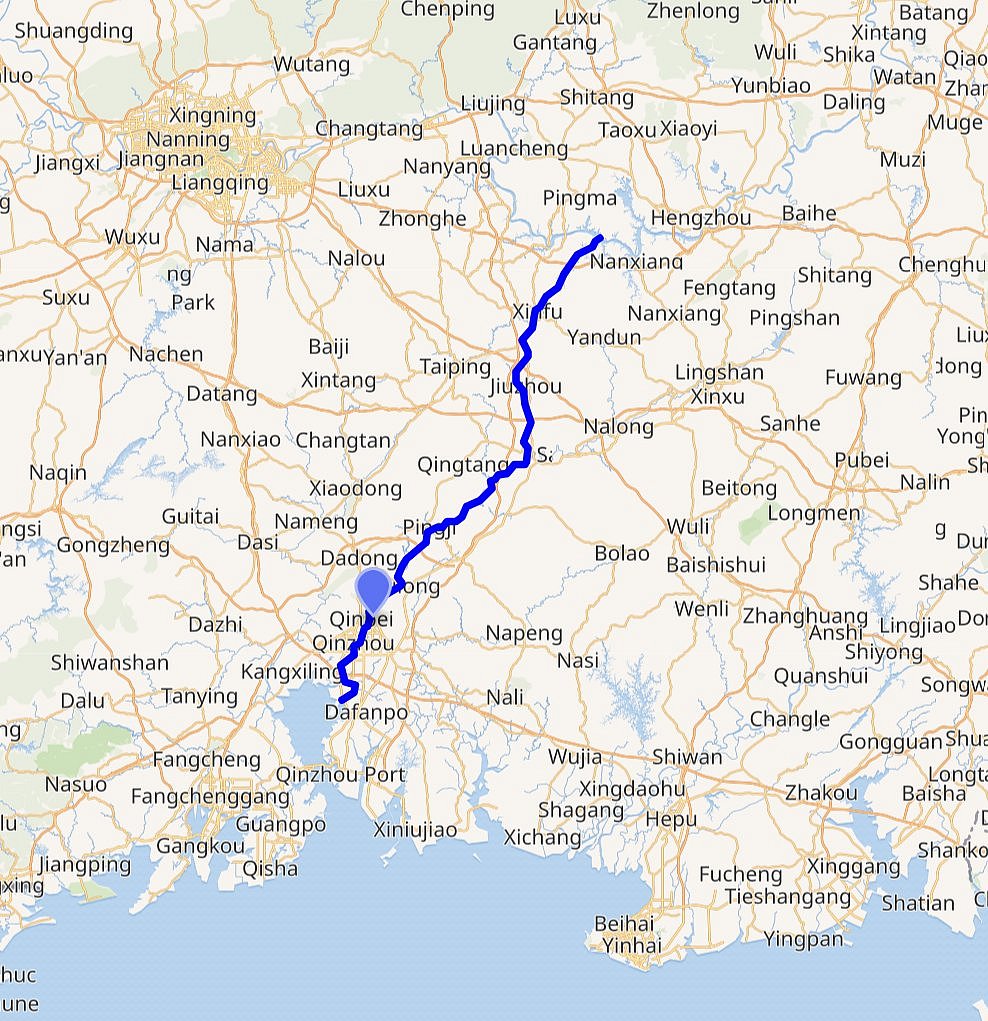
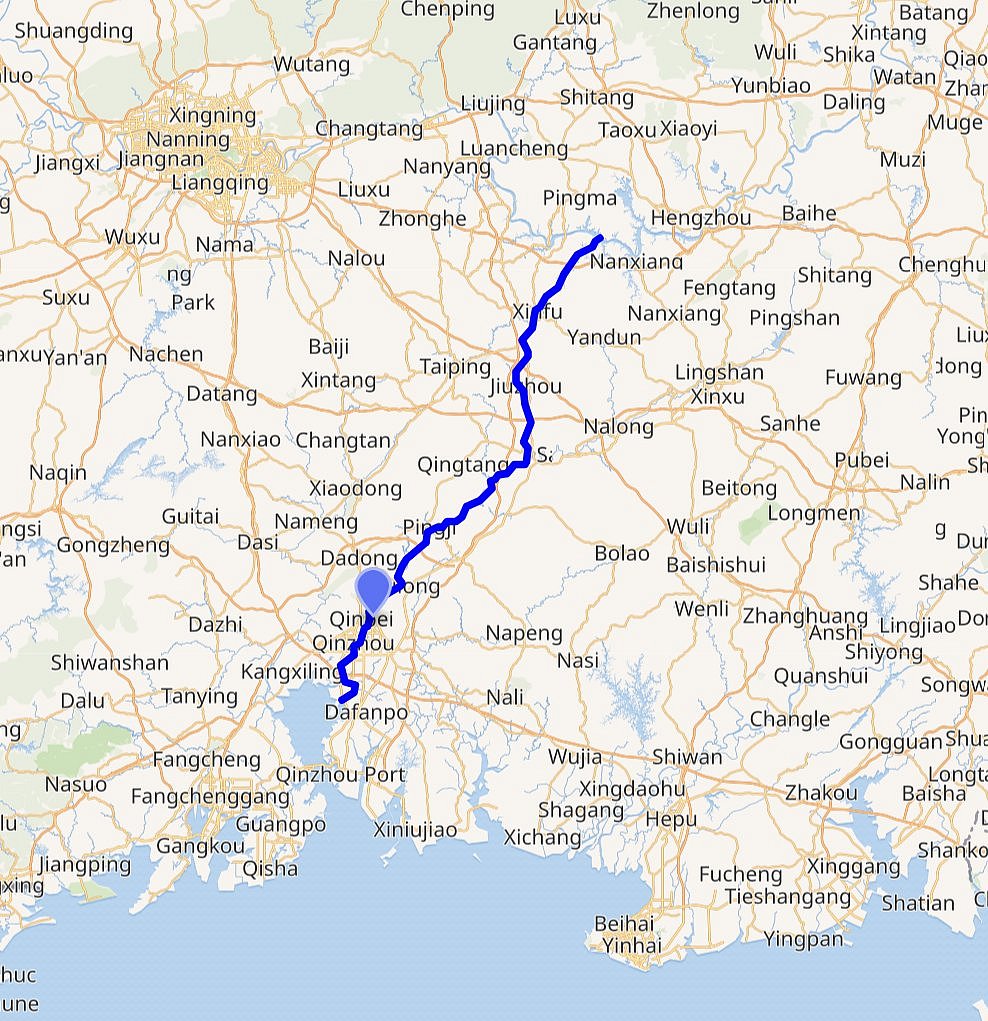
The 134.2-km canal runs from the Nanning area of Guangxi Zhuang Autonomous Region south to the Beibu Gulf (Gulf of Tonkin), creating a river-to-sea connection that bypasses the traditional route east through the Xijiang River system and ports in Guangdong.
The project cost 72.7 billion yuan, or about $10.7 billion, according to Chinese state media. It was launched in August 2022 and took about four years to build.

The canal is designed for vessels of up to 5,000 tonnes.
A canal, an engineering marvel, and a new era for western China:
On September 16, the #Pinglu Canal opened for navigation. It connects the inland waterway of #Guangxi Province and cuts through the hills to connect with the Beibu Gulf.
Giving new seaborne access to the landlocked… pic.twitter.com/PhCXn8Snei— Bridging News (@BridgingNews_) September 16, 2026
Why the canal matters
For decades, cargo from parts of southwest China had to travel east through the Xijiang River and toward the Pearl River Delta before reaching the sea.
The Pinglu Canal instead provides a direct southern route to the Beibu Gulf, shortening the inland waterway journey by more than 560 kilometres.
Chinese authorities estimate that the new route could reduce overall logistics costs by 18% to 30% and save more than 5 billion yuan a year in transportation costs.
The canal therefore has significance beyond transportation. Beijing sees it as a major component of the New International Land-Sea Trade Corridor, connecting China’s inland provinces with the country’s southern ports and international shipping routes.
First cargo routes already operating
The canal opened to navigation on Wednesday, with about 30 cargo vessels scheduled to transit during the opening day.
The initial cargoes include containers, building materials, coal, minerals, steel and fertiliser. Two new freight routes also began operations: an international service connecting Nanning with Can Tho in Vietnam, and a domestic route linking Nanning with Yangpu in Hainan.
Four water-based passenger routes also began operating.
Gateway for China’s southwest
The canal connects to China’s extensive inland river network, meaning its impact could extend well beyond Guangxi.
Chinese authorities say cargo from Yunnan, Guizhou and other parts of the southwest, as well as goods arriving through China’s rail network, can eventually be routed through the canal to the Beibu Gulf and onward to international markets.
The project is intended to integrate river, rail, road and maritime transport, creating what Chinese planners describe as a “river-rail-sea” multimodal logistics network.
That could be particularly important for Yunnan, which borders Vietnam, Laos and Myanmar but has no coastline. A new connection through Guangxi gives producers in the province another route toward international markets.
The Pinglu Canal in south China's Guangxi Zhuang Autonomous Region becomes operational on Sept. 16, 2026. It is expected to shorten the shipping distance between China's southwestern hinterland and ASEAN by 560 km and reduce logistics costs by 18 to 30 percent. pic.twitter.com/1LDayi0ict
— China Xinhua News (@XHNews) September 16, 2026
A strategic ASEAN connection
The canal also comes as China deepens its economic relationship with ASEAN, which has been China’s largest trading partner for several consecutive years.
Beibu Gulf ports already provide shipping connections to Southeast Asia.
Chinese authorities expect the canal to make it easier for products from the country’s inland industrial centres to reach ASEAN markets while allowing Southeast Asian commodities to move deeper into China’s southwest.
The planned trade flows include automotive components, electronics, machinery, new-energy products, agricultural goods and other manufactured products.
The canal could therefore help shift some industrial activity toward China’s interior by reducing one of the traditional disadvantages of being far from the coast: transportation costs.
China just officially opened the Pinglu Canal — the first river-to-sea waterway built at the national level since the founding of the PRC.
Here are the numbers:
• 134.2 km long, connecting Nanning with the Beibu Gulf
• Handles vessels up to 5,000 tons
• ¥72.7 billion… pic.twitter.com/gmeDdBZL7m— fsf. Commentaire très conflictuel (@SharonBelmoo) September 16, 2026
Four major engineering records
The project includes three major ship-lock complexes — Madao, Qishi and Qingnian — allowing vessels to overcome changes in elevation along the route.
Chinese state media says the project has achieved several engineering records, including the world’s largest water-saving ship lock and the world’s largest inland water-saving ship-lock system.
The Madao lock can accommodate vessels of up to 5,000 tonnes and handles a maximum water-level difference of 29.6 metres.
More than a canal
The Pinglu Canal is part of Beijing’s broader effort to develop China’s western regions and improve their access to international markets.
The project is incorporated into national infrastructure plans including the New International Land-Sea Trade Corridor.
Once fully integrated with the rail and port network, the canal is expected to provide another logistics route between China’s southwest, the Beibu Gulf and Southeast Asia.
Its opening also comes at a time when global shipping routes are being reshaped by geopolitical risks.
Major waterways such as the Strait of Hormuz, Red Sea and Panama Canal have all faced disruptions or constraints this year, underscoring the economic value of alternative transportation corridors.
The Pinglu Canal does not replace China’s major maritime gateways. Instead, it adds another inland-to-sea route, giving producers in China’s southwest a shorter path to the coast and potentially making the region more closely integrated with the fast-growing ASEAN market.