
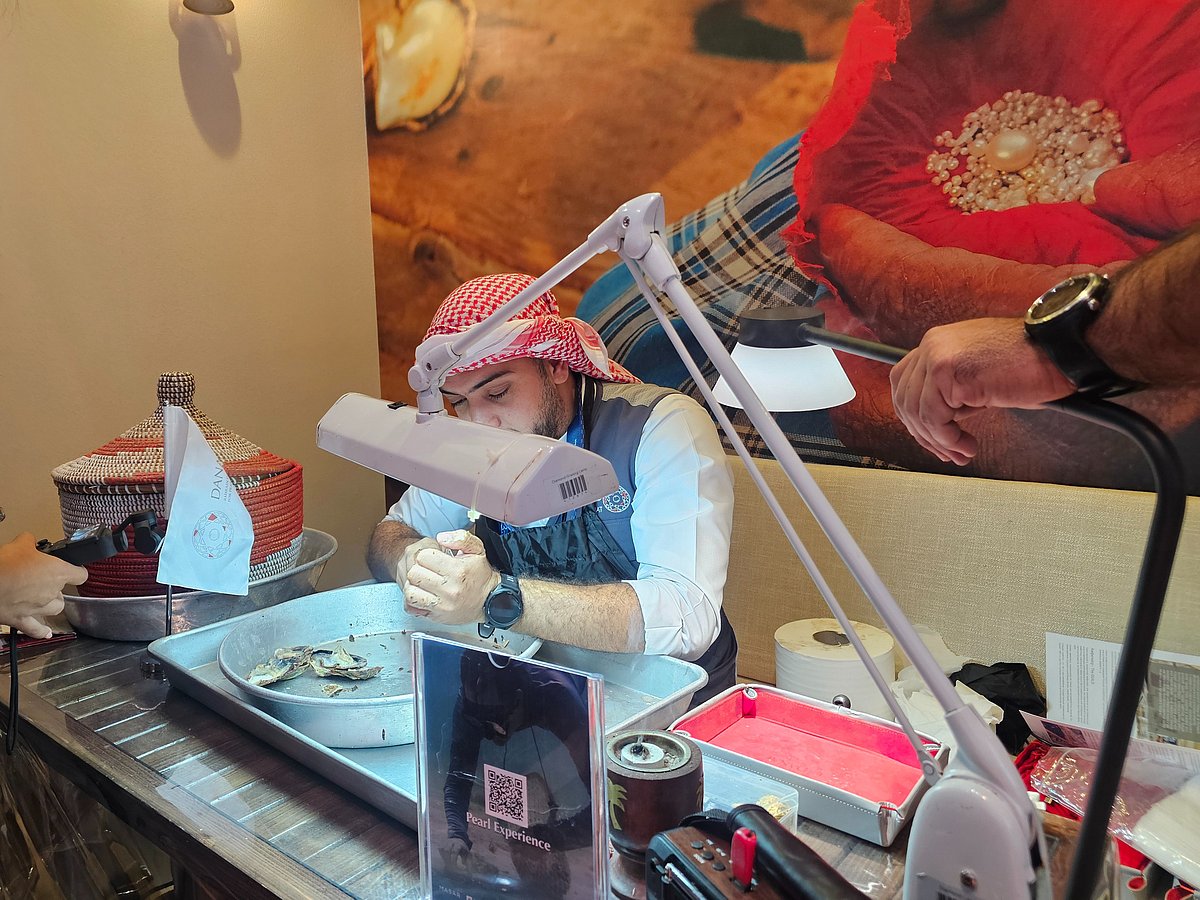
AI can never replace the culture of Pearl shucking, says Mohamed Slaise, Field Researcher from Danat Institute Bahrain, at the Bahrain pavilion of Arabian Travel Market 2026.
“Our seas are full of oysters in every single corner of Bahrain, we have oysters. It’s just who can do this is the important part. For sure, AI can’t replace this,” he said to Gulf News.
At the ATM 2026, they exhibited the real search for pearls. Field Researcher, Ahmed Ramadhan cracked open an oyster with his bare hands, working through the mollusk’s muscle to retrieve a tiny pearl, then held it up for the crowd gathered in front of the kiosk to see.

Mohamed Slaise and Ahmed Ramadhan have spent more than 15 years working together to bring the practice of pearl diving to public, allowing visitors to experience the process firsthand, from diving for oysters to opening them in search for pearl.
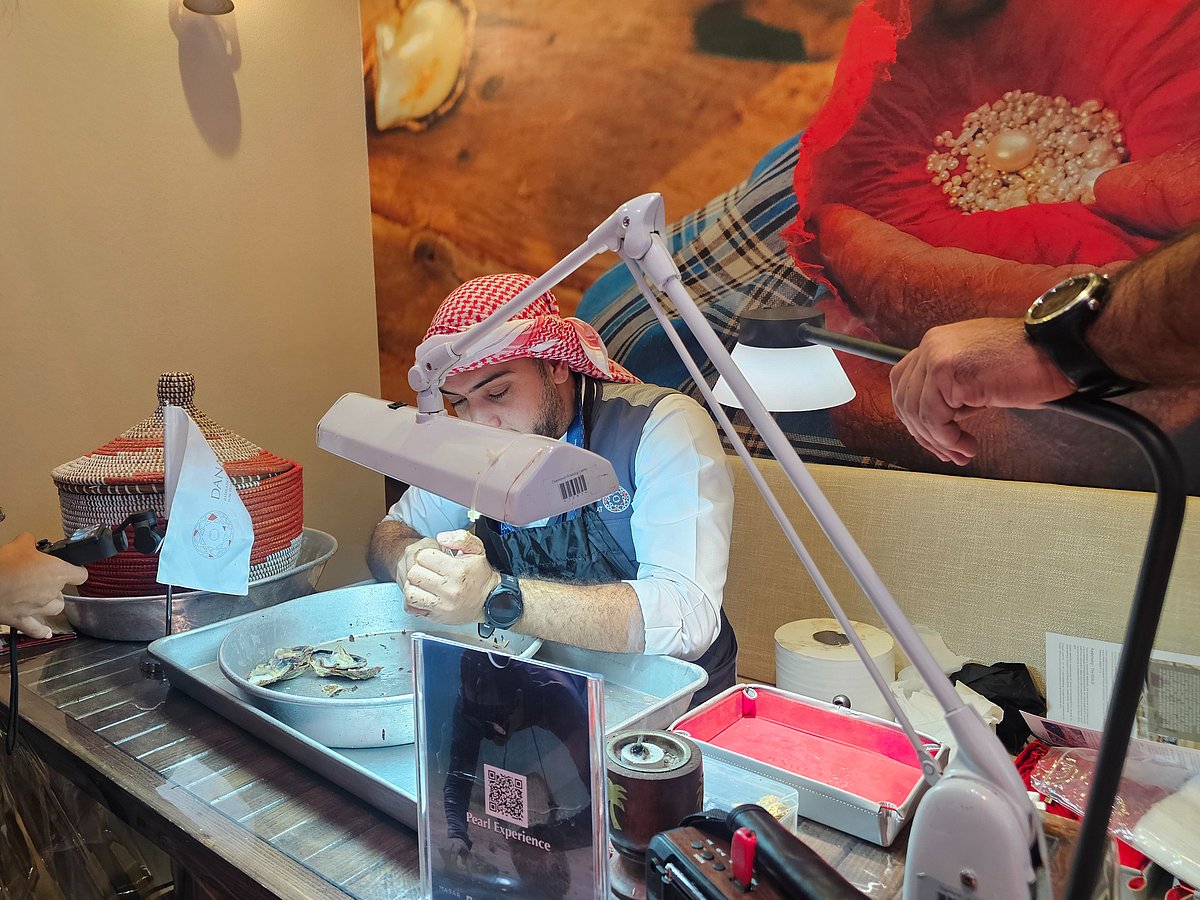
Visitors waited in line to find a pearl from pearl shucking and then convert them into chains or the oyster shells into keychains. Mohamed Slaise, noted that the team had recovered three sizeable pearls the previous day, a lucky day even for divers with decades of experience.
“It shows you how rare the big pearl is. But we do find, like we found three big ones today. We’ve been diving of 20 years. I haven’t found something that big. So, it’s a very rare commodity,” he added.
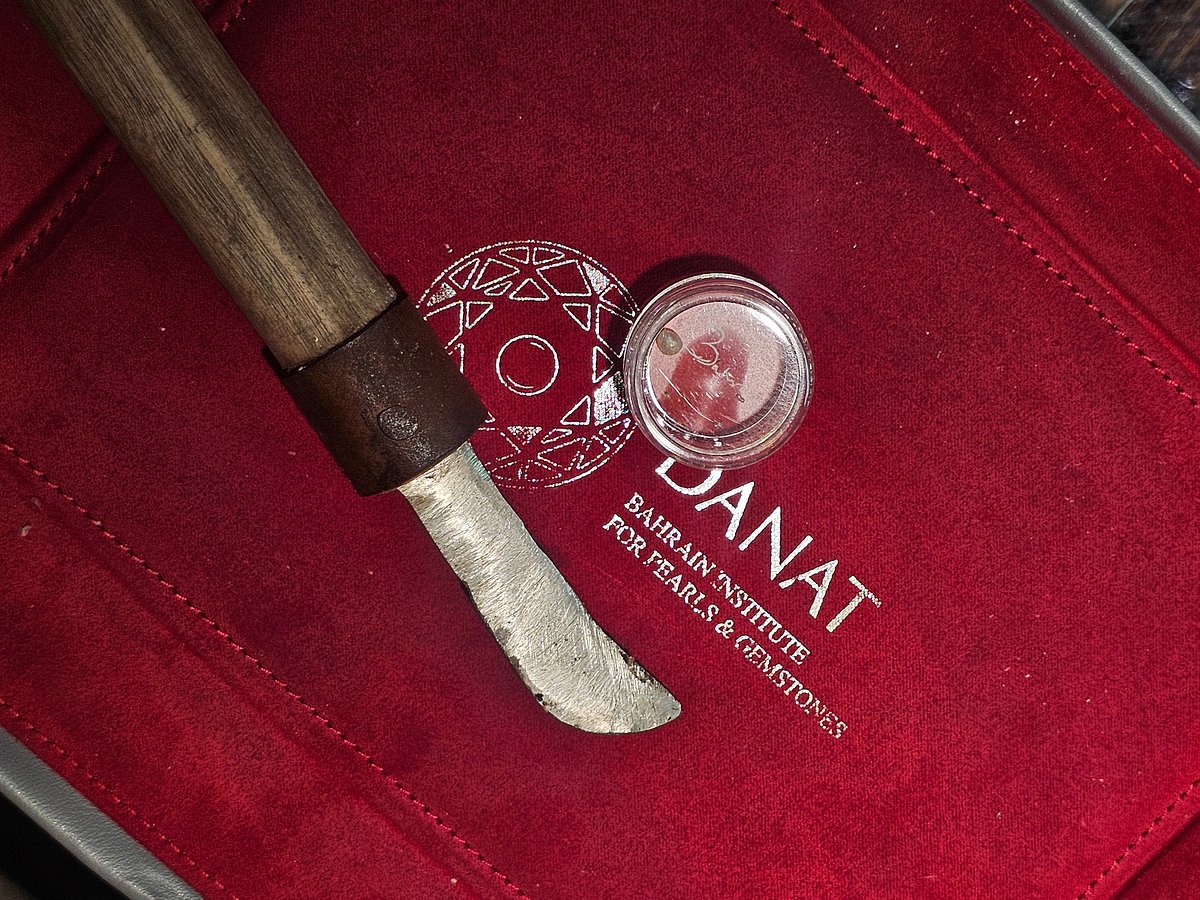
He pointed out that the polished, oversized pearls often shown in advertising bear little resemblance to what divers ‘actually’ pull from the sea. “It’s like one of the rarest gems in the world,” he said.
Ahmed says that despite the geopolitical tensions, Bahrain’s tradition of oyster diving has continued uninterrupted, but with safety as the top priority. They say that visitors can book the experience online, joining divers to collect oysters, open them by hand, and search for their own pearls.
Other Attractions at the Bahrain pavilion offered the visitors to convert the pearl into a chain and to calligraph their names in Arabic.