

Table of Contents
Dubai: Sydney Sweeney appears to have discovered that even Hollywood’s most reliable currency, attention and scandal, can come with a rather expensive receipt.
The Euphoria star has lost more than 200,000 Instagram followers amid a growing backlash over her new advertising campaign for sports prediction company Novig, according to social-media tracking data cited by Variety and other outlets.
The drop comes days after Novig launched its first national campaign featuring Sweeney in a series of provocative images in which she appears nude or nearly nude while using sporting equipment to cover herself. The campaign, titled “Just Sports”, launched on September 9.


The campaign’s premise is that Novig is focused on sports prediction markets, with Sweeney appearing to mock-play a series of sports including basketball, football, tennis and other games.
In one sequence, she is perched topless on a basketball hoop. The commercial ends with Sweeney on a pool table, delivering the line: “You can’t trade this, I just look good here.”
The response from female athletes, however, has been anything but playful.
‘This is what a woman in sport looks like’
Olympic champion swimmer Ariarne Titmus was among the most vocal critics.
Titmus, a four-time Olympic gold medallist, said she was infuriated by the campaign and questioned why women’s bodies were still being sexualised to sell products connected to sport.
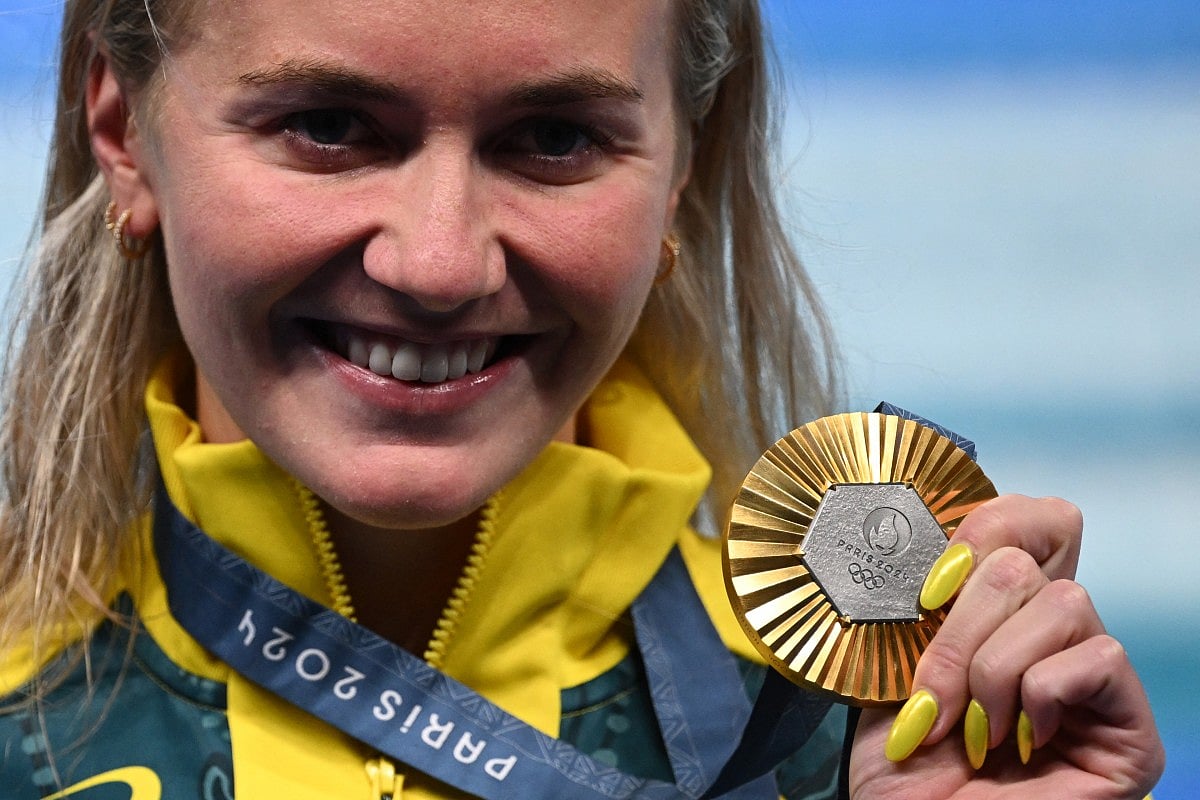
The Guardian reported her describing the campaign as “a kick in the face” to women who had devoted their lives to perfecting their sporting skills.
Other athletes have taken a more visual approach to their criticism.
American gymnast Gracie Kramer posted an Instagram video contrasting Sweeney’s campaign with footage of herself competing, accompanied by the message: “this is what a woman in sport looks like.” The response has since been echoed by other female athletes sharing images and videos of their training, competitions and achievements.
British sprinter Amy Hunt also criticised the campaign, pointing instead to the physical reality of elite sport: “muscles, hard work, sweat, blood, (and) tears”, according to Northeastern Global News.
Australian boxer and world champion Skye Nicolson drew a distinction between an athlete embracing her appearance and using sexual appeal to sell sport.
“There is nothing wrong with looking good and doing sport,” Nicolson said, according to The Guardian. “There is nothing wrong with embracing your femininity while also being a badass athlete.”
Australian athletes including water polo player Tilly Kearns and swimmer Lani Pallister have also criticised the campaign. ABC News reported that dozens of female athletes had joined the backlash.
Former Olympic athlete and Australian politician Zali Steggall also criticised the advertisement, describing its approach as overt sexualisation and arguing that it diminished women’s sporting achievements.
Sweeney has not apologised
Sweeney has not issued a public apology for the campaign.
Instead, she appeared to respond to the criticism by sharing images from ESPN’s Body Issue, which has previously featured athletes including Serena Williams and Ronda Rousey posing nude or semi-nude.
That appears to be part of the defence surrounding the campaign: women in sport have posed nude before, so why should Sweeney’s decision to do the same be treated differently?
But critics argue that context matters.
Northeastern University experts Rachel Rodgers and Stephen Warren said the fundamental difference was that Body Issue photographs centre on athletes and their bodies in the context of athletic achievement, whereas the Novig campaign uses Sweeney’s body to sell a sports prediction product.
Rodgers said the campaign created a “jarring contrast” between the physical mastery associated with sport and the way Sweeney was presented in the advertisements.
Sweeney has a financial stake in Novig
There is another important detail that makes this controversy different from a routine celebrity endorsement.
Sweeney is not simply the hired face of the campaign.
Novig describes her as a strategic partner and equity holder, meaning she has a financial stake in the company. The company said Sweeney pitched the partnership and joined Novig ahead of the campaign.

In its September 9 announcement, Novig said the campaign was designed to put the focus “entirely on sports”, with Sweeney describing the concept as one intended to bring that idea to life “with confidence, humour and a playful edge”.
The company has therefore received enormous attention from the controversy, even if that attention was not entirely the sort it may have hoped for.
Northeastern media expert Warren suggested that provoking a reaction and generating social-media conversation may have been part of the strategy, arguing that people were discovering the campaign through posts discussing how outrageous it was rather than through traditional advertising.
So, has Sweeney actually suffered?
The answer is complicated.
Losing more than 200,000 followers sounds dramatic, particularly when it happens within days of a controversial campaign. But Sweeney still has millions of Instagram followers, meaning the reported loss does not amount to anything close to a collapse of her social-media audience.
And there is an important caveat: follower-tracking services can show changes in audience size, but they cannot establish that every person who unfollowed Sweeney did so because of the Novig advertisement.
What can be established is the timing. The reported follower decline has happened as the campaign has faced increasingly vocal criticism from athletes and social-media users.
This is not Sweeney’s first advertising controversy
The Novig backlash also comes roughly a year after Sweeney found herself at the centre of another advertising storm.
Her 2025 American Eagle campaign became controversial after its “Sydney Sweeney Has Great Jeans” slogan was accompanied by references to “genes”. Critics argued that the campaign’s language and imagery evoked eugenics and problematic ideas surrounding race and genetics.
Sweeney later said she was surprised by the reaction and acknowledged that her decision to remain silent had contributed to the divide. “I was honestly surprised by the reaction,” she told PEOPLE, adding that she did not support the views that some people had attached to the campaign.
Yet the American Eagle controversy did not appear to damage the brand commercially.
Associated Press reported that American Eagle subsequently recorded record-breaking new customer acquisition and brand awareness following the Sweeney campaign. The company’s CEO said the attention had reached consumers across ages, demographics and genders.
The retailer ultimately continued its relationship with Sweeney, announcing that she would remain part of its campaign for the second half of the year.
Which brings us back to the Novig controversy.
Sweeney may have lost more than 200,000 followers, but the campaign has achieved the one thing advertising agencies spend enormous amounts of money chasing: people are talking about it.
The question now is whether the attention converts into business for Novig, or whether the backlash becomes another example of a celebrity campaign that generated enormous visibility while leaving audiences arguing about the advertisement rather than the product.
For Sweeney, meanwhile, the latest controversy adds another chapter to an increasingly unusual relationship with advertising: the campaigns may provoke outrage, but they also keep her firmly at the centre of the cultural conversation.