
Table of Contents
Dubai: Etihad Airways CEO Antonoaldo Neves has one major concern as the airline heads into the final months of 2026: jet fuel prices. Demand is not keeping him awake. Fuel is.
Sign up for our daily business newsletter, Cheques & Balances
“I think jet fuel keeps me awake,” Neves told Gulf News on the sidelines of the opening day of the Arabian Travel Market in Dubai, as the Abu Dhabi airline continues to expand its fleet, network and workforce.
For Neves, the biggest risk facing Etihad is not demand but the cost of jet fuel — and what sustained high prices could mean for airfares next year.

He said the key question for Etihad is now what happens to the average fare next year if jet fuel prices remain elevated, particularly as airlines across the Gulf, Europe and the US compete heavily for passengers.
“So we compete a lot, right? And every time you compete a lot, the competition level is high. You cannot pass on prices as easy as you are in other markets.”
“If you ask me, what is my thinking right now in terms of risk challenge? It’s what’s going to happen with the average fare next year because of jet fuel price,” he said.
Jet fuel was around $170 a barrel, according to the International Air Transport Association’s (IATA) jet fuel monitor, according to Neves, who said the crack spread — the difference between the price of crude oil and refined products such as jet fuel — was also high.
However, he said the forward curve was indicating a less severe picture than current prices and argued that the present spike was unlikely to be sustainable.
“I hope jet fuel price goes back to normal levels,” he said. “The forward curve is saying that the jet fuel forward curve is not great, but it’s not as bad as the jet fuel right now.”
Neves pointed to the sharp move in fuel prices during the recent regional disruption as evidence of how quickly the market can change.
“We had the situation about six months ago, right? And jet fuel went back to 110 in July, so it’s going to come back. It’s not sustainable, right? So it’s just volatility because of the situation, the global situation.”
Fuel concern
Etihad is partly protected by fuel hedging, but it remains exposed to movements in the market. Neves said the current fuel environment is being driven by a wider global situation, rather than the Middle East alone, pointing to developments in Russia and Ukraine as factors that are also affecting oil prices.
“I hope jet fuel price goes back to normal levels,” he said, adding that the current situation was not sustainable. He said the forward curve suggested prices could eventually ease, although the airline still has to manage the impact of current prices.
For passengers, the key question is whether higher fuel costs will eventually appear in ticket prices.
Neves said that will depend partly on how much pricing power individual airlines have. Stronger airlines could benefit if fares rise, while weaker carriers that cannot generate enough demand could come under greater pressure.
“Elasticity plays,” he said. However, he cautioned against trying to predict exactly how the market will respond, saying conditions can change quickly, as airlines experienced during the Covid-19 pandemic.
Flights full
For now, Etihad is seeing strong demand, with Neves repeatedly describing the airline’s flights as “full, full, full”.
The carrier’s load factor reached 92 per cent last month, he said, despite several international travel advisories remaining in place.
Etihad’s flights from Europe to the UAE are full, while its services from the US are also performing strongly, said the CEO. The airline is preparing to launch Calgary as it continues rebuilding and expanding its network.
“I understand countries take time to remove travel advisories,” Neves said. But he believes travellers are increasingly making their own decisions based on the experiences of friends and other passengers who have already travelled to the UAE.
“People understand that governments take longer to remove these travel advisories,” he said. “If you want to travel, their friends travel and they say, ‘OK, travel. It was great.’”
He also pointed to Etihad’s operational performance during the disruption, saying the airline did not cancel flights at the last minute or move customers away from services.
“Word of mouth, and I think the great track record that we have in these situations also help,” he said.
More flights
Etihad is now operating 320 flights a day, which Neves said is 20 per cent more than last year. The airline spent the first three months of the year gradually bringing capacity back, moving through 30 per cent, 40 per cent and 70 per cent levels before reaching 100 per cent capacity by July.
The past three months have been particularly strong.
In July, Etihad had 17 per cent more capacity than in July 2025, while the airline also made more money that month than it did in July last year.
August was slightly weaker because of fuel prices, but Neves said the performance across July and August gave Etihad “strength and certainty that the strategy is in the right place”.
September has also started strongly, with the CEO saying the airline’s flights are continuing to fill up.
Fleet doubles
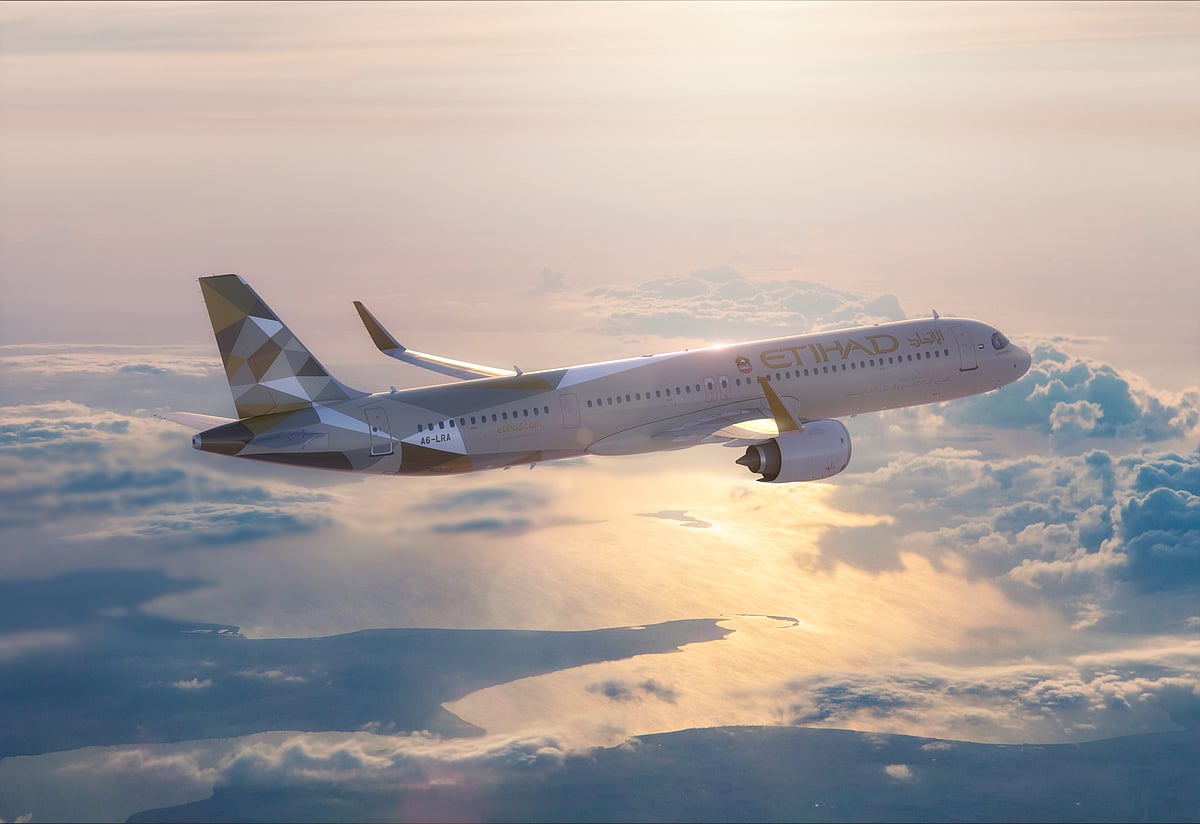
The airline is continuing to expand rapidly, with Etihad expecting to finish this year with around 140 aircraft, compared with 70 in 2022.
“In four years we doubled the number of aircraft,” Neves said. “We’re really proud of that. I don’t know any other airline in the world our size that has doubled in four years.”
Around 15 aircraft are due to arrive in the second half of this year. The majority are narrow-body aircraft, while the airline is also expecting A350s and other wide-body aircraft.
Several of the incoming narrow-bodies will be A321LRs, which have become an important part of Etihad’s network strategy. And for Etihad investing in newer-generation aircraft that consume less fuel is a more immediate and practical route to improving efficiency.
“The most important thing I can do is to invest in new aircraft type to burn less fuel per flight per hour,” he said, adding that new-generation aircraft can use about 20 per cent less fuel per passenger.
“There is no sustainable aviation fuel in the world that can solve for that.”
Etihad spends about $2 billion a year on new aircraft, while its annual fuel bill is also around $2 billion, Neves said. “Whenever SAF is available, and whenever SAF is is at the right market price, we we can buy it,” said the aviation veteran.
China, Africa
The aircraft arriving now are also helping Etihad prepare for another phase of growth, with China and Africa set to be major areas of focus next year. “Everywhere is important, but we stagger the growth so that we can focus,” Neves said. “So next year is China and Africa.”
The airline is using the A321LR to help increase frequencies as well as serve longer routes. Neves said Etihad now has double-daily services to almost all destinations in Europe, while Bangkok has reached five flights a day.
He said the narrow-body aircraft makes those frequencies possible and allows the airline to offer more choice to passengers without relying exclusively on larger wide-body aircraft.
“Schedule and frequency is a very important part of a product,” he said.
Break-even target
Despite the rapid expansion, Etihad is targeting a break-even result this year. Neves said the airline could make a small profit or lose a small amount depending on fuel-price volatility, but stressed that profitability is not the main priority for 2026.
“The most important thing this year is cash flow generation,” he said.
The airline needs to generate cash to fund its capital spending, including new aircraft, while Neves said Etihad is in a comfortable financial position with a strong balance sheet and “almost zero” bank debt.
“We’re going to get stronger out of the situation,” he said.
Hiring drive
The expansion is also creating jobs. Etihad hired more than 600 people during March, April and May, including pilots and cabin crew, and Neves said the airline expects to add another 600 employees during the second half of the year.
The longer-term hiring plan is considerably bigger.
Etihad expects to hire around 1,500 people every year for the next five years, as it continues adding aircraft to its fleet.
“We’re adding 20 planes per year every year,” Neves said, explaining that each aircraft requires around 60 to 70 additional employees.
Around 200 of those annual hires would be pilots, he said.
Premium push
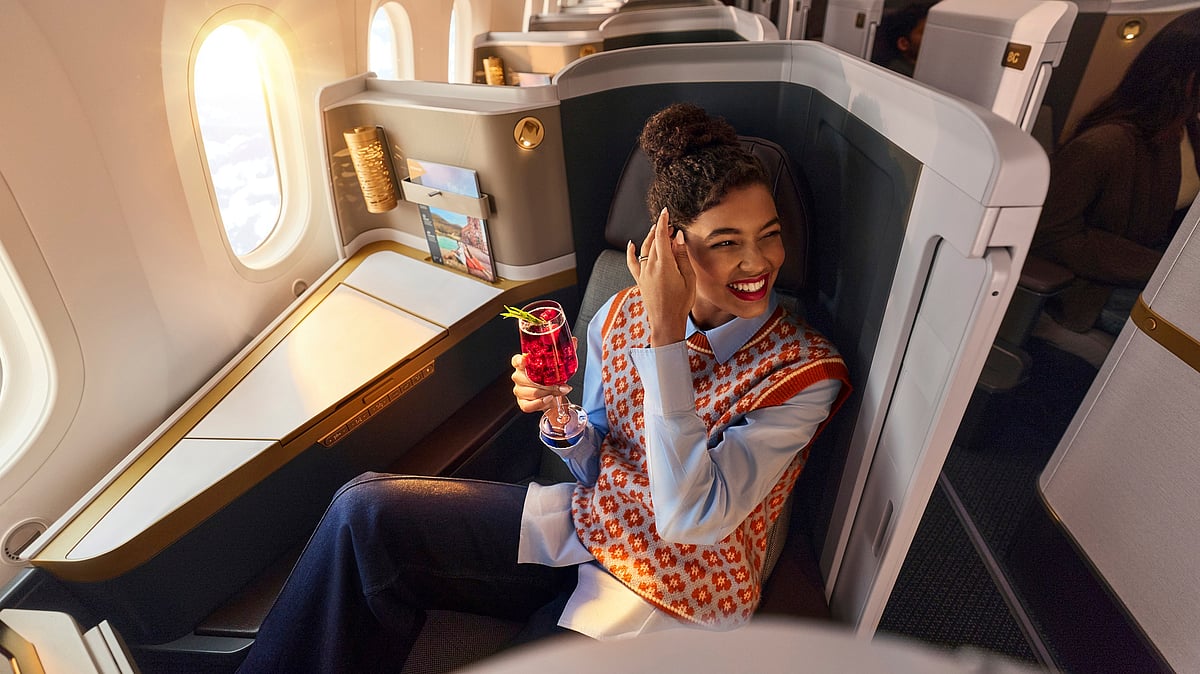
A major takeaway? It is evident that Etihad is propping up its premium segment in a big way. Neves’ comments came as Etihad unveiled its new-look seats and wider Beyond Borders customer experience at ATM on Monday.
Neves said the airline is putting a major emphasis on premium travel as it looks to move the customer experience into its next generation.
The new look will eventually extend across the journey, from online interactions and airport check-in to lounges, boarding and the onboard experience. Etihad also introduced its Wellbeing offering last week.
But behind the new seats and refreshed look, Neves’ message at ATM was broader.
Etihad is expanding its fleet, adding flights, filling more seats and hiring thousands of people, while preparing for growth in China and Africa. For now, however, one variable remains outside the airline’s control. Jet fuel.