
Table of Contents
Dubai: Picture a Nissan Patrol buried axle-deep in a dune, its tyres spinning helplessly in the sand, a Range Rover swallowed by mud after a wrong turn off-road or a vehicle fully submerged in the sea. In the UAE, there’s one group people call when disaster strikes off the beaten track – BlueRex Offroad Rescue, a volunteer team that’s built a reputation for turning up when no one else can.
BlueRex Offroad was founded by Ahmad Hiskol, a Lebanese expatriate who has called Dubai home for more than a decade, together with his wife Nora, who is from Uzbekistan. Both hold down full-time jobs, yet they dedicate much of their free time, especially weekends and public holidays to rescuing stranded vehicles from deserts, hilly terrain and other hard-to-reach corners of the UAE.
“The rescue work is completely voluntary, and we never charge people for helping them. We started simply from our passion for off-roading and helping people, and today it has become a very important part of our lives. For us, it has never been about making money from rescues. It’s about being there when someone needs help and knowing that sometimes a small act of help can completely change someone’s day,” Ahmad told Gulf News.

Get updated faster and for FREE: Download the Gulf News app now – simply click here.
From a passion for off-roading to thousands of rescues
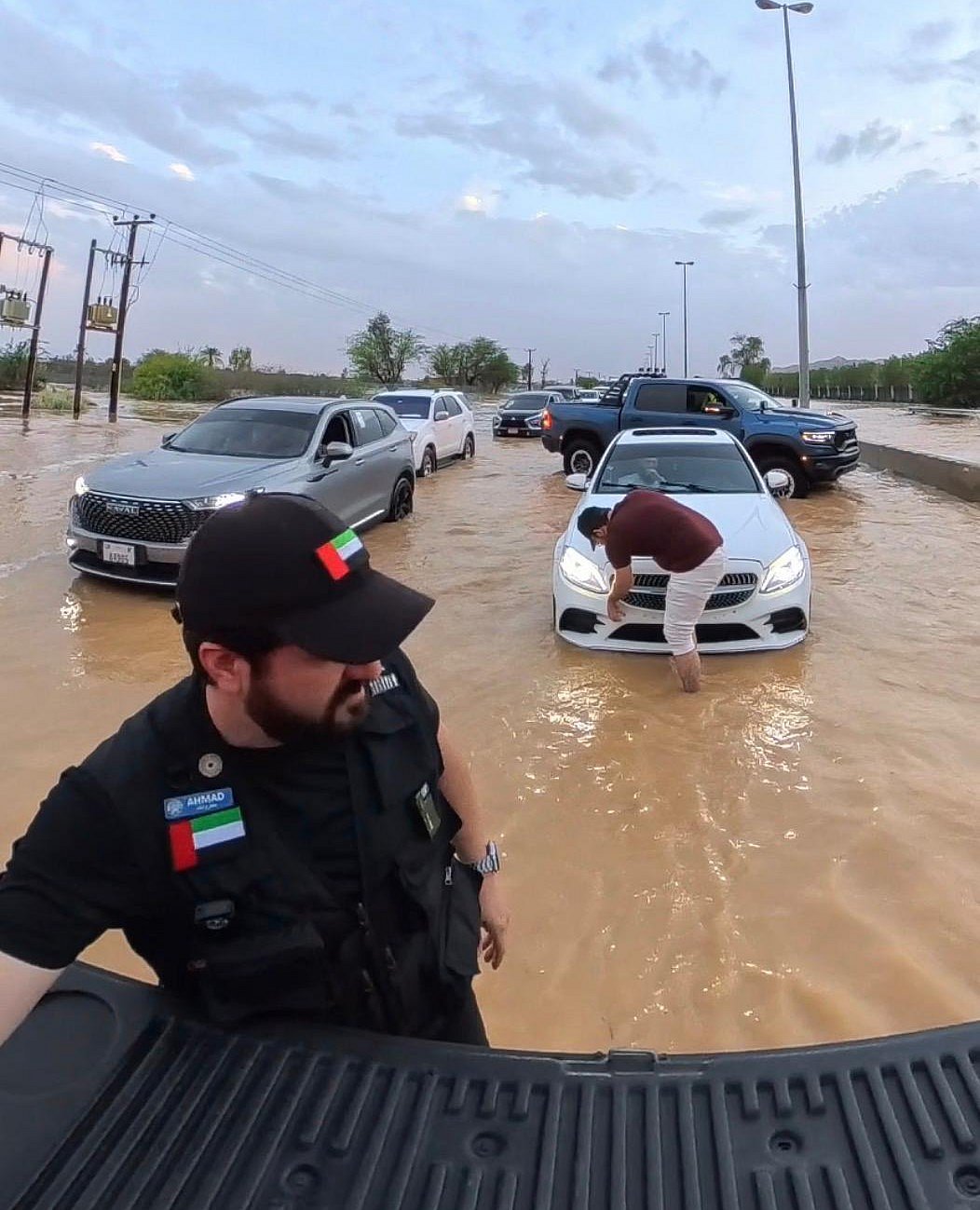
Ahmad already had a passion for off-roading and would regularly help vehicles that became stranded in the desert. But the UAE floods of 2024 became a major turning point. As heavy flooding left vehicles trapped in badly affected areas, Ahmad and Nora couldn’t just watch this happen.
“We went out to help and ended up assisting more than 100 vehicles, including pulling cars out of flooded areas and water. That experience was the turning point for me. I saw how frustrated and worried people were, and I realised that with the right vehicle, equipment and experience, we could actually make a difference.”
Following that experience, Ahmad and Nora began building their social media presence, particularly on Instagram, where they now have more than 200,000 followers. Their content focuses on their recent rescues, why people get stuck, how they can avoid getting stranded, how to prepare their vehicles, and what drivers should know before heading off-road.
“The idea wasn’t only to help people who were already stuck, but also to educate people who were planning to go into the desert, so hopefully they could avoid getting into trouble in the first place.”

A family operation backed by a network of volunteers
BlueRex consists of Ahmad, Nora, and their daughter Eva, who accompanies her parents, though they are by no means alone.
Close friends and a large network of volunteers across the UAE support them when needed. Their friends Abdurahman and Ayham are particularly useful when a difficult recovery requires additional vehicles, equipment or manpower.
“We have a large group of volunteers in different areas across the UAE. Sometimes we receive too many cases at the same time, or someone needs help far away from us, for example in Fujairah or Al Ain. In those situations, we coordinate with trusted volunteers who are already nearby so the person doesn’t have to wait for us to travel all the way there.”
Everyone involved has their own jobs, families and responsibilities. BlueRex does not operate like a commercial recovery company with employees working shifts. “It’s really a community of people who are willing to help when they can.”
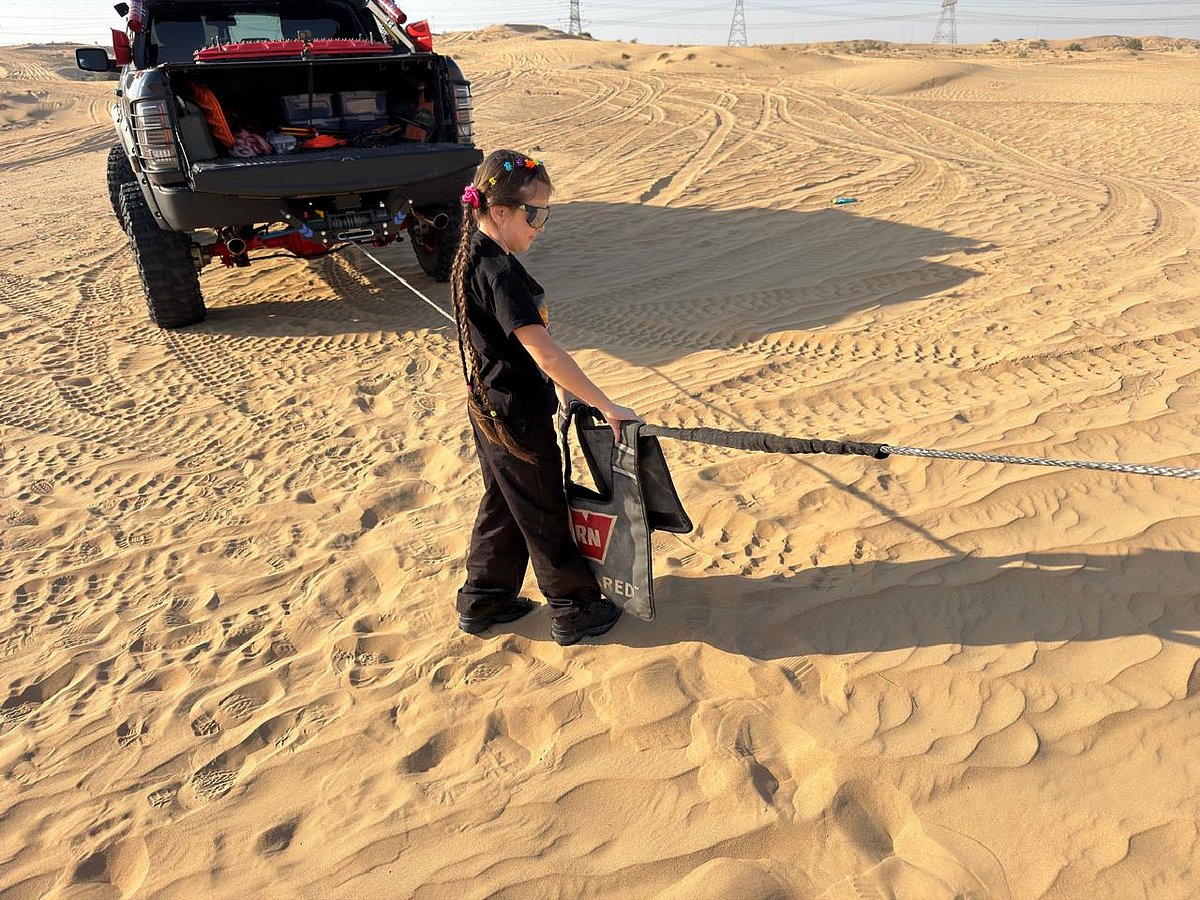
Since starting in August 2024, BlueRex has assisted more than 6,000 vehicles.
The busiest period is during the cooler months, particularly weekends and public holidays, when many more people head into the desert. But the rescues do not stop during summer.
Even when temperatures reach 45°C or more, people continue to venture into deserts, mountains and hilly areas and some still find themselves stranded. “In fact, summer situations can sometimes become more serious very quickly because of the heat, especially if people don’t have enough water or aren’t properly prepared.”
From a phone call to a full recovery: How a rescue unfolds
Most people initially contact BlueRex through social media platforms. The group also has a dedicated mobile number and WhatsApp line specifically for rescue cases.
“When someone contacts us, the first things we ask them to send are their exact location and photos or videos of the vehicle and the situation. From those pictures, we can often understand what has happened and whether the vehicle may be able to recover itself.”
This information allows the team to assess whether the vehicle genuinely needs a physical rescue, because not every stranded vehicle requires BlueRex to travel to the location.
“For example, the driver may simply need to engage the correct 4×4 system, adjust the tyre pressure or use the right driving technique. In those cases, we guide them step by step over the phone or WhatsApp, and very often they manage to free the vehicle themselves.”
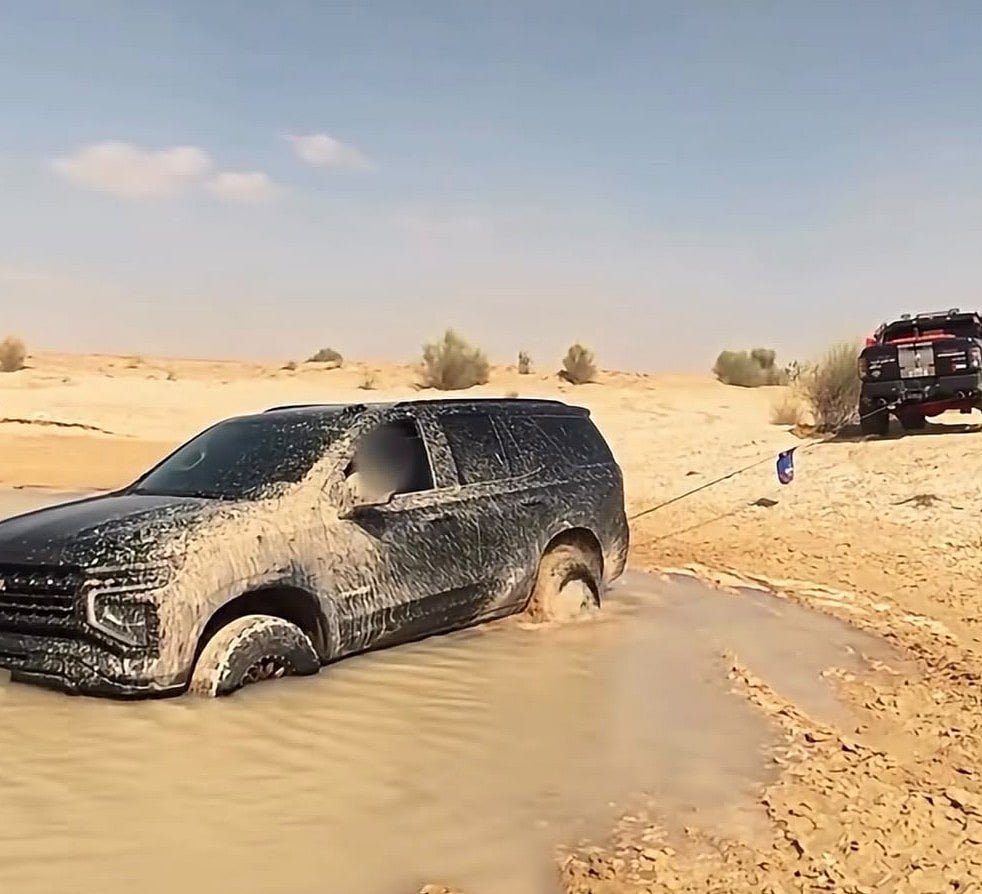
“Not every stuck vehicle needs a winch or another vehicle pulling it out. Sometimes a little guidance and knowledge is enough, and it’s actually very satisfying when someone manages to recover their own vehicle because they’ve learned something they can use again in the future.”
If a situation does require additional assistance, the BlueRex team heads straight out to the location. If they are too far away, they coordinate with trusted volunteers nearby instead.
According to Ahmad, some rescues take only a few minutes and can be resolved over the phone, while others demand hours of hands-on work, with the team physically battling to pull a vehicle free.
Registered volunteers with Dubai Police
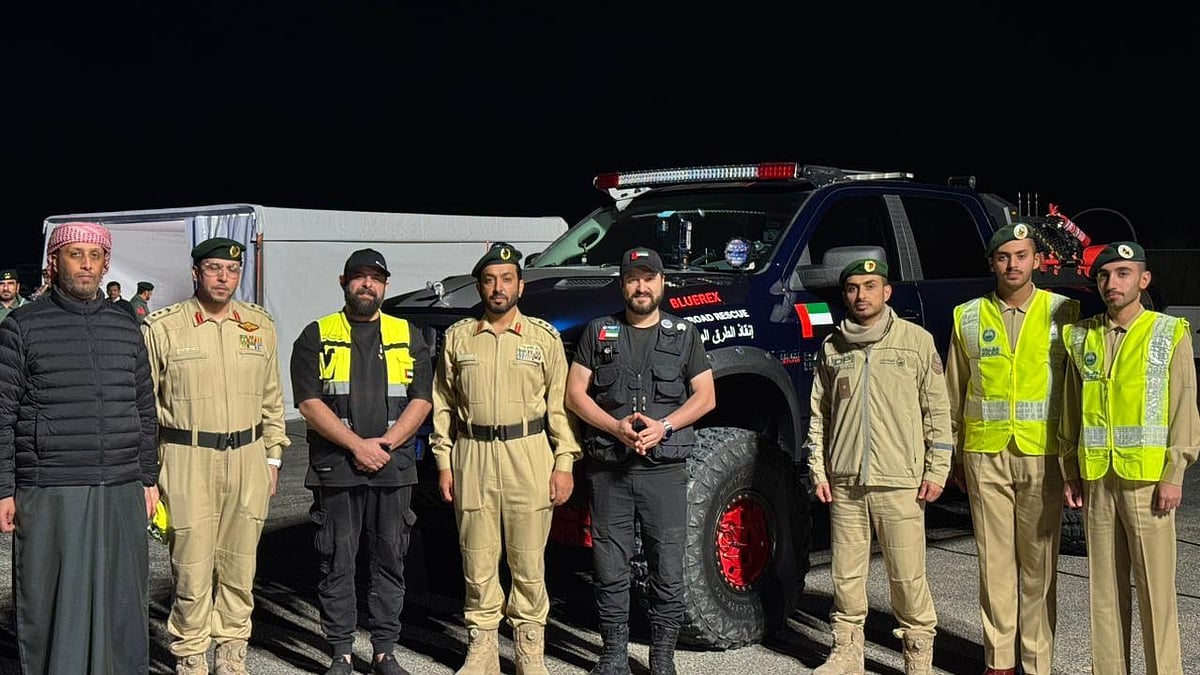
The group is registered with Dubai Police as an official volunteer group, but its role is a specific one. If there is an accident or injury, motorists must call the authorities right away. BlueRex mainly helps with off-road situations where a vehicle is stuck and the people involved are safe, but they don’t have the experience or equipment to recover the vehicle themselves.
“This could be a family stuck in soft sand, someone who has driven into an area their vehicle can’t handle, or simply someone who needs experienced off-road assistance.”
In some cases, the police themselves have referred people to BlueRex after being contacted by a stranded driver, officers have passed on the location and details so the team could step in and help.
The vehicle behind the rescues
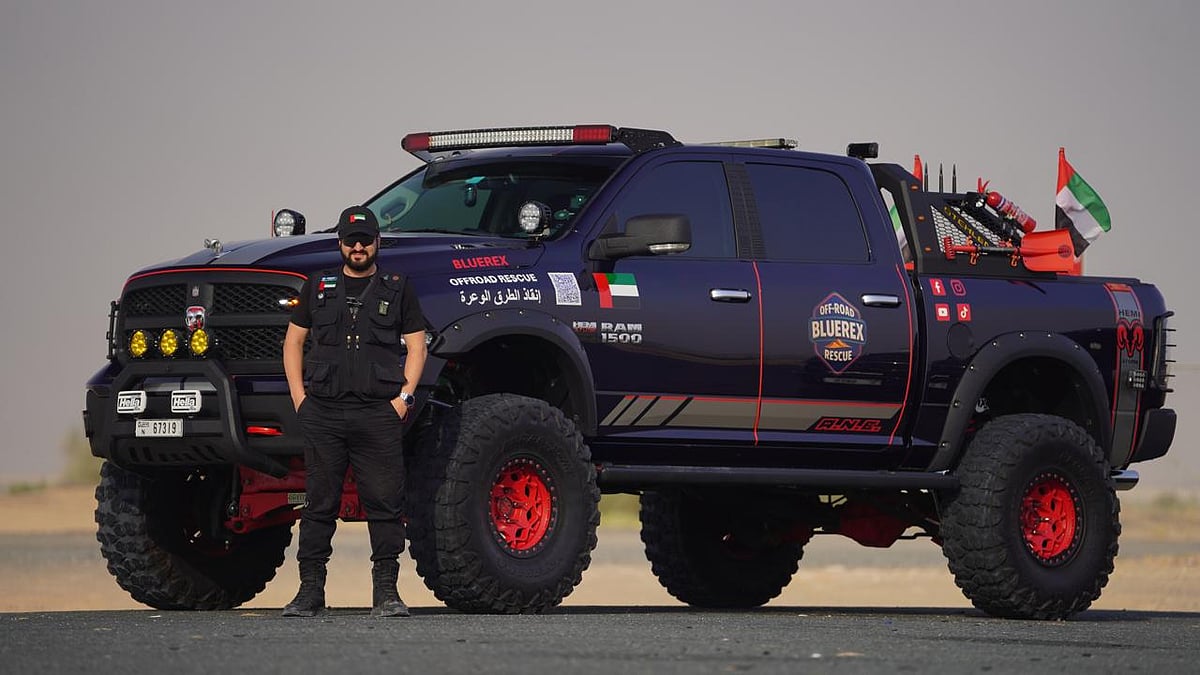
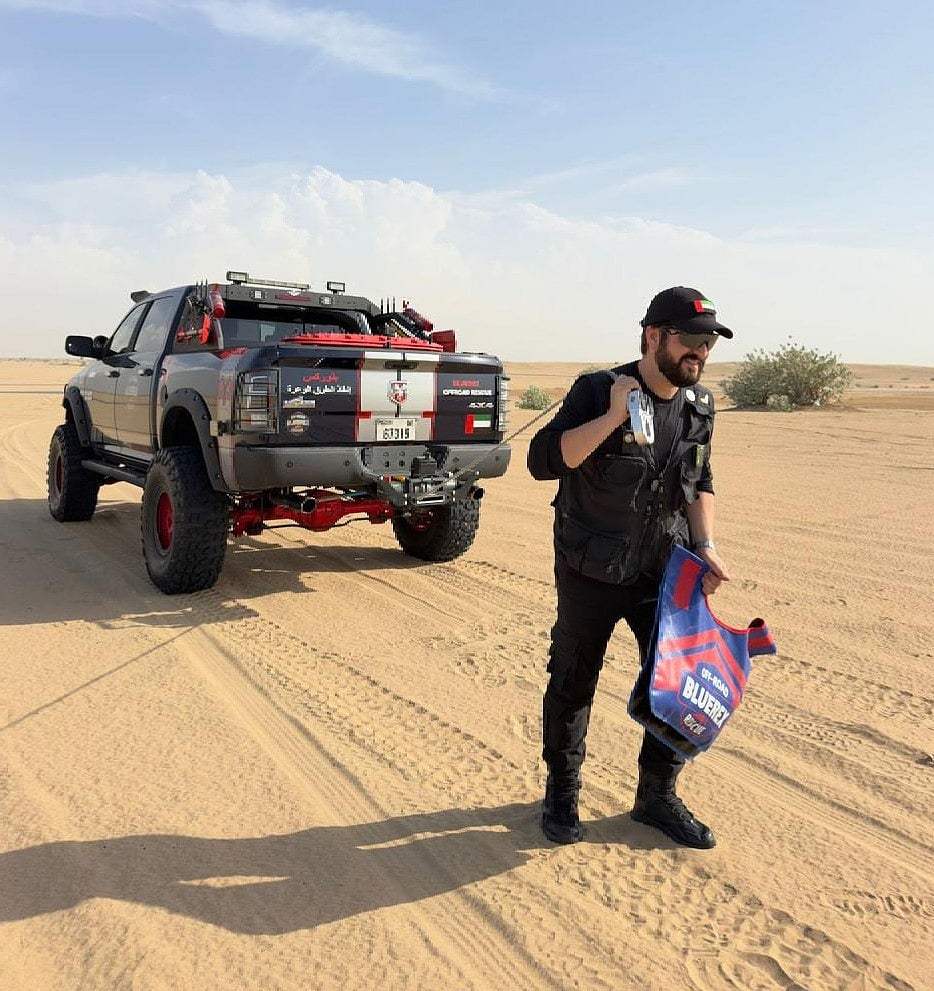
At the centre of many BlueRex recoveries is a 2015 RAM 1500 with a 5.7-litre HEMI V8. It is no longer a standard truck. Over the years, BlueRex has modified and prepared it specifically for off-road and recovery work and Its modifications have cost as much as Dh100,000.
“For rescues, we need a vehicle that can handle difficult terrain but also has the power and capability to recover other vehicles. The RAM has been equipped with off-road tyres, recovery equipment and other modifications that help us reach places where people are stuck and safely get them out.”
The truck carries a long list of recovery equipment, including a winch, recovery ropes and straps, rated recovery equipment, traction boards, shovels, tyre deflators, air compressors, lighting, navigation and communication equipment, a fire extinguisher, tools, a spare tyre, water and charging and power equipment.
But Ahmad says having the equipment is not enough.
“But one thing we’ve learned is that having lots of equipment doesn’t automatically make someone good at recovery. Knowing when and how to use the equipment safely is more important. Using the wrong recovery method can turn a simple stuck vehicle into a much more difficult or even dangerous situation. At the end of the day, the equipment is there for one reason: to help us bring people and their vehicles out safely.”
Over time, it has also become a major part of the BlueRex identity. “A lot of people recognise the truck immediately, and sometimes people even tell us that when they see the BlueRex RAM arriving, they know they’re going to get out. We have a very strong connection with this truck because it has been part of the BlueRex journey from the beginning. At this point, it’s almost another member of the family.”
The hidden cost of free rescues
While BlueRex does not charge people for rescues, keeping a dedicated recovery vehicle running comes at a cost. The expense varies from month to month depending on how active the team is and the types of rescues they carry out.
“During a busy month, fuel alone can cost around Dh3,000 to Dh4,000, but fuel is only one part of the expense. There is regular servicing, tyres, mechanical repairs and recovery equipment that needs to be maintained or replaced. Sometimes, especially after a difficult recovery, we can face much bigger repair bills for the truck,” Ahmad said.
Cleaning and maintenance after rescues are also important, since sand, mud and water can get everywhere in the vehicle but every penny is worth it.
“All of these costs are covered by us because we don’t charge people for rescues. Of course, maintaining a rescue vehicle isn’t cheap, but when you’ve helped somebody get safely back on the road, that’s what matters to us.”
The recovery that took three and a half hours
After assisting more than thousands of vehicles, the team has encountered all kinds of rescues. Some were straightforward. Others were far more complicated and took hours to complete. But their most challenging recovery was something they had never faced before – a vehicle completely submerged in seawater at the shoreline.
“By the time we arrived, the vehicle was already underwater near the shore. This was completely different from anything we normally deal with in the desert. Visibility and access were difficult, and we had to carefully plan every step of the recovery,” Ahmad said.
The operation required multiple vehicles, winches and very careful coordination. It took around three and a half hours to finally recover the vehicle.
“Water recoveries are very different from normal sand recoveries because the situation can change quickly and there are additional risks involved. You constantly have to assess what is happening and understand your limits. Safety is always our first priority in every rescue.”
The common mistakes that leave drivers stranded
According to Ahmad, one of the most common mistakes is simply assuming that getting stuck in sand will not happen. The desert can look deceptively easy from the road, and drivers often underestimate just how soft the sand can be.
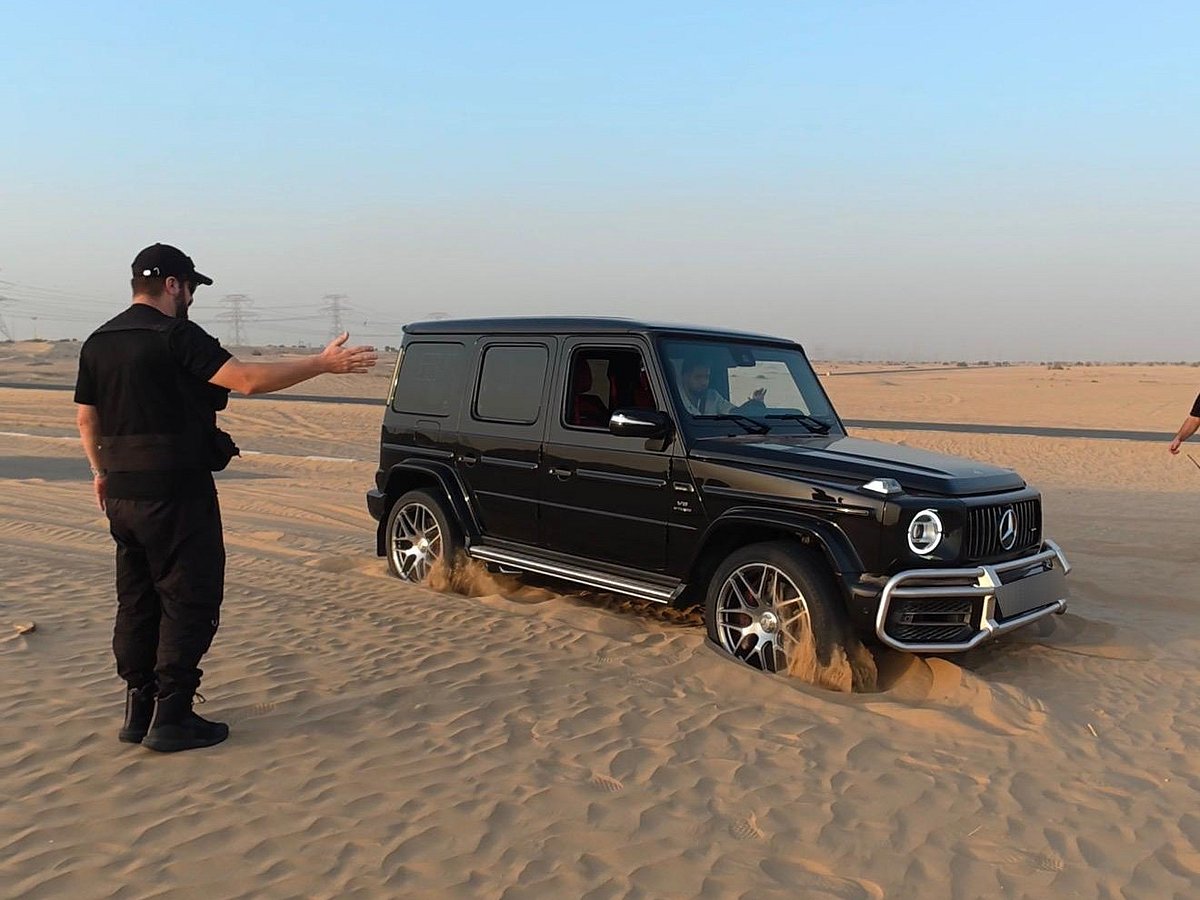
“We’ve had so many cases where someone didn’t even go into the desert. They simply parked with their front or rear wheels on the sand, sometimes literally one metre away from the road, and the vehicle sank into the soft sand and couldn’t move anymore,” he said.
Another common mistake is heading into the desert alone without properly preparing the vehicle.“Things like reducing the tyre pressure and knowing when and how to engage the correct 4×4 system can make a huge difference.”
Ahmad also sees people heading into the desert, particularly on family outings, without basic recovery equipment. “You don’t need to carry everything, but we always recommend having at least a shovel, tyre deflator and air compressor, as well as enough water and a charged phone or power bank.”
If a vehicle does become stuck, he advises drivers not to panic or keep pressing the accelerator.“Spinning the wheels can dig the vehicle much deeper into the sand and turn what could have been a very simple self-recovery into a much more difficult situation.”
The real reward – watching families get home safely
Maintaining the rescue truck is expensive. Everyone on the rescue team has full-time jobs and dedicates their weekends and free time to their voluntary missions. Doing this requires a great deal of motivation. But for Ahmad, Nora and the team, the reward comes from seeing what happens when a stranded person finally gets home safely.
“Sometimes we arrive and find a person or a family who has been stuck for hours. They’re tired, worried and don’t know what to do. Then you help them get out, and you see that moment of relief when they realise they can finally go home. That’s something that never gets old, no matter how many rescues we’ve done.”
The impact of BlueRex’s work is not limited to the UAE – their tips and videos on social media have reached people thousands of kilometres away. The team has received messages from Australia, Kazakhstan, South Africa, the US and many other countries from people who found themselves stuck in sand or in a difficult situation, remembered a technique they had seen in one of the group’s videos, tried it and managed to free their vehicle.
For BlueRex, the work is therefore about more than pulling vehicles out of the sand. It is also about giving people the knowledge and confidence to handle off-road situations safely and, ideally, avoid getting stuck in the first place, and according to Ahmed, “that’s another kind of reward for us.”