

Table of Contents
Dubai: Bipasha Basu has been talking about her body in public for a quarter of a century, mostly not by choice. In a new Elle India cover interview, she finally supplies the part of the story that usually gets left out.
The reason she started weight training was not aesthetic. It was medical.
It began with her knees
Her knees were the problem. Doctors told her she might need surgery, she told Elle India, and warned that dancing and action sequences could become difficult.

She decided she was not accepting that. “I wanted to be absolutely fit and not dependent on anybody,” she said, adding that she wanted to do everything she had just been told she could not. So she started weight training, started physio, and set about understanding what the human body is capable of.
That is the origin of the physique that would go on to define how a generation of Indian audiences pictured a fit woman.

‘I started the trend’
Women with more muscle tone, she says, were not particularly acceptable as actresses at the time. She thinks she is the one who changed that, and that alongside it she started preaching self-love, because she had worked out that it was never really about looking good. As she put it to the magazine: “It’s more intrinsic. You need to be healthy.”
Whether the credit is entirely hers is arguable. What is not is that she was doing it early. Basu was releasing fitness DVDs from 2005, well before wellness became a content category and before every actor had a Pilates instructor on retainer.
She is not sold on where the conversation has landed, though. She likes that everybody exercises now, and calls it one genuinely healthy trend. Her doubt is about motive. She does not believe most people are chasing health at all. “They are looking for the physical externals,” she said.
Standing out in 2001
Basu arrived in Hindi cinema at a moment when the template for a heroine was narrow.

Actresses then were mostly petite, fair and delicately featured, she recalls. “I was very tall, very athletic and tanned, and with very strong features,” she said. She knew she stood out, and she knew it was not the prevailing prototype.
Her choices were similarly off-pattern. “Nobody used to debut in a negative role, and I did that in Ajnabee,” she said. She simply found the character interesting, and the audience took to her in a way she had not expected.
Raaz followed, a supernatural film at a time when horror was not a route to the A-list. After that she decided she would try never to take the regular roles, and says the interesting scripts started arriving because the industry had worked out she was a risk taker with an audience behind her.
What followed was a look that spread across Indian popular culture: bronzed skin, heavy kohl, textured hair.
The trolling after Devi
The scrutiny did not stop when she became a mother. It found a new format.
“The conversation around women’s bodies is quite bizarre even now,” she said. The moment you give birth, she argues, you are expected to return to the shape you were in your twenties even if you are in your forties. What is expected of a 20-year-old is expected of a 40-year-old, and if you are not bouncing back, the trolling arrives.
She went through it herself after her daughter Devi was born. “I went through major, major trolling,” she said. A few insensitive paparazzi, she says, took genuinely bizarre pictures of her. Nobody sees the effort a woman is putting in, or what she is managing alongside a new baby. Everybody just expects you to bounce back.
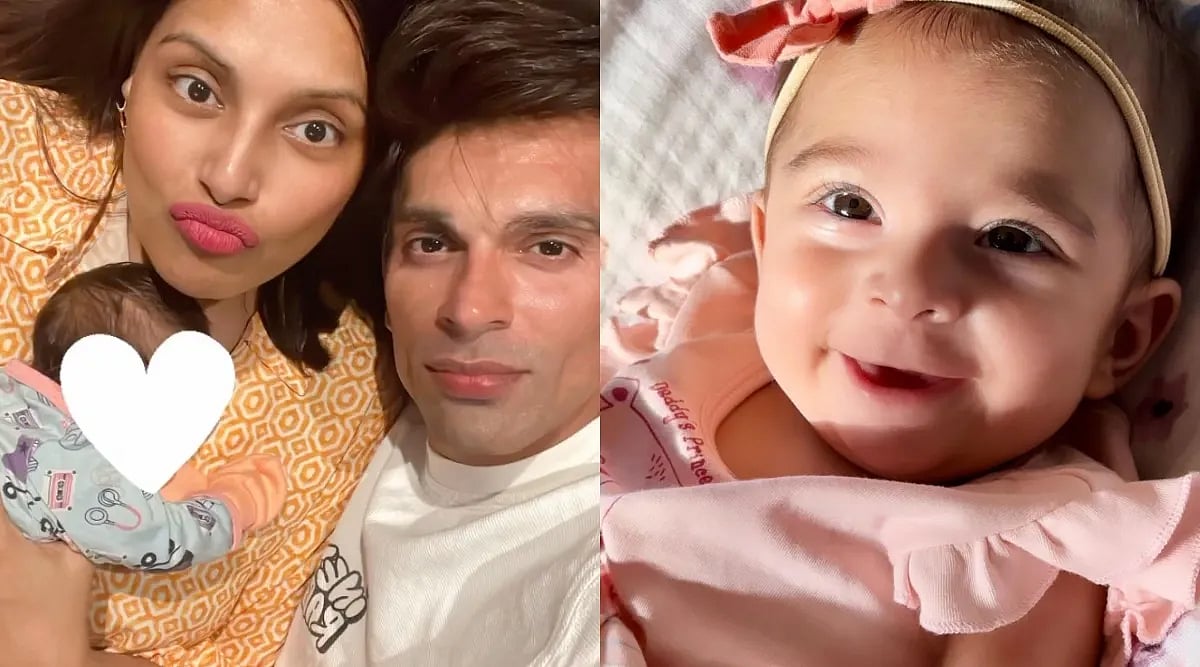
Her position on all of it is settled. “I’m an extremely confident person, so no kind of trolling can break me,” she said. She knows what her journey is and what work she needs to do, and the outside noise does not register.
On ageing
The line most likely to travel is her one about getting older.
“Ageing is like the biggest sin that you can commit,” she told Elle India, laughing, before adding that she likes the person she is today considerably more than the one she was in her twenties.
She was careful not to judge anyone else’s choices. That, she says, is their call. “I’m never going to fall into the pressure of wanting to look younger than what I am,” she said. She is happy with the way she is growing older and proud of her age, credits her parents for the genetics, and says she does relatively little to her skin and hair.
She wants to act again
The other news in the interview is a career one.
Basu has not appeared in a project since the 2020 series Dangerous, which she made with her husband Karan Singh Grover. “I am an actor, and I’m extremely eager to act now,” she said. She was not ready for a while, because she wanted to give her daughter everything she had. Devi is three now, with longer school hours, classes and her own friends, which has finally given Basu the room to step back out.
Streaming interests her particularly, because a series lets a character have a long arc in a way films do not. She has no preconceived ideas about what she wants. When a script and a character resonate, she will take it, and it could be anything.
She is also openly curious about the industry she is walking back into. “I want to see what has changed for women in our business,” she said, adding that she is waiting to find out what turns up and what she ends up choosing.