
Table of Contents
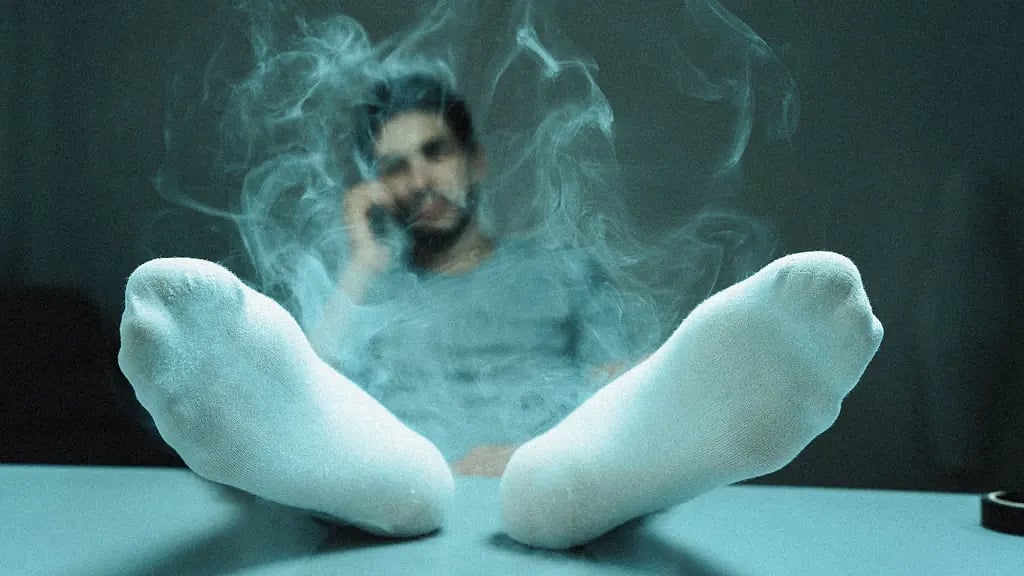
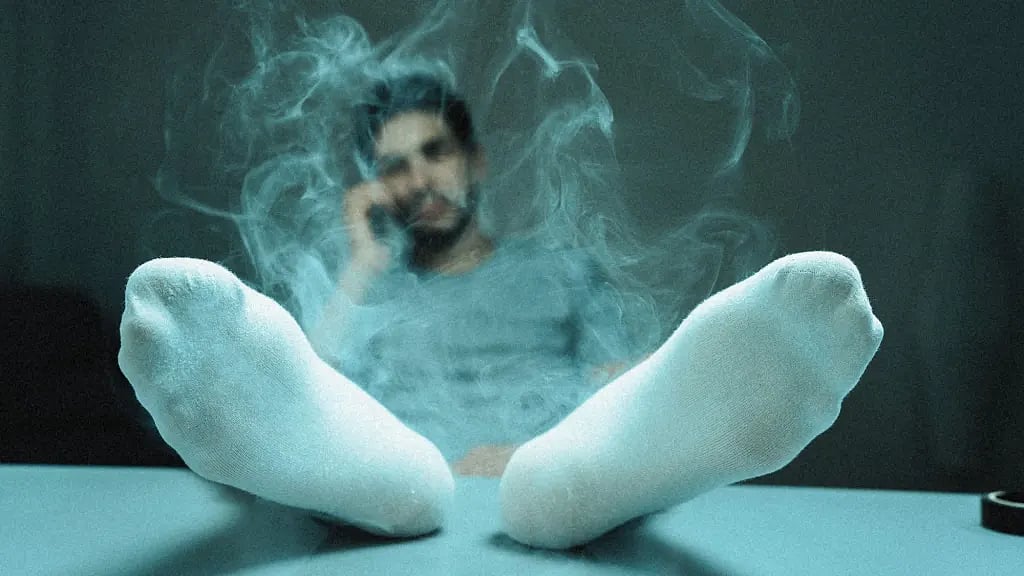
Somewhere in Dubai this week, a teenage boy is getting dressed for school and deliberately skipping his deodorant. He is not running late. He is not out of stock. He is following a plan he found on his phone, and the plan says his own smell will do more for him than anything sold in a bottle.
The plan has a name. Pheromone-maxxing sits inside the wider looksmaxxing world, the vast online industry devoted to optimising your face and body for maximum attractiveness, and it holds a unique place in that world. Nearly every other looksmaxxing technique demands effort, money or minor surgery. This one asks you to do nothing at all, and promises results anyway.
Strip it down and the argument makes one claim: your natural scent is an asset, and soap is throwing it away.

Fresh sweat does not actually smell of anything
Start with what body odour even is, because most people have it wrong.
“Fresh sweat itself is generally odourless,” explains Dr Meeth Atawane, Specialist Dermatologist at RAK Hospital. “Body odour develops when substances in sweat and other skin secretions are metabolised by microorganisms living on the skin.”
The main culprits are the apocrine glands in the underarms and groin, which produce a secretion full of lipids and proteins. Skin bacteria break those down into volatile molecules, and those molecules are the smell. Eccrine glands, the ones spread across the body that handle temperature regulation, mostly produce water and electrolytes and start out odourless too.
So the smell teenage boys are being told to cultivate is not their essence. It is bacterial metabolism.

Dr Nermine Ismail, Specialist Dermatology at Medeor Hospital Abu Dhabi, makes the same distinction and adds the part the trend depends on obscuring. “Natural scent is different from accumulated sweat and odour resulting from bacterial breakdown of sweat,” she says.
There is a small grain of real science buried in all this, and both dermatologists are careful to acknowledge it rather than dismiss it outright. Each person does have a unique odour profile shaped by genetics, hormones, diet, skin secretions and the microorganisms on their skin. Scent can influence social perception.
What does not follow is that more of it is better.
“There is no dermatological evidence to recommend avoiding bathing or using deodorant to enhance attractiveness,” Dr Ismail says.
The showering myth, dismantled
The other pillar of the argument is that washing strips away your scent signature, leaving you a blank, unattractive nothing.
This turns out to be untrue. The skin does not stop working when you towel off.
Washing removes sweat, sebum, dead skin cells, environmental contaminants, deodorant residue and some of the odour-producing compounds sitting on the surface. It can shift the composition of the skin microbiome temporarily. Then the microbiome replenishes itself, because that is what it does.
“Your individual scent is not permanently removed by showering,” Dr Atawane says.
Or, as Dr Ismail puts it: “The idea that showering destroys an attractive natural scent is an oversimplification of the science.”

Gulf climate and this trend
Almost every online source pushing this stuff is operating in a temperate climate. The gulf has a higher average temperature year round.
High temperatures plus high humidity, particularly along the coast, means substantial sweating and inefficient evaporation. Sweat sits on the skin longer. Warm, moist, occluded areas such as the underarms, groin and skin folds become considerably more hospitable to things nobody wants.
After a few days without washing in those conditions, according to Dr Atawane, there can be increased accumulation of sweat, sebum, dead skin cells and microorganisms, stronger odour, and a raised risk of intertrigo, irritant dermatitis and overgrowth of organisms such as Candida or dermatophytes. Heavy sweaters may also see follicular occlusion, friction irritation, or flare-ups of acne or folliculitis.
“Advice about deliberately avoiding hygiene practices that might be relatively tolerable in a cool, dry climate cannot necessarily be extrapolated to the Gulf,” she says.
Dr Ismail’s also advices that in this climate, drying the skin properly matters nearly as much as washing it, and so does getting out of sweat-soaked clothes rather than sitting in them.
One clarification both doctors offer, in fairness to the deodorant sceptics: skipping deodorant and skipping showers are not the same thing. Deodorants control odour. Antiperspirants reduce sweat using aluminium-based compounds. Bathing does something else entirely.
“Someone may choose not to use deodorant and still have perfectly good hygiene,” Dr Ismail notes. “However, avoiding bathing altogether allows sweat, oils, dead skin cells and microorganisms to accumulate, particularly in hot weather.”
On the related conspiracy theory that antiperspirants are poisoning everyone, both are unambiguous. There is no good evidence that normal use of aluminium-containing antiperspirants causes breast cancer or Alzheimer’s disease, and sweating is a thermoregulation mechanism rather than a detox route. The liver and kidneys handle metabolic waste. They always have.

Good news: The teenagers are not buying it
We asked youngsters in the UAE about pheromone-maxxing and their response was…disgust, delivered with personal takes.
“It worries me to know that people are rebranding not having basic hygiene,” says Maheshwar Sunil, 19 years old. He adds, with the weariness of someone who has heard a lot of nonsense: “Not taking a shower and being sweaty isn’t ‘pheromone-maxxing’.”
Mahita Venugopalan Muthulekshmi, 23, went straight to the practical implications. “I found it quite nasty actually. I would not be fine with a man not showering and showing up for a date because he thinks that his pheromones are going to attract me. I think the result would be quite the opposite.”
Rohan, 20, had assumed the term referred to something entirely different, which is its own small comment on how this vocabulary spreads. “I have always associated it with those pheromone perfumes that people use,” he says. Learning what it actually meant made his jaw drop.
“I have definitely heard a lot of really, really egregious stuff come out of TikTok, especially the looksmaxxing community, but this really takes the cake,” he says. “What are we doing, guys? Are we losing the plot?”
Shravan Podugu, 17, kept it short. “I will not try it because it is not good for humans to not take showers regularly.”

Zoe Lengyel, 16, offered what may be the most efficient rejection on record. “I will not try this because this is a matter of poor personal hygiene, plus I am not a man.”
The sharpest analysis came from Noah Fernandez, 23, who identified the thing underneath the smell.
“It’s part of this whole ‘looksmaxxing’ manosphere that makes me immediately sigh whenever I come across any of its subcategories,” he says. “The main reason being that the underlying theme for these trends and ideas that spread seem to be that a lot of men these days are very unhappy with themselves.”
He also pointed out the self-defeating logic at the centre of it. Walking around with heavy body odour repels the very people you are trying to attract. And then the line that ought to be printed on a poster in every secondary school: “If I would have to use ‘hacks’ to seem more attractive, then there’s a deeper underlying issue that I need to solve.”
The complication: how much of this is a joke?
There is a wrinkle in all of this that deserves airing, because it changes what the problem actually is.
Rohan is not convinced that large numbers of young men are genuinely doing this. Most of what he has seen online, he says, is people mocking it and medical professionals debunking it, though he adds that it would not surprise him if some were practising it for real.
His reading is that much of pheromone-maxxing is satire. And that, in his account, is precisely where the danger sits rather than where it dissolves.
“There is also this predatory aspect to it, particularly for people who are not able to discern that it’s satire,” he says. Some of the videos commit fully to the bit, and telling them apart from the sincere ones is a skill rather than an instinct.

“It truly takes some internet knowledge and familiarity with pop culture, especially with Gen Z pop culture, in order to understand satire,” Rohan says. “Unless you understand satire, it’s really hard to get it and know it’s not true.”
Which is an uncomfortable thought for anyone who has forwarded one of these videos to a group chat with a crying-laughing emoji. The audience least equipped to detect the joke is the same audience most likely to be watching.
He also traces how the vocabulary itself spread, and he is honest about finding some of it funny. Once “maxxing” took hold as a suffix, the constructions multiplied, and he cheerfully names gesture-maxxing as a personal favourite. The humour is not the issue. What sits underneath it is.
“A lot of these trends, they need not be unhealthy as in harmful to you physically,” he says. “But in terms of influencing young children, a lot of the content on social media is not ideal or good for them to consume.”
His conclusion about looksmaxxing broadly is: It has led a lot of young boys to attribute their self-worth to their looks.
Why the smell is not the story
And that, brings us to the reason this piece is not simply a public service announcement about washing.
Every young person we spoke to, thinks other kids are falling for it, even though they are not. Their explanations are worth reading, because they are more sophisticated than most commentary on the subject.
“Kids have a minimal understanding of biology and are susceptible to such rhetoric,” says Maheshwar.
Shravan pointed at the relationship rather than the information. “Young kids don’t have enough maturity and they easily get persuaded by their favourite influencers,” he says.
Noah described the same dynamic from closer range, and it is the mechanism that makes this whole ecosystem work. “Boys and young men build strong trust with social media creators in this scene and take everything they say as fact,” he says. He has watched worse arrive through the same pipeline, including boys hitting their own faces with objects to reshape their bone structure. That one, he says, freaked him out.

Zoe went furthest, connecting the content to consequences that have nothing to do with skincare. “There are children who believe things they see on the ‘manosphere’ to an extent that disrespect towards women has become a major issue among children in some countries,” she says.
Rohan reached the same conclusion from a different direction, and pushed it further. He has met boys who know about looksmaxxing, though he cannot say whether any of them are actually skipping showers, and he does not think that matters much.
“You don’t really need to observe or know someone that practises it firsthand in order to appreciate the harmful effects that it is having in a broader cultural sense,” he says.
What he points to instead is the comment sections. Videos with tens of thousands of responses, using hateful language casually, in a way he does not believe would have passed on the internet a decade ago.
“There definitely has been a normalisation of really toxic misogynistic themes in popular culture,” Rohan says, “which should be something that should concern us as we are engaging in this culture.”
And then he said: “By laughing about trends like this, we are in a way enabling it.”
The clinical view: It starts with grooming and ends somewhere else
Zobia Amin, Clinical Psychologist at RAK Hospital, sees where this pipeline terminates, and her account of why it works is the most useful thing in this entire debate.
Adolescence, she explains, is when young people are working out who they are and where they belong, and when the need for approval runs the most. Social media adds something new to that old equation.
“They are not simply seeing people anymore,” Ms Amin says. “They are seeing filtered, edited and carefully presented versions of what people are supposed to look like.”
The appeal of looksmaxxing content, in her reading, is control. A teenager starts thinking that changing their face, body, skin or even their smell might finally make them attractive and accepted, and at first that feels like power rather than pathology.
The escalation follows a pattern she describes with uncomfortable clarity. It begins with something harmless. Better grooming. Skincare. Exercise. Then the algorithm does what algorithms do, because extreme content holds attention.

“So gradually, a young person can move from asking, ‘How can I look better?’ to ‘What is wrong with the way I look?’ and eventually to, ‘I need to change myself completely for people to accept me’,” she says.
The distinction she draws next deserves to outlive this trend entirely.
“There is a big difference between self-care and self-correction,” Amin says. “Self-care comes from a place of looking after yourself, whereas self-correction can come from believing that something is fundamentally wrong with you.”
And yes, this is happening here. Teenagers are coming into her practice wanting nose jobs, wanting particular features changed, pursuing dermatological procedures, running elaborate day-and-night skincare routines because something about their appearance feels like it needs fixing. The platforms are global. The trends do not respect borders.
She is also careful about the line she will not cross, which is diagnosing teenagers based on their watch history.
“I would be careful not to label every teenager who follows this content as having a psychological disorder,” she says. “Wanting to take care of your skin, look presentable or even consider a cosmetic procedure does not automatically mean there is a mental-health problem.”
The same caution applies to body dysmorphic disorder, which gets thrown around loosely in these conversations. Someone already vulnerable to body-image concerns may well be drawn to this content, and it can feed a cycle of comparison, anxiety, checking, temporary relief and renewed doubt. But BDD has diagnostic criteria involving intensity, persistence, repetitive behaviours and genuine impairment of daily functioning, and following a trend is not one of them.

What parents should actually watch for
The test Amin offers parents is not how much a teenager cares about their appearance. Most of them care enormously, and always have.
The test is distress and interference. How much is it upsetting them, and how much is it eating their life?
The signs she flags include constant mirror-checking, or the opposite, avoiding mirrors and photographs entirely. Excessive grooming rituals. Repeatedly asking family members whether they look okay. Hours spent researching one feature. Growing spend on products and procedures. And, importantly, avoidance of school, friends, gatherings or being photographed because of how they think they look.
Sometimes it shows up in the language. Statements such as “I’m ugly”, “nobody will like me”, or “I can’t go out looking like this” are worth hearing properly rather than waving away.
What not to do when you find it on his phone
The instinct, on discovering this content on a fifteen-year-old’s phone, is to confiscate the phone and mock the trend. Both are understandable. Both are counterproductive.
“Don’t panic and don’t shame him,” Amin says. Ridicule makes him defensive, and a defensive teenager stops talking to you and starts asking the internet instead. Which is precisely how he got here.
Her suggested approach replaces criticism with curiosity, and she scripts it out: Tell him you came across what he has been watching, that you are not there to judge, and that you want to understand what he likes about it and whether it actually makes him feel better or worse about himself.
“Parents don’t necessarily need to fight the content itself,” she says. “They need to understand what it is doing to their child.”
If the answer involves real distress, withdrawal from friends or school, intense preoccupation with changing himself, expressions of self-hatred, or serious money going into fixing perceived flaws, that is the point to involve a mental-health professional.

The takeaways
The dermatologists will tell you to shower daily, especially after sweating, pay attention to the underarms, groin, feet and skin folds, dry them properly, use a gentle cleanser rather than scrubbing, wear breathable clothing and change out of sweaty clothes. Deodorant for odour, antiperspirant for sweat. See a doctor if strong odour persists despite good hygiene, because bromhidrosis, hyperhidrosis and various infections are real and treatable.
That advice is unglamorous, free and correct, and no influencer will ever go viral delivering it.
But the smell was never really the point. Zoe Lengyel, who is sixteen and has apparently already worked this out, put the defence in one line: kids need to be taught critical thinking so they do not believe things simply because they have seen them repeatedly.
Noah Fernandez arrived at the same place from a warmer direction. Find a good circle of people who let you be yourself, he says, and who help you understand that your worth is not tied to how conventionally attractive you are.
A boy who believes that does not need to know what apocrine glands do. He will shower anyway, because there is nothing at stake in it.