
Table of Contents
Dubai: The rapid buildup of US military forces in the Middle East has progressed to a stage where President Donald Trump now has the option of launching military action against Iran as soon as this weekend, The New York Times reported, citing administration and Pentagon officials.
The report underscores the high-stakes choices facing the White House as tensions with Tehran escalate despite renewed diplomatic contacts. While Trump has given no public indication that a final decision has been made, military preparations have continued at pace, signalling that Washington is maintaining credible strike capabilities even as negotiations remain technically open.
According to the newspaper, the drive to assemble forces capable of striking Iran’s nuclear infrastructure, ballistic missile systems and launch facilities has intensified this week. The military movements come even after indirect talks between US and Iranian officials in Geneva on Tuesday.

Iranian representatives, the report said, sought additional time to return with more detailed proposals for a diplomatic resolution. US officials described the discussions as constructive but cautioned that major differences remain unresolved.
US military buildup near Iran — at a glance
-
President Trump has described the expanding US deployment as an “armada”
-
Officials say the force posture allows potential military action as soon as this weekend
-
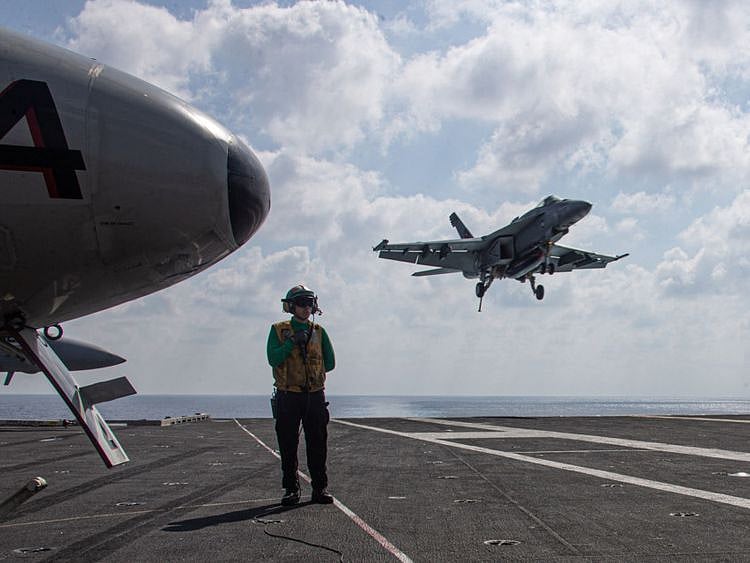
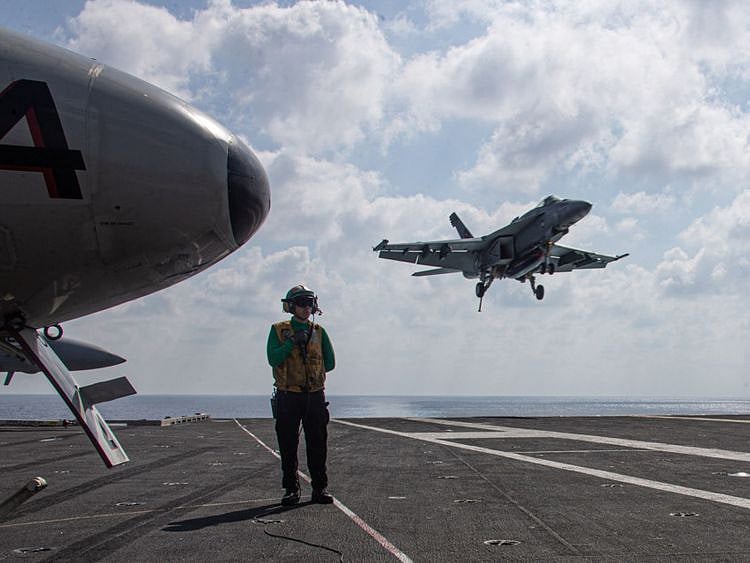
USS Abraham Lincoln carrier strike group positioned within striking range
-
Strike group includes F-35 stealth fighters and F/A-18 attack aircraft
-
Multiple destroyers and Tomahawk-equipped warships deployed
-
Second carrier strike group led by USS Gerald R. Ford moving toward region
-
Total destroyers in wider theatre reported at more than a dozen
-
Attack aircraft, electronic warfare jets and MQ-9 Reaper drones deployed
-
Refuelling tankers and reconnaissance aircraft repositioned
-
Patriot and THAAD missile defence systems reinforced
-
Estimated 30,000–40,000 US troops stationed across Middle East
-
Long-range bombers on heightened alert status
-
Additional aircraft positioned at Diego Garcia base
-
Report says Trump’s precise objectives remain unclear
Trump has repeatedly insisted that Iran must abandon its nuclear programme, including halting uranium enrichment — a central demand that continues to define the standoff between Washington and Tehran.
Iranian officials, however, have firmly rejected any such possibility. Iran’s atomic energy chief Mohammad Eslami said on Thursday no country could deprive the Islamic republic of what he described as its legitimate right to nuclear enrichment.
“The basis of the nuclear industry is enrichment. Whatever you want to do in the nuclear process, you need nuclear fuel,” Eslami said, according to remarks published by Etemad daily.
“Iran’s nuclear programme is proceeding according to the rules of the International Atomic Energy Agency, and no country can deprive Iran of the right to peacefully benefit from this technology,” he added.
Diplomatic uncertainty
Despite the expanding military posture, Trump has not publicly committed to a course of action. The New York Times noted that the president’s objectives in any potential operation appear less clearly defined than during previous confrontations.
Administration officials cited in the report expressed scepticism about the prospects for a near-term diplomatic breakthrough, even as dialogue channels remain active. Iranian officials characterised the Geneva talks as producing agreement on a “set of guiding principles,” though US counterparts warned that significant gaps persist.
Trump has repeatedly warned that Iran must meet US conditions or face severe consequences, keeping the threat of military action firmly in play.
Israel’s preparations
Israel, widely viewed as a potential participant in any US-led military action, has simultaneously intensified its own readiness measures.
The New York Times reported that Israeli forces have been operating under heightened alert for weeks amid concerns over Iranian missile capabilities and regional escalation risks. Israeli defence officials told the newspaper that planning for a possible joint strike scenario is underway, even though no final decision has been taken.
According to the officials, operational concepts envision delivering a sustained blow over several days rather than a single strike, with the aim of degrading Iran’s military and strategic assets while increasing pressure on Tehran’s leadership.
Prime Minister Benjamin Netanyahu has consistently pushed for measures to weaken Iran’s missile forces, viewing them as a critical threat to Israeli security.
Risks of escalation
The report emphasised that another confrontation with Iran would carry substantial risks. Officials warned that Tehran could respond with missile attacks targeting Israel as well as US military installations across the region.
Such concerns are shaped partly by the legacy of last year’s 12-day conflict, during which US and Israeli forces struck Iranian nuclear and military sites. While Trump declared at the time that Iran’s nuclear programme had been “obliterated,” the newspaper noted that Tehran’s capabilities remain a central factor in current calculations.
Analysts and defence officials cautioned that even a limited strike campaign could trigger unpredictable retaliation dynamics.
Expanding US military presence
According to The New York Times, the American buildup includes dozens of aerial refuelling tankers, additional fighter aircraft and two carrier strike groups deployed across strategic waterways.
Among the key assets, the aircraft carrier USS Abraham Lincoln and its accompanying warships remain central to US force posture. A second carrier strike group led by the USS Gerald R. Ford — the Navy’s most advanced carrier — has been moving toward the region.
The combined deployments significantly expand Washington’s operational flexibility, enabling potential strikes on a wide array of Iranian targets, including missile systems, storage depots, nuclear facilities and military command centres.
The Pentagon has also reinforced defensive systems, moving Patriot and Terminal High Altitude Area Defense (THAAD) batteries to protect US troops and allied infrastructure.
Approximately 30,000 to 40,000 American personnel remain stationed across the Middle East.
Readiness and constraints
The New York Times reported that only weeks earlier, the Pentagon faced limitations in supporting rapid offensive operations, with regional air defenses considered insufficient to counter large-scale retaliation.
Recent deployments, however, have strengthened both defensive and strike capabilities. One military official told the newspaper that US forces are now better positioned to withstand short-term retaliation but acknowledged lingering questions about sustaining a longer and wider conflict.
Diplomacy vs. conflict
Trump has continued to frame diplomacy as his preferred course while maintaining that military options remain available.
Experts warn that delays carry strategic trade-offs.
“Diplomacy may give the US more time to get its military ready, but it also gives Iran more time to plan its retaliation,” Vali Nasr, an Iran expert, told the newspaper.
Observers say the president’s decision — whether toward negotiation or force — could reshape regional stability and security dynamics for months to come.